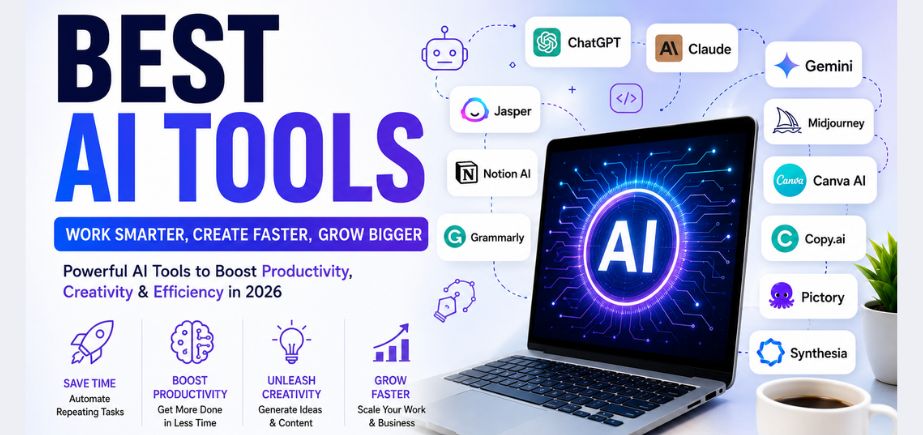
Over the past 2025-2026 years, I’ve been testing all kinds of AI tools for all kinds of purposes – writing, research, design, programming, videos, automation, data analysis and more. Some of them were life-changing. Most were forgettable. A few I simply can’t do business without.
Beneath, you’ll see the best 14 AI tools in 2026 I’ve come to use and trust. They’re categorised, not ranked. They’re all evaluated on my pragmatic rubric: quality of output, ease of use, cost, and whether it’s actually a time-saver or pain.
If you’re looking for free AI tools online, AI tools for students, best AI tools for marketing or enterprise AI tools for data analytics – you’ll find something here.
Let’s get into it.
Quick Comparison Table of Best Ai Tools
| # | Tool | Category | Best For | Free Plan? | Starting Price |
| 1 | ChatGPT | General AI | Brainstorming, writing, logic | ✅ Yes | $20/mo (Plus) |
| 2 | Claude | General AI | Long docs, nuanced writing, coding | ✅ Yes | $20/mo (Pro) |
| 3 | Perplexity AI | Research | Real-time search + citations | ✅ Yes | $20/mo (Pro) |
| 4 | Lindy | Automation | Custom AI agents & workflows | ✅ Limited | $49/mo |
| 5 | Jasper AI | Marketing | Enterprise content at scale | ❌ No | $49/mo |
| 6 | Notion AI | Productivity | Notes, docs, team knowledge | ✅ Yes | $10/mo add-on |
| 7 | Grammarly | Writing | Real-time grammar + tone | ✅ Yes | $12/mo (Pro) |
| 8 | GitHub Copilot | Coding | AI code suggestions | ❌ No | $10/mo |
| 9 | Descript | Video/Audio | Edit video by editing text | ✅ Limited | $24/mo |
| 10 | Midjourney/Flux | Image Gen | High-quality AI images | ❌ No | $10/mo |
| 11 | Gamma | Presentations | Decks & websites in minutes | ✅ Yes | $15/mo |
| 12 | Fathom | Meetings | Meeting transcription & summaries | ✅ Yes | $19/mo |
| 13 | Canva AI | Design | Visual content & marketing assets | ✅ Yes | $15/mo |
| 14 | DataRobot | Data/ML | ML model building & deployment | ❌ No | Custom |
| 15 | AdCreative.ai | Advertising | High-converting ad creative | ❌ No | $29/mo |
Category 1: General-Purpose AI Assistants
These are the Swiss Army pen knives of AI. They’re not the best at any one thing, but they’re good at everything. If you want to get into AI, begin with these.
1. ChatGPT (OpenAI)
Best for: General brainstorming, reasoning and composition
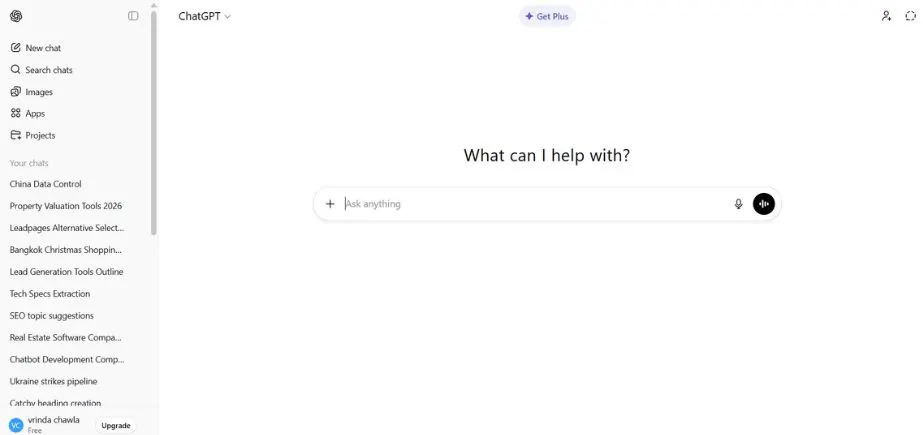
If there was a face to the best AI tools debate, it would likely be ChatGPT’s. OpenAI’s largest model – now featuring GPT-4o and future models – is the one that really kick-started the AI revolution. And in 2026, it remains one of the most powerful and adaptable of the top AI tools 2026.
ChatGPT’s greatness is in its versatility. It effortlessly solves riddles, writes essays, helps you fix your code, drafts emails to customers, plans your dinner menu, and discusses the meaning of life, the universe and everything. The new GPT-4o model can process vision, voice, and respond in real time, making it feel less like a chatbot and more like a friend you can call on throughout the day.
Why I use it: For quickly writing first drafts, helping people brainstorm ideas, translating technical ideas to non-technical audiences, and rapid automation via its GPT Actions capability.
Standout features:
- Memory across conversations
- Tailored GPTs for specific purposes
- Web browsing with a browser
- Generates images (DALL·E)
- Data works with the code interpreter
Pricing: Free to use. ChatGPT Plus $20/month. Team and Enterprise plans for businesses.
Verdict: This is the best AI tool to use if you have time for only one of the best on our list, and particularly if you’re a beginner.
2. Claude (Anthropic)
Best for: Considerate writing, reviewing documents and programming
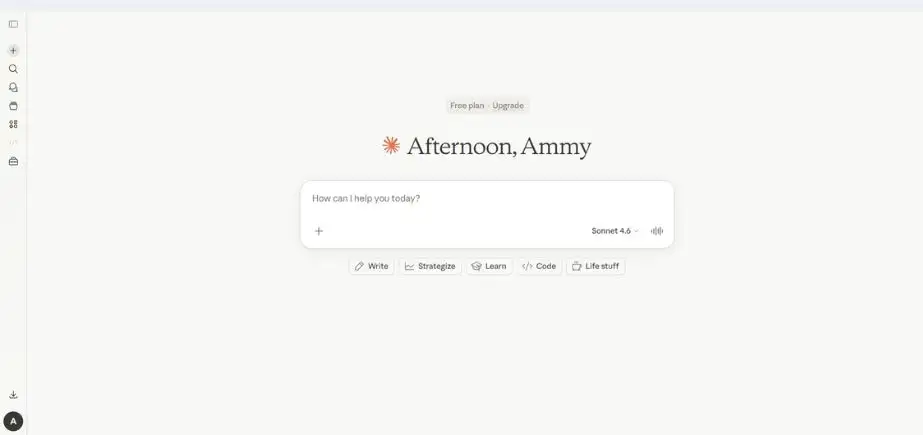
Claude is the result of creating an AI writing tool with a focus on nuance, precision and quality. Created by Anthropic, Claude is one of the most impressive generative AI tools out there – and it’s rapidly becoming the go-to tool for anything that needs a bit of thought and consideration.
While ChatGPT is better for broad, Claude is better for deep. It’s the best at working with and reasoning over long documents (200,000+ tokens). Load up a 100-page PDF, ask it to generate a summary of the main points, and it will do so in a coherent manner – with reasoning, not summarisation.
And Claude’s style is very human-like. It doesn’t have the telltale AI-writing style, with empty filler words, robotic transitions, and hedging words. It’s the best for writing articles, reports, and other complex documents.
Why I use it: Document summarisation, writing essays, writing reports, fixing long code blocks and anything that requires high accuracy.
Standout features:
- World’s biggest 200K context window
- Great at multi-step instruction following
- Good reasoning and chain-of-thought abilities
- The Projects feature for managing projects
- API with a reasonable price
Pricing: Free to use. Claude Pro $20/month. Team plans available.
Verdict: A great AI tool for businesses that need to produce high-quality content. A must-have on the list of top AI tools 2026.
3. Perplexity AI
Best for: Up-to-date information and verified answers
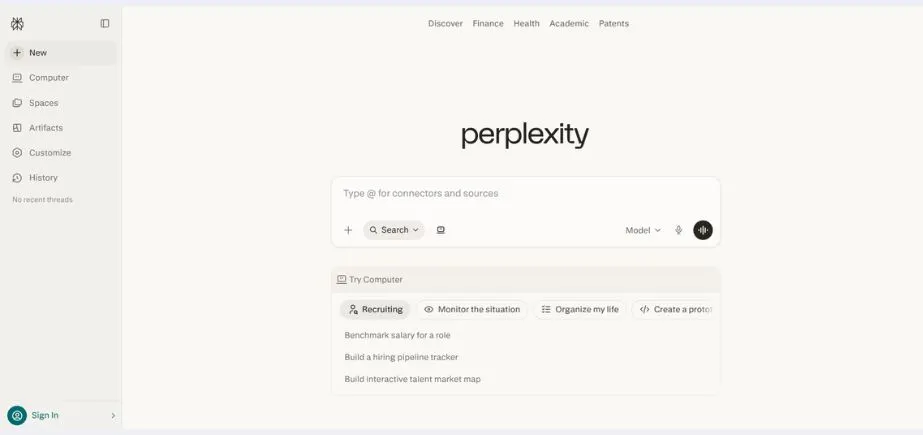
Perplexity is the next version of Google Search. It’s one of the best AI research tools out there – it combines the natural language processing capabilities of a large language model (LLM) with the up-to-date search of a real-time search engine.
And all of Perplexity’s answers are accompanied by links to where the information came from. Not only are you getting information that was true at the time the AI model was trained – you’re getting information sourced live from the internet, with citations you can check. This could be a game-changer for students, journalists, researchers, and anyone else who needs to keep up with rapidly changing information.
Why I use it: To check facts, get information on competitors, get up-to-date news on a topic, anything where I want to know I’m getting an answer, not a guess.
Pricing: Free plan with a limit on searches per day. Perplexity Pro for $20 per month offers unlimited search, improved models and uploads.
Verdict: The best free AI search engine for research that gives you sources. The best of the AI tools for students and professionals.
Category 2: AI Automation & Productivity Tools
Here’s where the power is. These AI automation tools and AI productivity tools can help you do less work and get more done.
4. Notion AI
Best for: Organizing notes, summarization, and team knowledge management
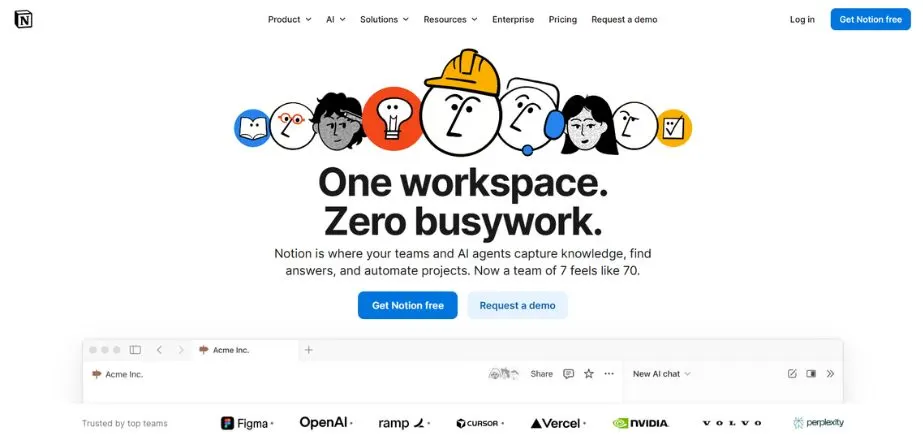
Notion AI is the best example of AI being added to an existing product as opposed to being a forced add-on. If you’re already a Notion user (and millions of teams are), then Notion AI is one of the best business AI tools to add to your stack without disrupting the way you work.
Notion AI can help summarise meeting notes, generate drafts from bullet points, clean up pages and tables, answer questions about your Notion workspace, and even translate content – all within the documents you’re already working on.
Why I use it: I use it to generate summaries of meeting notes, transform rough notes into formal documents and create team wikis with AI-generated sections.
Price: $10 per month, on top of Notion’s plans
Verdict: A must-have to increase productivity with AI on Notion. Seamless, quick and valuable.
5. Fathom
Best for: Recording, transcribing and summarising meetings
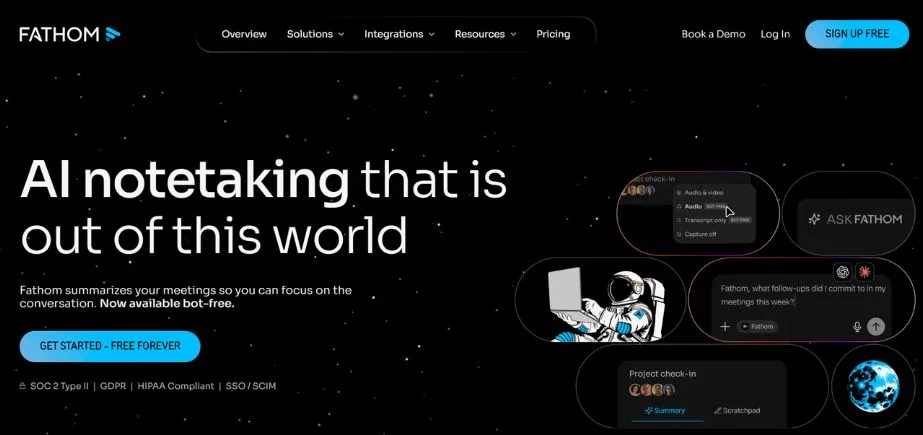
Fathom is a meeting note taker that wishes it were around when you were in school. It dials into your meetings, takes notes and transcribes what’s being said, and provides a well-organised summary – with action items, decisions, and key points – just minutes after the meeting is over.
Fathom is one of the best AI productivity tools for anyone who spends a lot of time in meetings. No more taking notes. No more “so what was the decision again?” emails. The AI remembers so you can focus on what’s being said.
Pricing: The free plan is really generous. Paid starts from $19/month
Verdict: One of the best free AI tools for meeting-happy workers.
Category 3: AI Tools for Writing & Content Creation
The most popular area of AI. Here are the best of the best AI tools for content creation and AI tools for writing.
6. Jasper AI
Best for: Scalable and on-brand enterprise marketing content
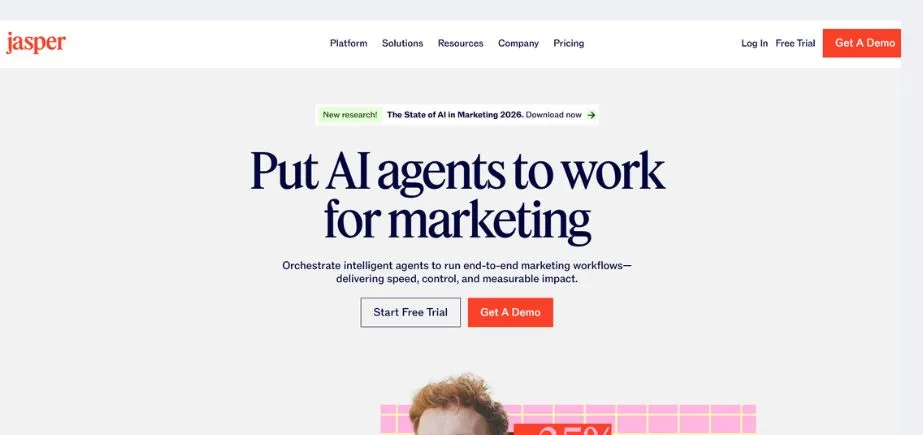
Jasper is the one of the best AI tools for marketing, and has come a long way. It’s now a complete content intelligence platform aimed at marketers who need to produce a lot of content, on-brand.
The key to Jasper’s success in using a chatbot for content is the brand voice technology. You can teach Jasper your brand style guidelines, brand voice, target audience and product positioning, and all content it writes will be consistent, without having to explain the context each time. For companies that use hundreds of pieces of content a month, this is invaluable.
Why I use it: Creating blog post titles, emails, ad copy variations, and a calendar of social media posts for brand-sensitive projects.
Pricing: $49/month or more. Enterprise pricing available.
Verdict: The best of the best AI tools for marketing teams. A must-have for teams that need to scale up their content production.
7. Grammarly
Best for: Writing suggestions and tone adjustment
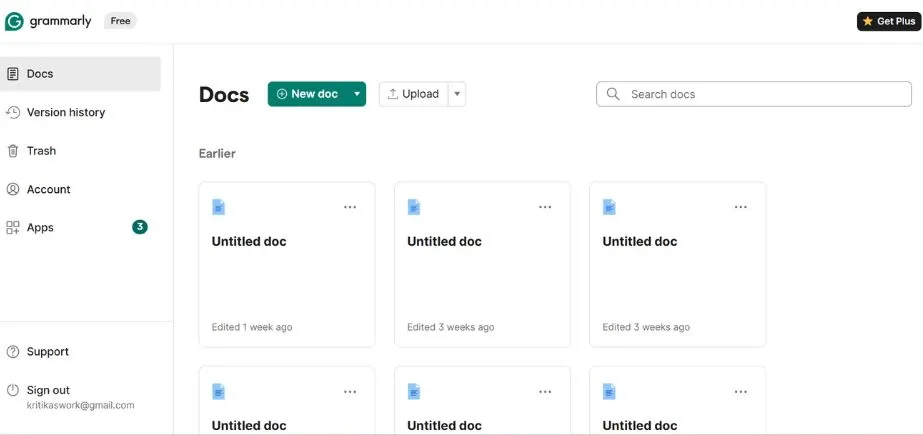
You’ve surely heard of Grammarly, but it should be on every list of the best AI tools because it has recently become much more intelligent with the introduction of generative AI. These are more than just typo and passive voice corrections.
In 2026, the AI-powered rewrite suggestions can restructure paragraphs and make your writing clearer, tweak your tone to suit the audience (professional, friendly, empathetic), and alert you when your writing might be too belligerent, too vague, or too long-winded. For those writing at scale, whether it’s emails, proposals or articles, it’s a very cost-effective AI writing tool.
Pricing: The free plan is great. Grammarly Pro at ~$12/month gives full access to AI rewrite.
Verdict: Best AI solution for proofreading & feedback. Great for those who aren’t native English speakers and for those who need to write at scale for important communications.
Category 4: Writing for Programmers & Data Scientists.
These are changing the way we code and crunch data – quickly.
8. GitHub Copilot
Best for: AI code completions and development.
Copilot is the quintessential example of AI complementing a job. It’s one of the most significant AI tools for developers – an AI assistant in your integrated development environment (IDE) that can suggest lines of code, entire functions, tests and documentation as you code. Copilot started as a code-completion tool but is now a productivity booster.
With GitHub Copilot Chat and the new workspace tools, you can ask it questions about your code, explain unfamiliar code to you and even have it automatically implement new features from a natural language description.
Price: $10/month for personal use. Business and Enterprise plans are also available.
Verdict: A must-have for programmers.A prime example of the latest AI tools 2026 that can actually make the work lives of tech professionals easier.
9. DataRobot
Best for: Creating and deploying machine learning models.
DataRobot is the enterprise-level solution to the question, “How do I use machine learning in my business, but I don’t have a PhD data scientist on staff?”This is one of the most feature-rich data analysis AI tools around – an automated machine learning platform that simplifies data preprocessing, model selection, model training, explainability and deployment, all through a user-friendly interface. Data scientists and engineers can develop predictive models much, much quicker, and business analysts can get predictive insights without a single line of Python.
Pricing: Enterprise pricing. Contact sales for a demo.
Verdict: Best enterprise choice of the AI tools for data analysis and best generative AI tools.
Category 5: Design, Visual & Creative Skills.
Visual skills are high-impact skills in the workplace. These best AI tools make it accessible to everyone
10. Midjourney / Flux
Best for: Generating high-quality AI images
These two tools are the current best generative AI tools for image creation. Midjourney – the stylistic dynamo that creates painterly, cinematic art – and Flux – the new open-weight up-and-comer with stunning photorealism – have set the bar for AI-generated images in 2026.
For marketers, designers, content creators and visual asset builders, they’re both essential AI content creation tools. You no longer have to know Photoshop or have a stock photo subscription – you just need to know how to craft a prompt and have a vision.
Price: Midjourney starts at $10/month. You can find Flux (open-weight) online for free.
Verdict: The best free and paid online AI visual design tools. Midjourney for art; Flux for realism.
11. Canva AI
Best for: Design and marketing assets
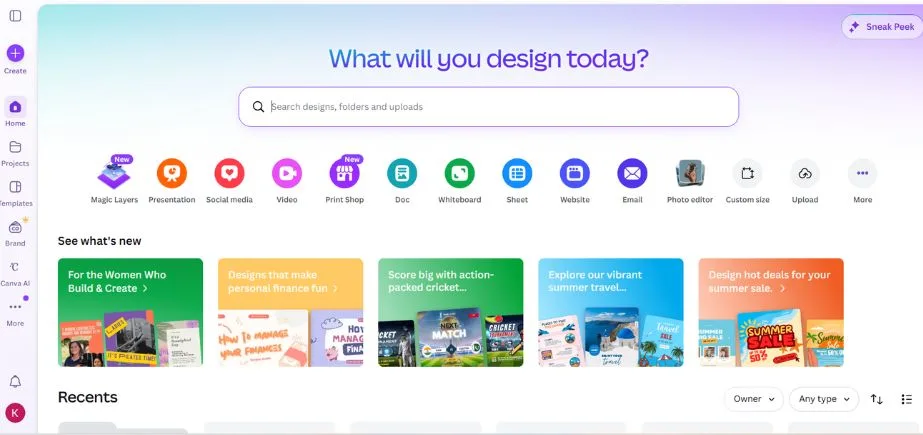
Canva is already the world’s most user-friendly design software. Now, with the inclusion of Magic Studio – Canva’s suite of AI tools – it’s one of the best AI tools for social media and marketing teams that don’t have an in-house designer.
Magic Design can create brand kits, presentations, social media posts and campaigns from a single prompt. Magic Write is text writing within Canva. Magic Edit lets you remove backgrounds, change elements and expand images. For social media AI tools, Canva AI is unrivalled in terms of speed, from ideation to on-brand visuals.
Price: The free version is great. Canva Pro ($15/month) or higher gives you full access to Magic Studio.
Verdict: The best social media image generator using AI. Easy to use, quick and sophisticated enough for commercial use, no matter your team’s size.
12. AdCreative.ai
Best for: AI-designed, high-converting ads
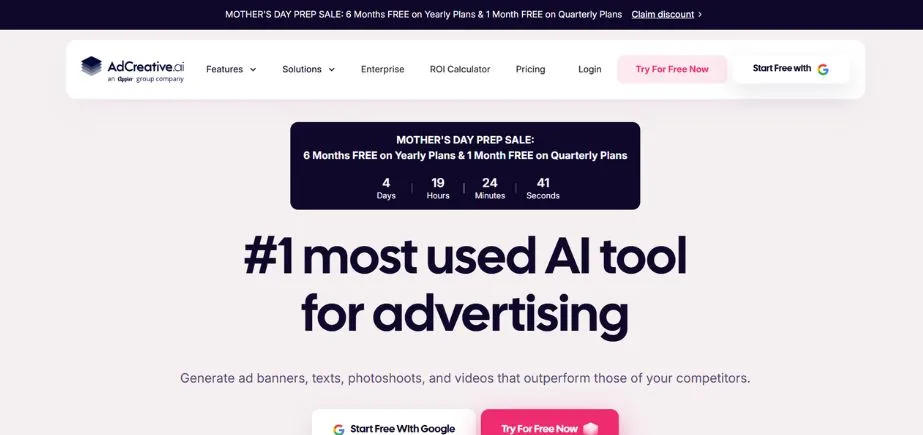
AdCreative.ai is in a very narrow niche, but an extremely important one: creating converting ad creatives. Rather than a design tool, it’s a performance tool that links to your ad accounts, analyses your historical data and generates new ad variations that are statistically likely to convert well for your audience.
It’s one of the most ROI-oriented best AI marketing tools for paid media for both performance marketers and e-commerce brands. It takes out the creative production time and allows you to test more variants, quicker, which is what we need in paid media today.
Price: From $29/month.
Verdict: A niche but mighty choice for paid marketers. A leading AI tool 2026 has to offer for the paid marketing industry.
Category 6: AI for Media & Presentations
No more slow content creation, editing and presentation. These new AI tools in 2026 are revolutionising visual communication.
13. Descript
Best for: Editing audio and video by editing text.
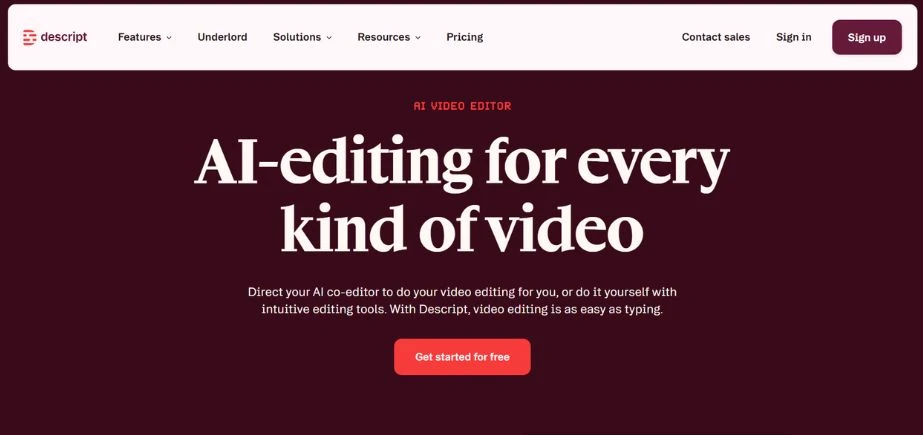
Descript is that type of tool that makes you think, “Oh, how did I ever edit video?”The concept is simple but revolutionary: your video and audio are automatically transcribed, and you edit the media by editing the transcript. Edit the transcript to remove a word, and remove it from the video.
Cut a sentence, cut the video. It’s some of the prettiest AI for content creation magic I’ve ever witnessed. It also does AI Overdub (clone your voice to re-record without having to record again), automatic filler word removal, scene detection, and studio sound removal. Descript is a lifesaver for podcasters, YouTubers and video marketers alike.
Pricing: Free to use. Creator plans at $24/month.
Verdict: The best AI tool for creating videos or podcasts.Fastest and easiest to use for editing.
14. Gamma
Best for: Rapidly creating presentations and websites.
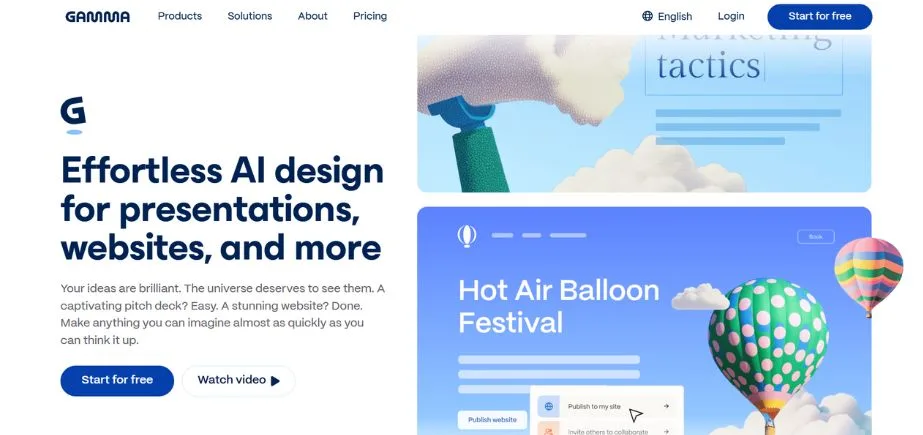
Gamma is to PowerPoint what Google Docs is to Microsoft Word: the AI version. Type in the kind of presentation you need to create (a pitch deck, project report, company update, etc) and Gamma will generate a template with a layout, structure and design for you within a minute.
It’s one of the best free AI tools on the web for anyone who needs to create presentations often but doesn’t have time to create elaborate slide designs. The results are actually quite impressive – well laid out, consistent fonts and transitions, not the 21st-century plastic you might expect from an AI-generated design.
Pricing: Free to use. Premium starting at $15/month.
Verdict: The fastest way to present your ideas.A great choice for AI tools for students and professionals to create pitching decks, reports and client presentations.
Closing Advice: Which of the Best AI Tools Should I Choose?
In 2026, there are so many best AI tools that it’s tempting to want to try and experiment with everything. Resist that urge. Pick one in each category based on your most pressing challenge:
Having trouble writing? → Grammarly + Clauded
Too many meetings? → Fathom
Want to improve your marketing copy? → Jasper AI + Canva AI
Creating code? → GitHub Copilot
Doing research? → Perplexity AI
Making designs or ads? → Midjourney/Flux + AdCreative.ai
Automate anything? → Lindy
The best AI tools 2026 has seen aren’t special because they’re new – they’re special because they’re compounding. The more tools you use together, the more valuable they all become. A marketer using Jasper for inspiration, Claude for writing, Grammarly for refinement and Canva AI for design isn’t using four tools – they’re running a sophisticated content engine that would have once required an entire team of people. The best business AI tools are the ones you use. Start with one, and master it.e.
Frequently Asked Questions
What is the best AI tool for beginners in 2026?
For general purposes, try ChatGPT or Claude; for writing, Grammarly; and for presentations, Gamma. Each has a free version and is easy to use. These are among the easiest and best free AI tools online to get started.
What are the best free online AI tools?
The free versions of ChatGPT, Claude, Perplexity AI, Fathom, Gamma and Canva AI are all very powerful. In particular, Perplexity and Notion AI are excellent free AI tools for students for most research and study purposes.
What are the best AI tools for marketers?
Jasper AI, Canva AI, AdCreative.ai and ChatGPT are great core components for the best AI tools for marketing. Fathom helps with client calls, and Notion AI for campaign documentation and knowledge management.
What are some AI tools for data analysis?
Yes – DataRobot is the industry standard for enterprise, while ChatGPT’s Code Interpreter and Claude are excellent choices for personal AI tools for data analysis, able to work with CSV data, visualisation code and statistical analysis without any need for training.
What are the latest AI tools in 2026?
In addition to these best AI tools, watch for tools in the agentic space – especially multi-agent systems that integrate several of the tools above to create fully automated systems. The next generation of AI tools in 2026 is less about what tools can do and more about AI agents coordinating new systems.