
Managing cloud costs can feel a bit like tracking your monthly expenses—except everything is happening at a much larger scale and often in real time. Due to increased transfer of business operations to the cloud, monitoring the amount of expenditure is becoming as crucial as the utilization of the cloud. Unless cost is carefully managed, it may get out of control rather quickly because of unused resources, over-providing, or inability to see. This is where Cloud cost management tools come.
These applications assist in knowing what you are spending, waste, and the best use of money to ensure that you only spend on what you actually need. The right tool can be a difference maker whether you are a startup that is struggling to meet the budget or a huge company that has to deal with a variety of cloud platforms.
Why Cloud Cost Management is Important
- Eliminates bill shocks and overspending: Cloud services are priced on a per-use basis that is subject to rapid change. Cost management software is useful to monitor expenditures real-time, establish budgets, and provide notifications so that you can avoid being surprised by the large bills at the month’s end.
- Enhances team and service visibility: These tools segment costs by services, department, project or account and help to see exactly where the money is flowing and where the sources of the highest expenses are.
- Maximizes resource use: A lot of organizations will be paying for resources, which are either idle or not used fully. Such inefficiencies are detected using cost management tools that propose methods to minimize or close unwarranted resources.
- Facilitates proper budgeting and forecasting: When the patterns of use in the past are analyzed, businesses are able to have a more accurate projection of what is going to occur in the future and budget the same hence minimizing financial uncertainty.
- Promotes financial responsibility (FinOps culture): The fact that teams can understand their own cost impact makes them more responsible in terms of their usage of the cloud resulting in good decision making and cost wise behavior.
Key Features to Look for in a Cloud Cost Management Tool
- Multi-cloud/ hybrid support: A tool that enables you to control costs in various cloud providers such as AWS, Azure, and Google Cloud, and on-premises infrastructure where necessary should be a good tool.
- Instantaneous cost analysis and alerts: Real-time access to expenditures assists teams in responding fast. Users are alerted when spending limits are exceeded or unusual spending trends are detected.
- Centralized cost allocation and tagging: Costs can be allocated to the particular teams, projects, or environments to provide a better track, reporting, and internal chargebacks.
- Recommendations on automation and optimization: State of the art tools offer AI-driven recommendations or automatic behaviors such as instance rightsizing, instance shutdowns, or cheaper pricing models.
- Both custom dashboards and reporting: The ability to add custom dashboards, export data, and share insights with stakeholders means that the user can gain more control over the financial records and can make more effective choices.
List Of 15 Best Cloud Cost Management Tools
1. AWS Cost Explorer
Website:https://aws.amazon.com/aws-cost-management/aws-cost-explorer/
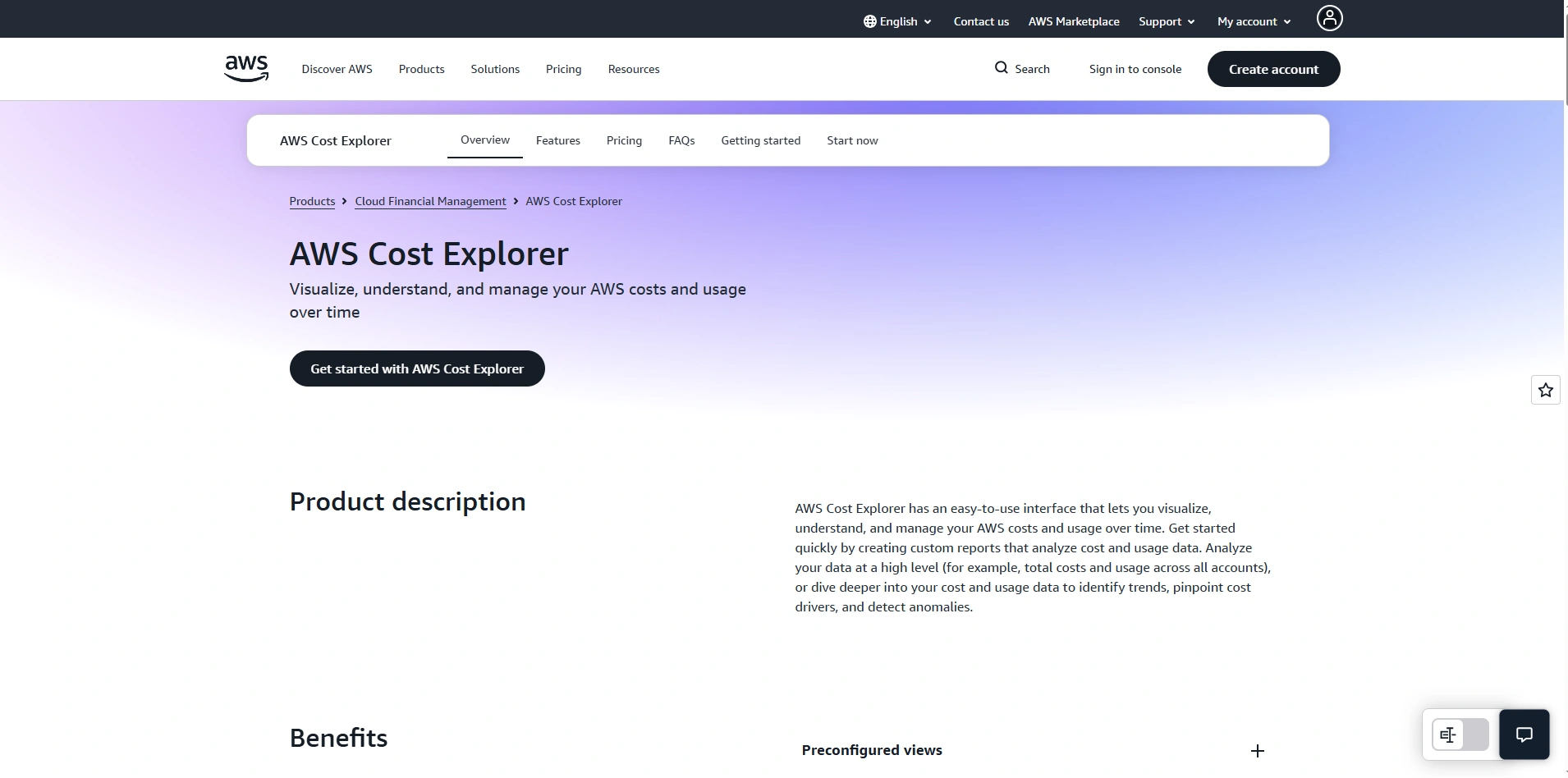
AWS Cost Explorer is a powerful native tool provided by Amazon Web Services that helps businesses visualize, understand, and manage their cloud spending. It offers detailed insights into cost and usage patterns over time, allowing users to analyze historical data and forecast future expenses with ease. The tool is especially useful for organizations already deeply integrated into the AWS ecosystem.
It enables users to break down costs by service, linked account, tags, or usage type, making it easier to identify cost drivers. With customizable reports and interactive graphs, AWS Cost Explorer empowers finance and engineering teams to make data-driven decisions to optimize their cloud budgets effectively.
Top Features:
- Interactive cost visualization dashboards
- Usage and cost forecasting
- Granular filtering (service, region, tags, etc.)
- Rightsizing recommendations
- Integration with AWS Budgets
Pros:
- Native integration with AWS services ensures accurate data
- Easy-to-use dashboards and visual reports
- Strong forecasting and budgeting capabilities
Cons:
- Limited to AWS (no multi-cloud support)
- Advanced features require additional tools like AWS Budgets
- Can be complex for beginners with large datasets
Pricing:
- Available on request
2. Azure Cost Management
Website:https://azure.microsoft.com/en-in/products/cost-management/
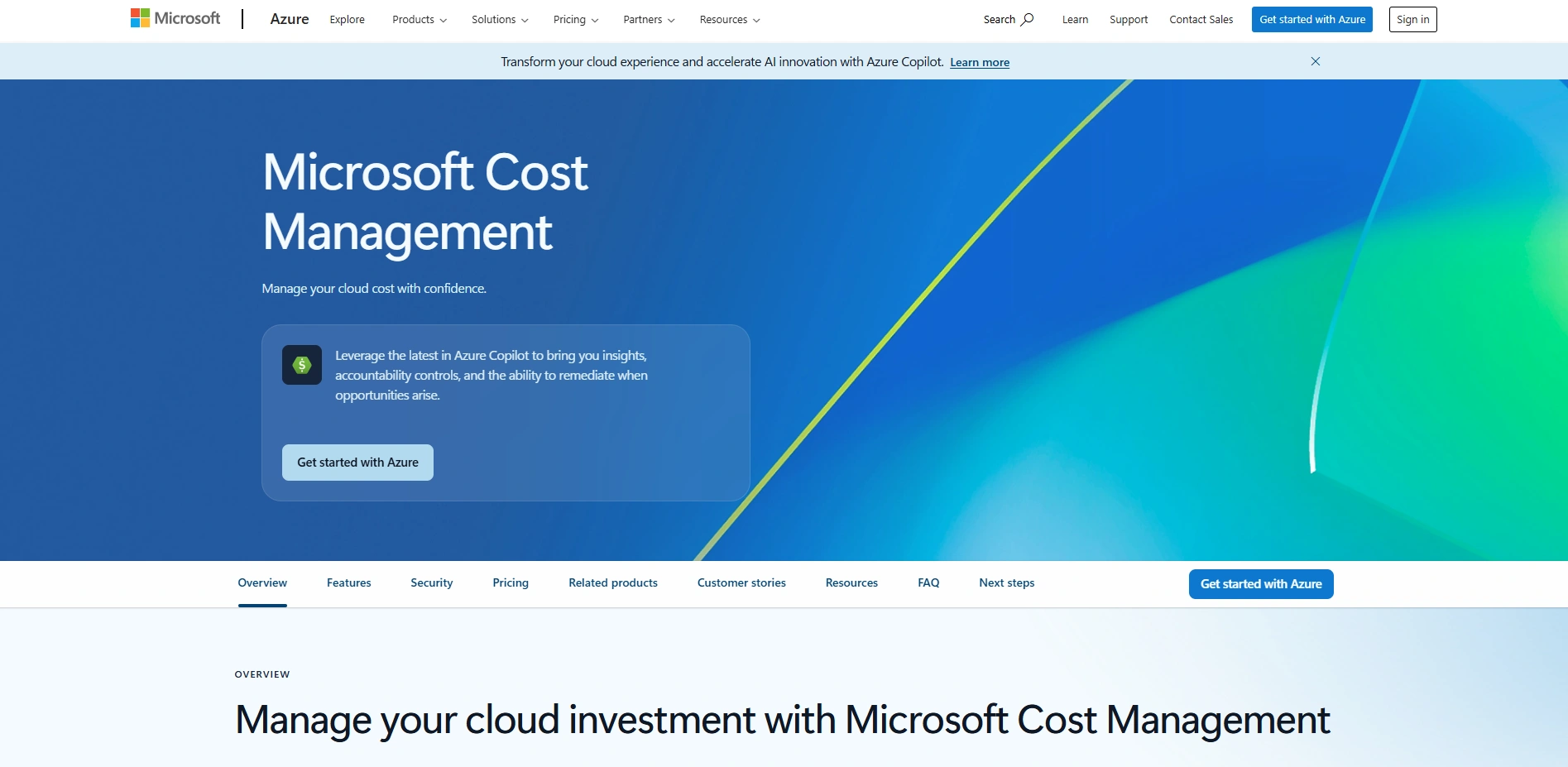
Azure Cost Management is a built-in solution within Microsoft Azure that provides comprehensive tools to monitor, allocate, and optimize cloud costs. It helps organizations track their cloud usage across subscriptions and resource groups, offering transparency into spending patterns and helping teams stay within budget.
The platform also includes advanced analytics and reporting capabilities, allowing users to identify inefficiencies and reduce unnecessary spending. As one of the effective Cloud Cost Management Tools, it supports multi-cloud environments as well, making it a flexible choice for enterprises managing hybrid or distributed infrastructures.
Top Features:
- Cost analysis and budgeting tools
- Multi-cloud cost management support
- Custom alerts for overspending
- Resource optimization insights
- Integration with Azure Advisor
Pros:
- Built-in tool with no extra setup required
- Supports multi-cloud environments
- Strong budgeting and alerting features
Cons:
- Interface can feel overwhelming for new users
- Best optimized for Azure (less effective for other clouds)
- Advanced customization can be limited
Pricing:
- Available on request
3. Google Cloud Billing
Website:https://cloud.google.com/
Google Cloud Billing provides detailed billing reports and cost management tools for organizations using Google Cloud Platform. It offers real-time visibility into cloud spending and helps users understand cost distribution across projects, services, and teams.
With built-in budgeting and alerting features, users can proactively control expenses and avoid unexpected charges. The platform also integrates seamlessly with other GCP services, enabling users to leverage data analytics tools like BigQuery for deeper financial analysis, making it one of the effective cloud cost management platforms.
Top Features:
- Real-time billing insights
- Budget tracking and alerts
- Cost breakdown by project and service
- Export billing data to BigQuery
- Committed use discounts tracking
Pros:
- Real-time billing insights and transparency
- Seamless integration with GCP services
- Easy data export for advanced analysis
Cons:
- Limited multi-cloud functionality
- Requires technical knowledge for deep analysis
- Reporting customization is somewhat limited
Pricing:
- Available on request
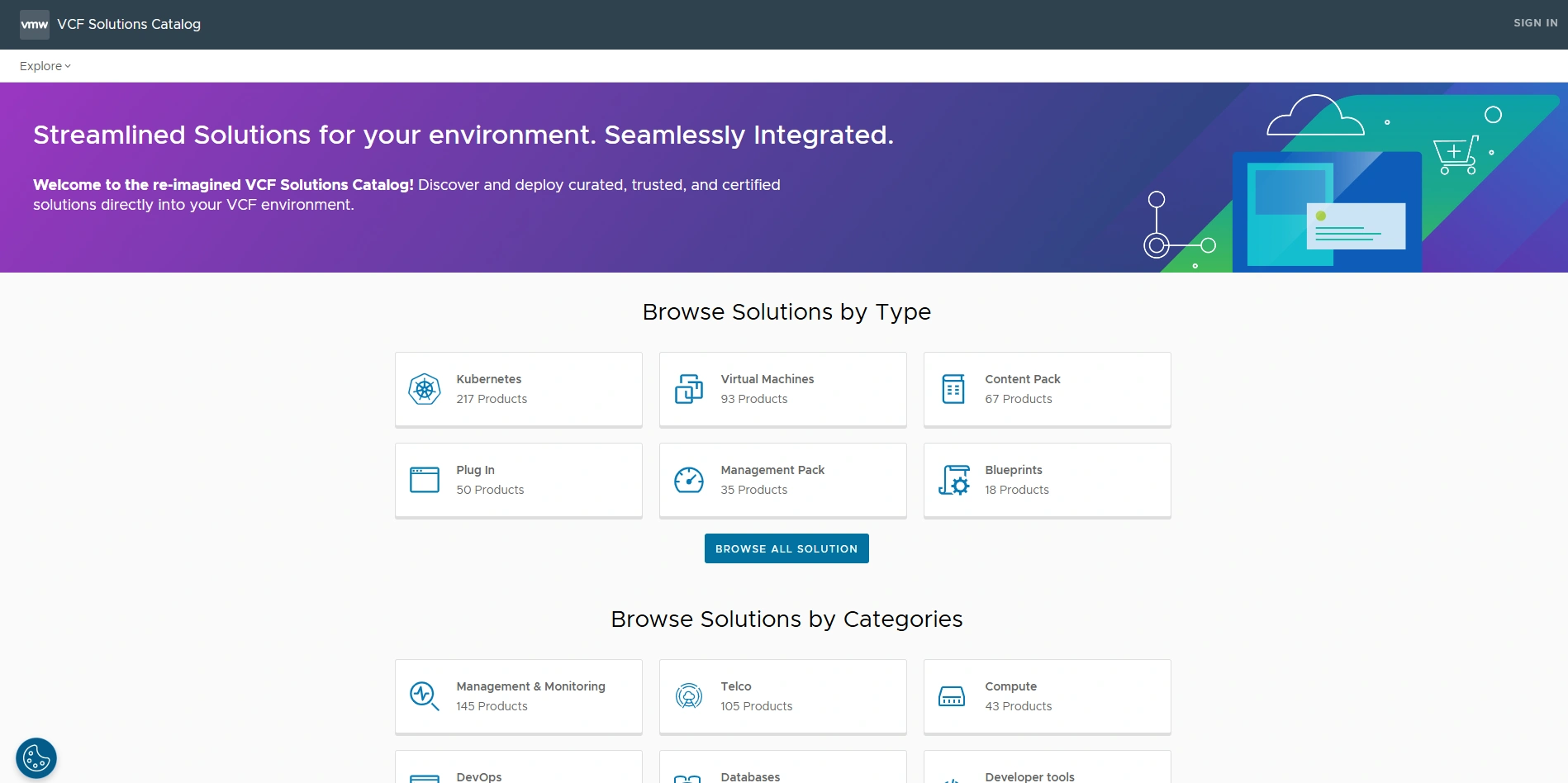
4. CloudHealth by VMware
Website: https://vcf.broadcom.com/vsc/
CloudHealth by VMware is a leading cloud management platform designed to provide visibility, governance, and Cloud Cost Management Tools capabilities for cost optimization across multi-cloud environments. It supports AWS, Azure, and Google Cloud, making it ideal for organizations with diverse cloud infrastructures.
The platform offers powerful analytics and automation features to help businesses identify cost-saving opportunities and enforce financial governance policies. With customizable dashboards and reporting tools, CloudHealth enables teams to maintain control over cloud spending while ensuring operational efficiency.
Top Features:
- Multi-cloud cost visibility
- Policy-based governance automation
- Advanced cost allocation and reporting
- Rightsizing and optimization recommendations
- Integration with enterprise tools
Pros:
- Strong multi-cloud support
- Advanced governance and policy automation
- Detailed cost allocation and reporting
Cons:
- Can be expensive for smaller businesses
- Steeper learning curve
- Requires time for proper setup and configuration
Pricing:
- Available on request
5. CloudCheckr
Website: https://www.cloudcheckr.com/
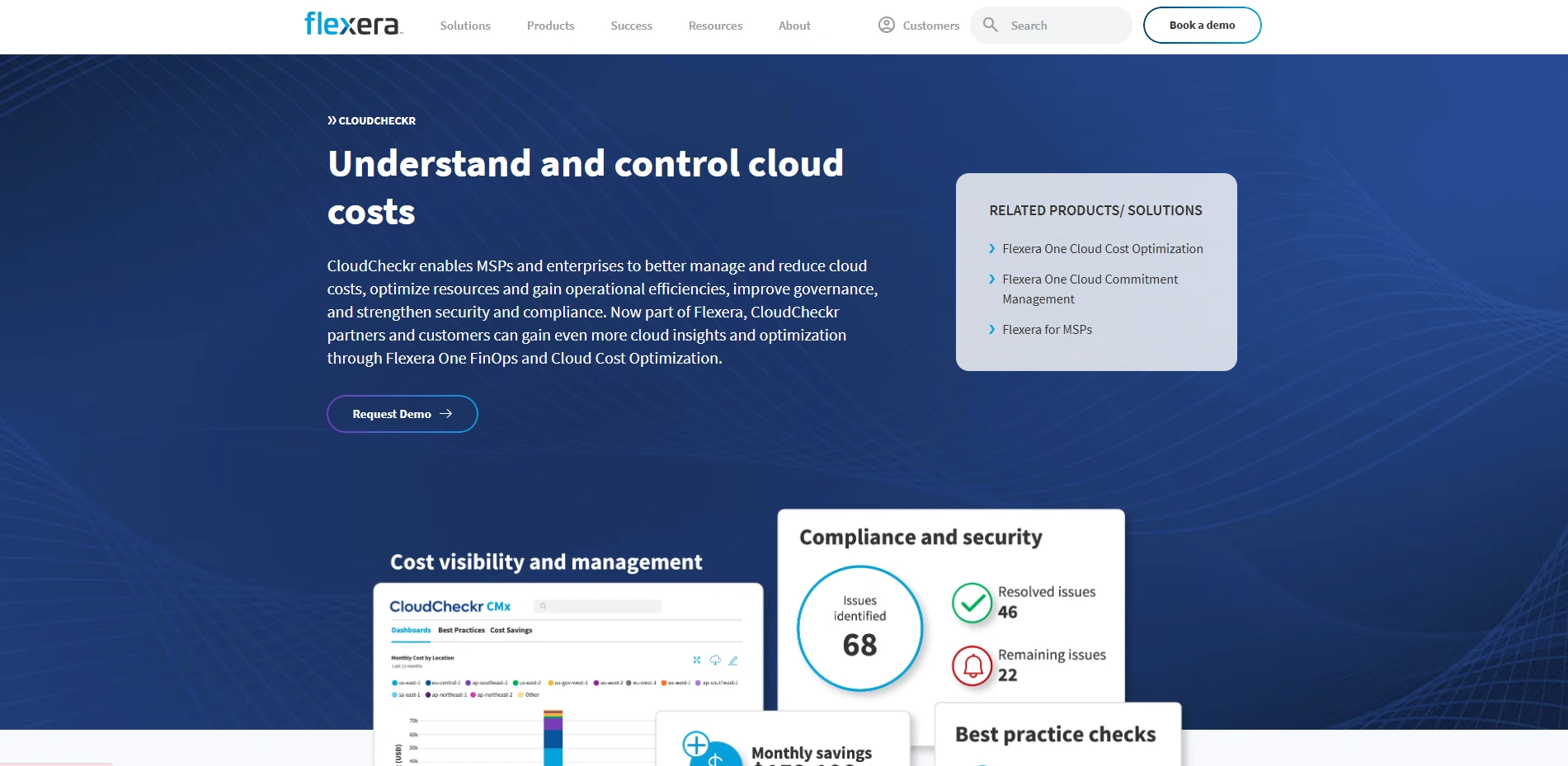
CloudCheckr is a comprehensive cloud management platform that focuses on cost optimization, security, and compliance. It is widely used by enterprises and managed service providers to gain deep insights into cloud usage and spending.
The tool provides detailed cost analysis, automated savings recommendations, and compliance monitoring features. Its user-friendly interface and customizable reporting make it easy for teams to track cloud expenses and implement cost-saving strategies effectively.
Top Features:
- Automated cost optimization recommendations
- Detailed billing and usage reports
- Security and compliance monitoring
- Multi-cloud support
- Custom dashboards and alerts
Pros:
- Combines cost management with security and compliance
- Detailed reporting and analytics
- Suitable for enterprises and MSPs
Cons:
- Interface can feel outdated
- Setup can be complex
- May include features not needed by small teams
Pricing:
- Available on request
Suggested more:
6. Apptio Cloudability
Website:https://www.apptio.com/products/cloudability/
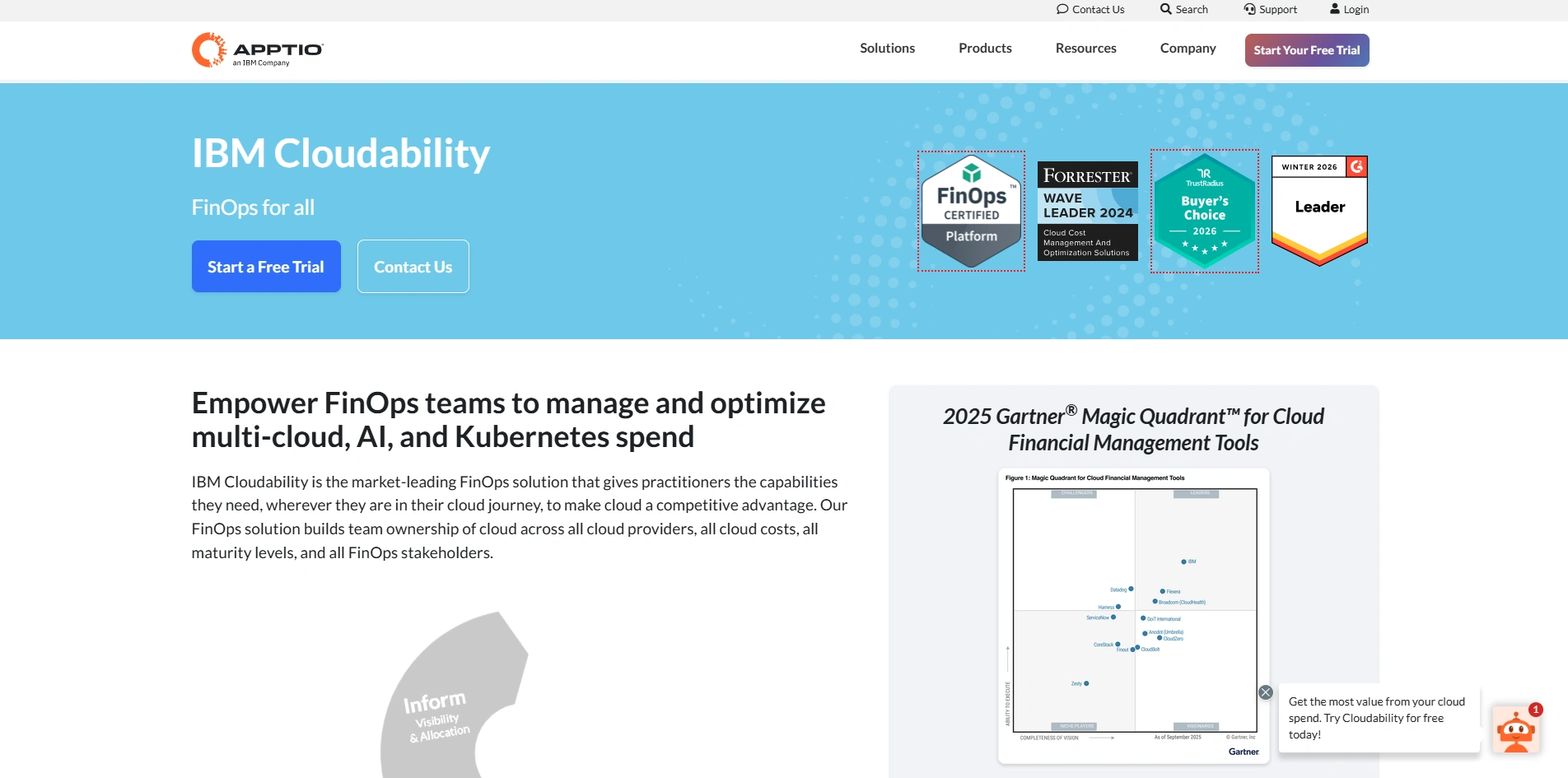
Apptio Cloudability is a leading FinOps tool designed to help organizations gain full visibility into their cloud costs and optimize spending across multi-cloud environments. It enables teams to allocate, analyze, and manage cloud expenses efficiently, making it easier to align cloud investments with business goals, making it one of the top Cloud Cost Management Tools.
The platform provides detailed cost allocation and reporting features, helping organizations understand exactly where their cloud budget is being spent. With strong governance capabilities and actionable insights, Cloudability supports better financial decision-making and promotes accountability across teams.
Top Features:
- Multi-cloud cost visibility and management
- Advanced cost allocation and tagging
- Budget tracking and forecasting
- Rightsizing recommendations
- FinOps reporting and analytics
Pros:
- Excellent FinOps and cost allocation capabilities
- Strong multi-cloud support
- Detailed financial reporting
Cons:
- Higher cost compared to other tools
- Requires training to use effectively
- Implementation can be time-consuming
Pricing:
- Available on request
7. Flexera
Website:https://spot.io/
Flexera One is a comprehensive cloud and IT asset management platform that provides visibility into both cloud usage and software assets. It helps organizations manage costs, optimize resource usage, and maintain compliance across hybrid and multi-cloud environments.
The platform offers advanced analytics and automation capabilities, enabling businesses to identify waste, enforce governance policies, and improve overall cost efficiency. With strong reporting and cost allocation features, Flexera One is especially useful for enterprises managing complex IT infrastructures among modern cloud cost management platforms.
Top Features:
- Automated cost optimization using AI
- Spot instance management
- Continuous infrastructure rightsizing
- Multi-cloud support
- Kubernetes cost optimization
Pros:
- AI-driven automation for resource optimization
- Balances performance and cost effectively
- Works across hybrid and multi-cloud environments
Cons:
- Can be complex to configure
- Higher learning curve
- May be overkill for small setups
Pricing:
- Available on request
8. IBM Turbonomic
Website:https://www.ibm.com/products/turbonomic
IBM Turbonomic is an advanced application resource management platform that helps organizations optimize cloud costs by ensuring applications get the exact resources they need. It uses AI-driven analytics to automate decisions around resource allocation, improving both performance and cost efficiency, making it one of the effective Cloud Cost Management Tools.
The platform continuously analyzes application demand and automatically adjusts compute, storage, and network resources in real time. This helps eliminate overprovisioning and reduces waste, making it a strong choice for enterprises looking to balance performance with cost optimization.
Top Features:
- AI-powered resource optimization
- Real-time automated scaling decisions
- Application performance and cost balancing
- Multi-cloud and hybrid cloud support
- Integration with Kubernetes and major cloud providers
Pros:
- Unified view of cloud and IT assets
- Strong governance and compliance features
- Suitable for hybrid environments
Cons:
- Can be expensive
- Requires proper configuration for best results
- Interface may feel complex for beginners
Pricing:
- Available on request
9. Kubecost
Website:https://www.kubecost.com/
Kubecost is a specialized cost management tool designed specifically for Kubernetes environments. It provides real-time visibility into Kubernetes spending, helping teams monitor and control costs at the container and cluster levels.
The platform enables engineers and DevOps teams to understand how resources are being used and identify inefficiencies. With its detailed insights and recommendations, Kubecost helps organizations optimize their Kubernetes workloads and reduce unnecessary expenses.
Top Features:
- Kubernetes cost visibility in real-time
- Cost allocation by namespace, pod, and service
- Resource utilization insights
- Cost optimization recommendations
- Integration with major cloud providers
Pros:
- Designed specifically for Kubernetes environments
- Real-time cost visibility at granular level
- Easy integration with cloud platforms
Cons:
- Limited to Kubernetes use cases
- Not ideal for general cloud cost management
- Requires Kubernetes knowledge
Pricing:
- Available on request
10. Harness Cloud Cost Management
Website:https://www.harness.io/products/cloud-cost-management
Harness Cloud Cost Management is a modern platform that helps organizations continuously monitor and optimize their cloud spending. It provides automated insights and recommendations to ensure efficient resource utilization and cost control.
The tool integrates seamlessly with CI/CD pipelines and cloud platforms, enabling teams to track costs alongside deployments. With real-time monitoring and intelligent automation, Harness Cloud Cost Management Tools help businesses maintain financial efficiency without slowing down development processes.
Top Features:
- Real-time cloud cost monitoring
- Automated cost-saving recommendations
- Integration with CI/CD workflows
- Multi-cloud support
- Budget tracking and alerts
Pros:
- Integrates with CI/CD pipelines
- Real-time monitoring and automation
- Developer-friendly approach
Cons:
- Best suited for DevOps-focused teams
- May lack depth for financial reporting
- Requires integration setup
Pricing:
- Available on request
11. Finout
Website:https://www.finout.io/
Finout is a modern cloud cost observability platform that helps organizations gain deep visibility into their cloud spending without requiring complex tagging structures. It enables teams to track, allocate, and analyze costs across multiple cloud providers and services in a highly intuitive way.
One of its standout capabilities is cost allocation without tagging, allowing businesses to map expenses to teams, products, or features effortlessly. With powerful dashboards and granular insights, Finout helps organizations improve cost accountability and make smarter financial decisions.
Top Features:
- Cost allocation without tagging
- Multi-cloud cost visibility
- Real-time cost monitoring
- Custom dashboards and reporting
- Integration with data warehouses and SaaS tools
Pros:
- No-tag cost allocation is very useful
- Strong cost observability features
- Clean and intuitive dashboards
Cons:
- Relatively newer tool
- Limited enterprise-level features compared to competitors
- May require integration effort
Pricing:
- Available on request
12. Zesty
Website:https://zesty.co/
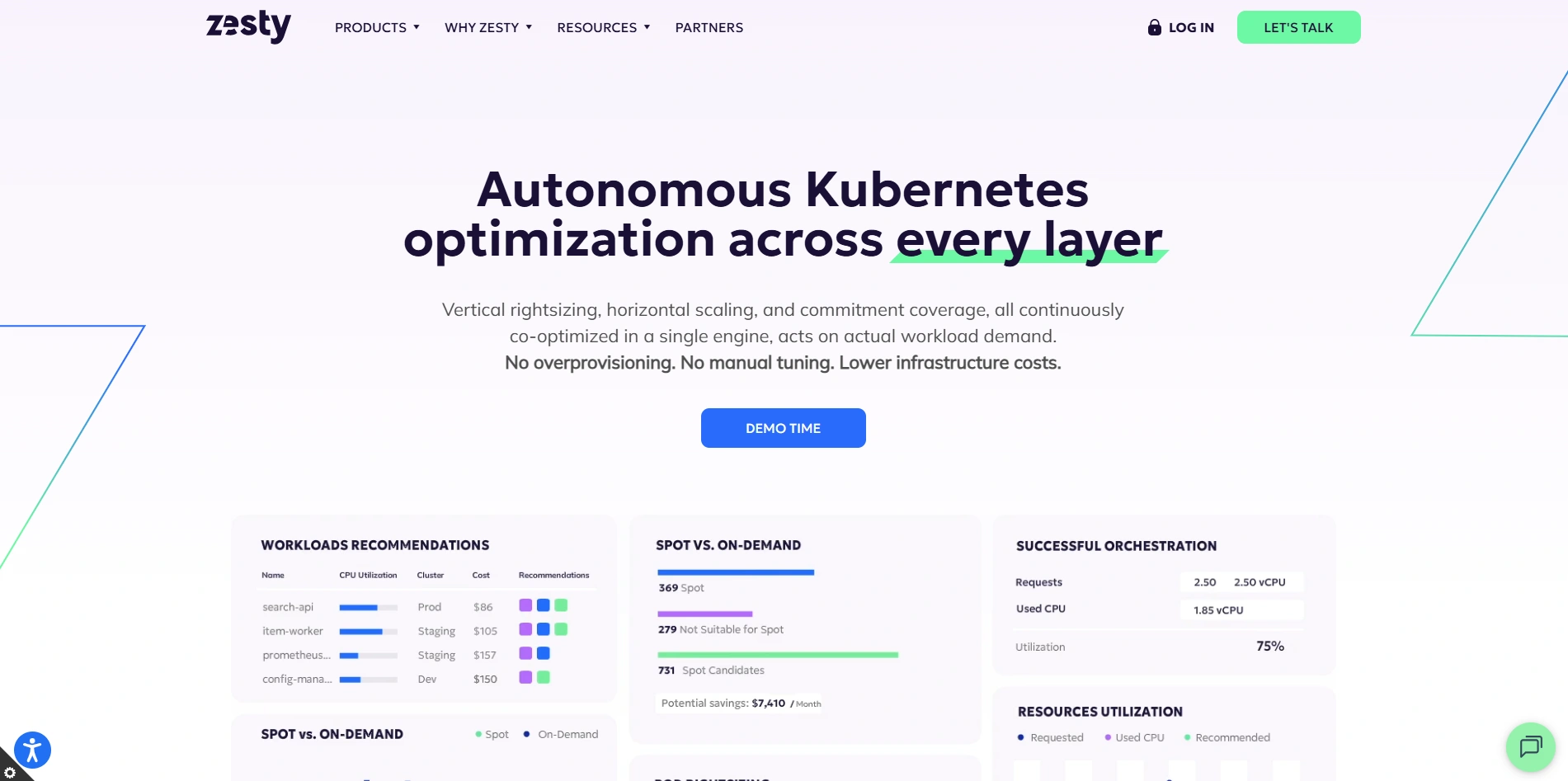
Zesty is an AI-powered cloud cost optimization platform designed to automatically reduce cloud waste and improve resource efficiency. It focuses on dynamic optimization of compute and storage resources, ensuring that organizations only pay for what they truly need.
The platform continuously analyzes usage patterns and adjusts resources in real time, helping businesses achieve consistent cost savings. Its automation-first approach makes it ideal for teams looking to minimize manual intervention while maximizing efficiency, making it a valuable solution among Cloud Cost Management Tools.
Top Features:
- AI-driven cost optimization
- Automated resource scaling
- Storage and compute optimization
- Continuous real-time adjustments
- Easy integration with cloud platforms
Pros:
- Fully automated cost optimization
- AI-driven resource management
- Reduces manual effort significantly
Cons:
- Less control due to automation
- Limited customization options
- Not ideal for teams wanting manual control
Pricing:
- Available on request
13. CloudZero
Website:https://www.cloudzero.com/
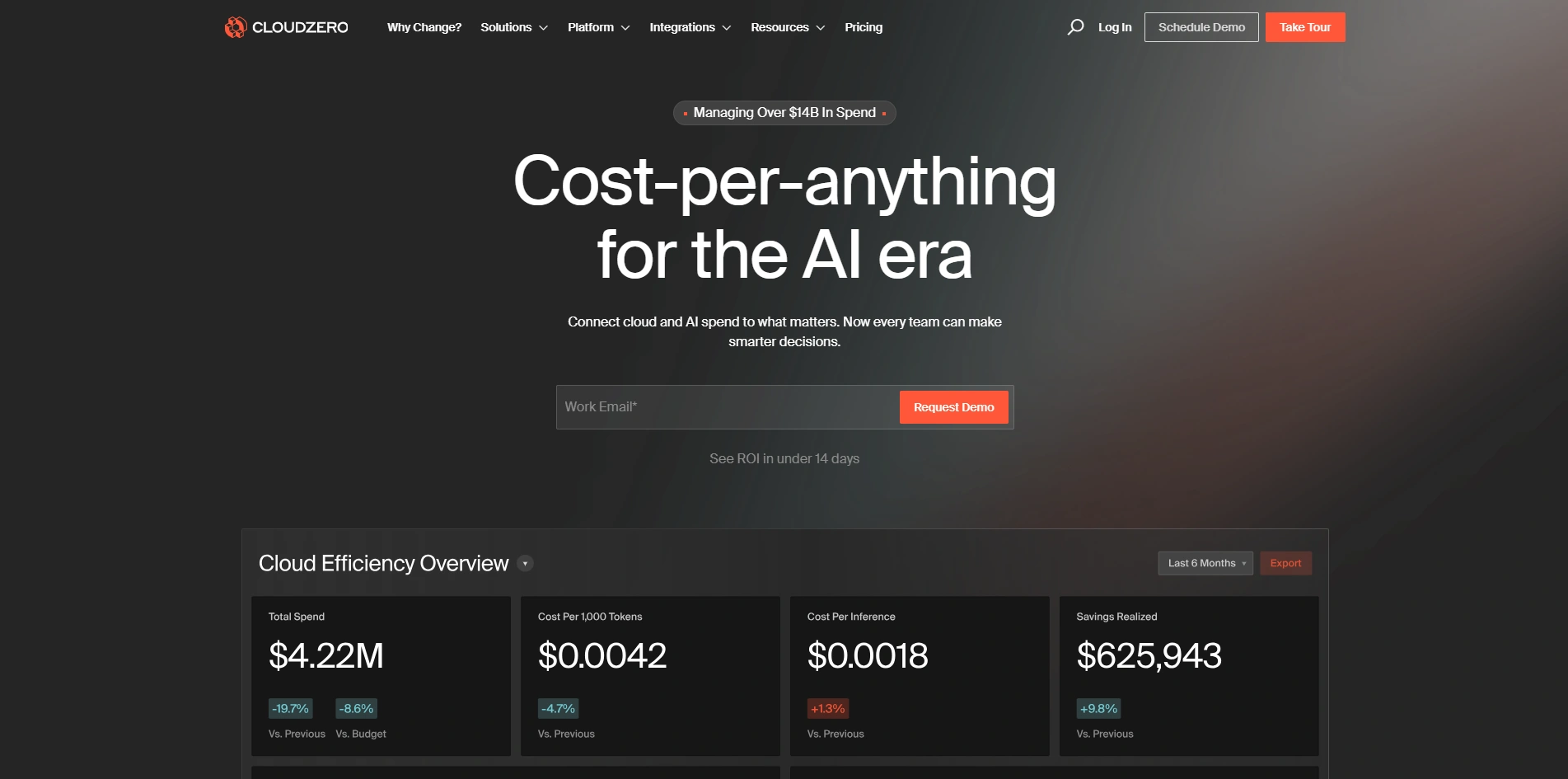
CloudZero is a cloud cost intelligence tool that assists businesses in comprehending and managing their cloud expenditures at a detailed level. It focuses on unit economics, enabling teams to track costs per customer, feature, or product.
With its detailed cost insights and analytics, CloudZero allows businesses to align cloud spending with revenue and business outcomes. This makes it especially valuable for SaaS companies looking to improve profitability and operational efficiency.
Top Features:
- Cost visibility by product, feature, or customer
- Unit cost analysis and insights
- Real-time cost monitoring
- Advanced reporting and dashboards
- Multi-cloud support
Pros:
- Excellent for unit economics tracking
- Strong insights for SaaS businesses
- Real-time cost analysis
Cons:
- Can be complex for beginners
- Focused more on analytics than automation
- May require data setup effort
Pricing:
- Available on request
14. nOps
Website:https://www.nops.io/
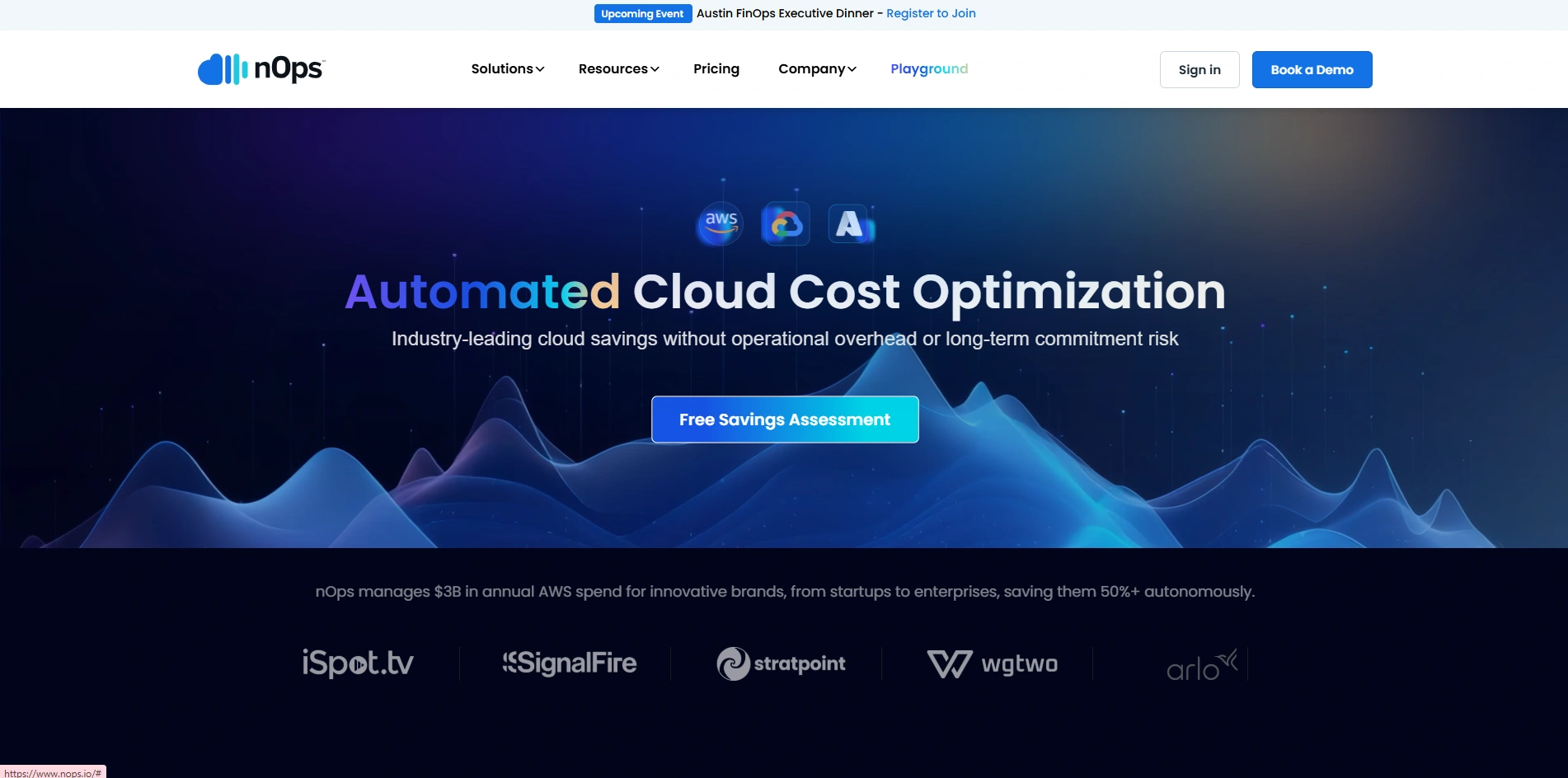
nOps is a cloud cost optimization platform focused primarily on AWS environments. It helps organizations reduce cloud expenses by providing actionable insights, automation, and compliance tools tailored for AWS users, making it one of the reliable Cloud Cost Management Tools.
The platform offers continuous monitoring, cost anomaly detection, and automated savings recommendations. With its user-friendly interface and strong AWS integration, nOps is a great choice for teams looking to optimize their AWS spending efficiently.
Top Features:
- AWS-specific cost optimization
- Cost anomaly detection
- Automated savings recommendations
- Real-time monitoring and alerts
- Compliance and governance tools
Pros:
- Deep AWS cost optimization capabilities
- Automated savings recommendations
- Easy to use for AWS users
Cons:
- Limited to AWS ecosystem
- Not suitable for multi-cloud environments
- Fewer advanced enterprise features
Pricing:
- Available on request
15. Kubex
Website:https://kubex.ai/
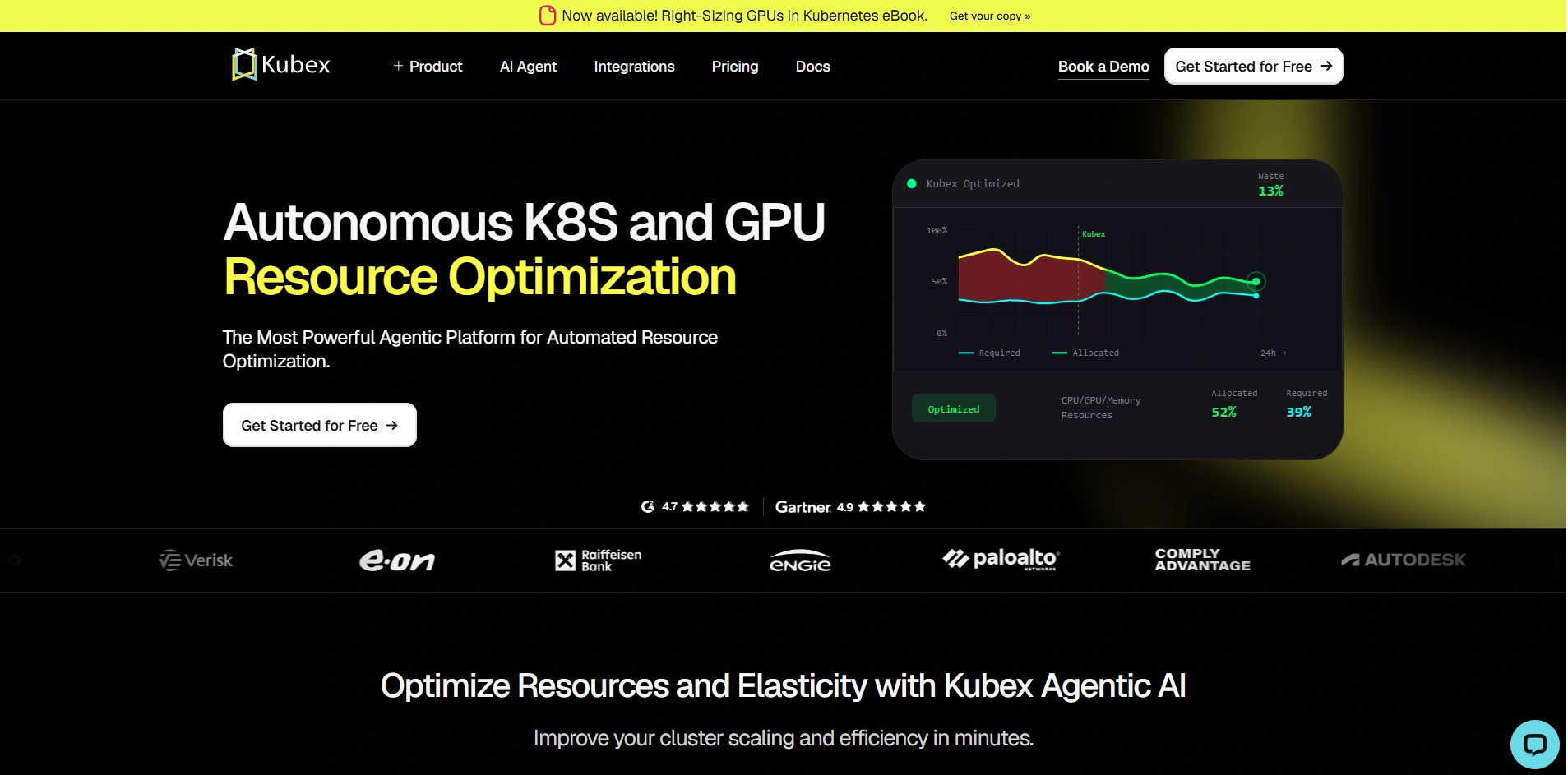
Kubex is a modern Kubernetes cost optimization platform designed to help organizations monitor, control, and reduce their container infrastructure costs. It provides deep visibility into Kubernetes resource usage, enabling teams to understand exactly how their workloads consume compute, memory, and storage.
As part of Cloud Cost Management Tools, the platform focuses on simplifying cost management for Kubernetes environments by offering actionable insights and optimization recommendations. With its intuitive dashboards and real-time monitoring, Kubex helps DevOps teams eliminate waste, improve efficiency, and ensure cost-effective scaling of containerized applications.
Top Features:
- AI-driven resource optimization
- Cloud and container support
- Workload performance analysis
- Rightsizing recommendations
- Integration with major cloud providers
Pros:
- Simple and focused Kubernetes cost management
- Easy-to-understand dashboards
- Helps reduce container cost waste
Cons:
- Limited to Kubernetes environments
- Not a full cloud cost management solution
- Fewer advanced enterprise features
Pricing:
- Talk With Us
Comparison Table
| Tool Name | Primary Focus | Cloud Support | Key Strength | Best For |
| AWS Cost Explorer | Cost visualization | AWS | Native integration | AWS users |
| Azure Cost Management | Cost tracking | Azure + Multi-cloud | Built-in analytics | Azure users |
| Google Cloud Billing | Billing insights | GCP | Real-time tracking | GCP users |
| CloudHealth by VMware | Multi-cloud management | AWS, Azure, GCP | Governance & reporting | Enterprises |
| CloudCheckr | Cost + security | Multi-cloud | Compliance + cost control | MSPs & enterprises |
| Apptio Cloudability | FinOps | Multi-cloud | Cost allocation | Large orgs |
| IBM Turbonomic | Resource optimization | Multi-cloud | AI automation | Performance-focused teams |
| Flexera One | IT + cloud management | Multi-cloud | Unified visibility | Hybrid environments |
| Kubecost | Kubernetes cost tracking | Multi-cloud | Container insights | K8s users |
| Harness CCM | Continuous optimization | Multi-cloud | CI/CD integration | DevOps teams |
| Finout | Cost observability | Multi-cloud | No-tag allocation | Data-driven teams |
| Zesty | Automation | Multi-cloud | Auto optimization | Hands-off teams |
| CloudZero | Cost intelligence | Multi-cloud | Unit economics | SaaS companies |
| nOps | AWS optimization | AWS | Deep AWS focus | AWS-heavy orgs |
| Kubex | Kubernetes optimization | Multi-cloud | Simple K8s insights | Container teams |
Conclusion
In conclusion, Cloud cost management is not a complex task when the right tools exist. As more businesses are fully dependent on cloud services, it is critical to monitor this expenditure and maximize the usage so as to avoid unnecessary costs. The instruments mentioned in this paper can be used to make you more visible, spend money wiser, and make smarter choices.
You can be a small startup or a big enterprise and the most appropriate Cloud Cost Management Tools will be selected based on what you need, the type of cloud environment, and the level of automation that you will need. With the help of one of these tools, you are able to save money as well as enhance the efficiency and general performance of your cloud infrastructure.
FAQs
1. Why Do Businesses Need Cloud Cost Management Platforms?
Businesses need these tools to avoid overspending, improve cost visibility, and ensure that cloud resources are used efficiently. They also help in budgeting and financial planning.
2. Can These Tools Work With Multiple Cloud Providers?
Yes, many cloud cost management Platforms support multiple cloud platforms like AWS, Azure, and Google Cloud, allowing you to manage all your costs in one place.
3. Do Cloud Cost Management Tools Help In Saving Money?
Yes, they help identify unused or underutilized resources, recommend cost-saving actions, and provide automation features that reduce unnecessary expenses.
4. Are These Tools Suitable For Small Businesses?
Yes, many tools offer scalable solutions that are suitable for startups and small businesses, helping them manage costs even with limited resources.
5. How Do I Choose The Right Cloud Cost Management Tool?
You should consider factors like your cloud provider, budget, required features (like automation or reporting), and ease of use before selecting a tool that fits your needs.