
Since the fast-growing digital environment of 2026, supply chain security has become one of the paramount issues of organizations globally. The attack surface has kept on growing exponentially as modern applications make more use of third-party components, open-source libraries, and complicated dependencies. As recent high-profile events, such as the SolarWinds attack, the Log4Shell vulnerability, and an alarming number of npm package attacks have shown, the results of compromised dependencies on a given ecosystem can be disastrous.
This includes a vast network of possible vulnerabilities since the current software development lifecycle includes the integration of hundreds or even thousands of third-party components. The vulnerability in any one dependency can cause a domino effect across the rest of an entire supply chain, rippling through hundreds, possibly thousands, of downstream applications and organizations. This interconnectedness, which has also made development and innovation happen fast, has resulted in previously unseen security issues that the traditional security models based on perimeter access control are not designed to handle adequately.
Organizations require specialized supply chain security tools in this landscape, which should help them gain visibility, control, and automated protection of risks they face during the development and deployment process, thus helping them assess and stop the risk. Development teams can use these tools as a means of first-line defense against more advanced supply chain attacks and can do so without compromising either velocity or innovation.
Understanding Supply Chain Security
Supply chain security refers to the set of practices, processes, and technologies involved in protecting the integrity of the software components, beginning with the development and distribution of the software components and concluding with deploying and sustaining software. The software supply chain can consist of all of the components of the final software product: source code, dependencies, build tools, deployment infrastructure, and individuals and procedures that maintain the software supply chain.
Supply chain security goes well beyond what is considered traditional application security. It is about more than protecting the code your organization develops but also securing the enormous third-party library, containers, infrastructure elements, and development tools that modern applications require. This will involve managing risks that expose open-source elements that can include the vulnerability that is already known, ensuring the integrity of software packages, and visibility of the intricate web of transitive dependencies.
Common Attack Vectors
Dependency Hijacking and Typosquatting: Malicious packages with names resembling popular libraries are produced by the attackers so that they could be accidentally deployed by the developers. They can also interfere with legit packages by either gaining maintainer access or exploiting vulnerabilities within the limits of package repositories.
Malware Injection: The software components are infected with malicious code in one of two ways: either by exploiting the original source or during the build or distribution process. This can occur at any aspect of the software lifecycle and can go unnoticed over a lengthy duration of time.
CI/CD Pipeline Breaches: Continuous integration and deployment systems are targeted by attackers in an attempt to insert malicious code into the build process. Such attacks are especially threatening due to the possibility of affecting all software developed by the compromised pipeline and potentially may fly under the radar/bypass deployment-time security scanning.
Zero-Day Exploits in Dependencies: There is a high risk of vulnerabilities in third-party components not known by security researchers or vendors since no patches or signatures exist to detect them.
Types of Supply Chain Security Tools
| Tool Category | Description |
| Dependency and Vulnerability Scanners | Automatically detect vulnerabilities in direct and transitive dependencies. Scan codebases, builds, and running apps, providing severity details, patches, and remediation steps. |
| Software Composition Analysis (SCA) Tools | Examine open-source and third-party components for vulnerabilities, license compliance, and risks like outdated or poorly maintained software. Provide component inventories and compliance insights. |
| Container Security Tools | Scan container images and runtimes for vulnerabilities, misconfigurations, and malware. Integrate with registries and orchestration platforms for continuous monitoring. |
| CI/CD Pipeline Security Solutions | Protect build pipelines by detecting unauthorized changes, checking code integrity, and preventing malicious code injection. Include artifact signing and pipeline configuration scanning. |
| SBOM Generation and Management Tools | Create and maintain Software Bills of Materials in standard formats. Integrate with development pipelines to keep SBOMs updated for compliance. |
| License Compliance Tools | Identify and manage open-source license requirements, detect conflicts, and enforce approved license policies. |
Explore More: Top Custom AI Software Development Companies
Key Features to Look for in Security Tools
Real-time Vulnerability Scanning
Monitor continuously and automatically to identify new vulnerabilities published and calculate their effect, and propagate the entire development.
Dependency and Open-Source License Management
Analyze dependency, advise update, measure impact, and automate license scanning, conflict resolution enablement, and policy enforcement in compliance.
Threat Intelligence Integration
Use threat feeds to provide context on exploits, attacker tactics, and risk prioritization to mitigate the most crucial vulnerabilities first.
CI/CD Pipeline Monitoring
It can be integrated with CI/CD platforms to scan the artifacts, enforce the security policies, prevent insecure builds, and provide direct feedback to developers.
Automated SBOM Generation
Auto-generation and storage of SBOMs in common formats, with build processes, and support safe downstream delivery.
Policy Enforcement and Compliance Reporting
Security policies should be defined and implemented, some thresholds should be set, and detailed compliance reports should be offered to the interested parties and individual audits.
Top 10 Supply Chain Security Tools in 2026
1. Snyk
Snyk is a developer-focused open-source security platform that enables open-source dependency scanning, container security, and infrastructure-as-code (IaC) security analysis. It flawlessly integrates with GitHub, GitLab, Bitbucket, and CI/CD pipelines, allowing the real-time detection of vulnerabilities in the development process. Snyk provides automatic repair, license compliance verification, and a dashboard that is easy to follow. It is easy to embed in workflows, as it has a CLI and a robust API. Snyk works best with agile teams to keep up the pace and avoid security shocks by enabling dependencies to remain secure and compliant throughout the development lifecycle.
Website:
https://snyk.io
Key Features:
Multi-language support, IDE integrations, automated pull requests for fixes, container and infrastructure scanning, and a comprehensive vulnerability database.
Ideal Use Cases:
Organizations looking for developer-friendly security tools with strong CI/CD integration and comprehensive language support.
Pricing:
Free tier available; paid plans start around $25 per developer per month.
2. Sonatype Nexus Lifecycle
Sonatype Nexus Lifecycle provides industry-leading software composition analysis (SCA) to track open-source in the development pipeline. It keeps checking dependencies and looks alert for vulnerabilities, license risks, and old versions. The platform has a closed policy enforcement that ensures that the developers choose secure and compliant components. Security with popular IDEs, repositories, and CI/CD tools ensures security throughout the coding process to production. It has a wide open-source intelligence database that makes it easy to detect vulnerabilities, thus enabling organizations to mitigate risks and retain compliance, as well as faster delivery of secure software.
Website:
https://www.sonatype.com/products/nexus-lifecycle
Key Features:
Advanced policy engine, component intelligence database, license compliance, integration with Nexus Repository, automated policy enforcement.
Ideal Use Cases:
Large enterprises requiring comprehensive governance and policy enforcement across their software supply chain.
Pricing:
Enterprise-focused pricing; contact for quotes based on applications and developers.
3. GitGuardian
GitGuardian was founded to find secrets, internet API keys, and sensitive data leaks in source code repositories, continuous integration/continuous delivery pipelines, and development environments. It searches the codebases of organizations in real time, both in open source and closed code, notifying teams immediately after exposure. It has an integration with GitHub, GitLab, and Bitbucket and works with Slack when conducting remediation workflows. There are also infrastructure-as-code (IaC) scanning and developer training modules provided by GitGuardian to reinforce the security culture.
Website:
https://www.gitguardian.com
Key Features:
Real-time secrets scanning, historical repository analysis, automated remediation workflows, team collaboration features, comprehensive secrets database.
Ideal Use Cases:
Organizations with significant exposure to secrets leakage risks and those requiring automated secrets management.
Pricing:
Free tier for public repositories; business plans start around $18 per developer per month.
4. JFrog Xray
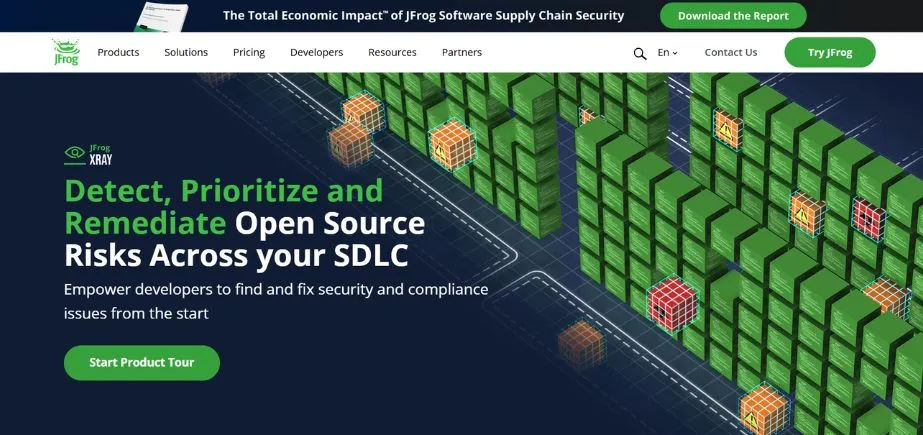
JFrog Xray is a security and compliance scanning solution that can connect to JFrog Artifactory for an end-to-end analysis of all artifacts. It scans binaries, containers, and dependency issues for vulnerabilities and license compliance. It finds risks within transitive dependencies and deeply recursively scans. JFrog Xray allows real-time alerts, policy-based actions, and CI/CD pipeline integration so that security can be integrated all the way along the software delivery life cycle. Precisely, it is of high value to DevOps teams with projects using huge artifact repositories and families of dependencies.
Website:
Key Features:
Universal package support, recursive scanning, impact analysis, integration with JFrog ecosystem, advanced search capabilities.
Ideal Use Cases:
Organizations using JFrog Artifactory or those requiring universal package format support.
Pricing:
Part of JFrog platform subscriptions; pricing varies based on storage and feature requirements.
Read More: Top Software Companies in Vadodara
5. Aqua Trivy
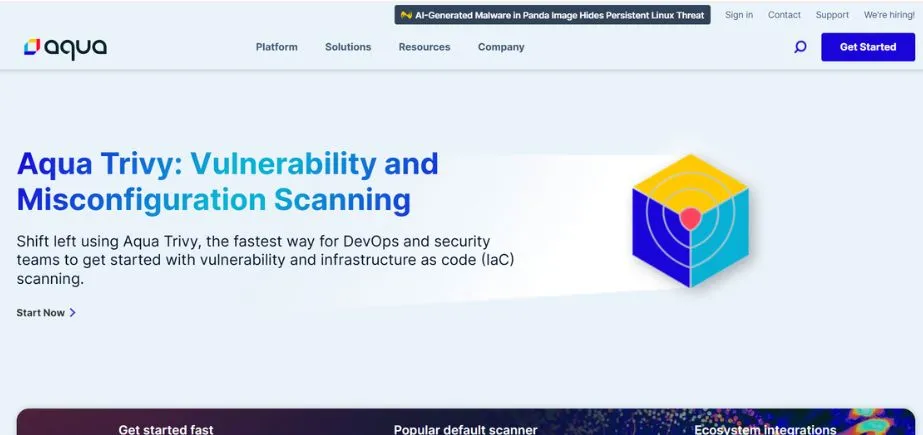
Aqua Trivy is a free vulnerability scanner applied to containers, Kubernetes, and IaC files. It has the ability to detect CVEs, misconfigurations, and secrets that are exposed in several environments. Trivy can use Docker, Kubernetes clusters, and CI/CD pipelines, which enables it to be versatile in cloud-native security. Its speed is quick and its weight is low, which makes it good to be used by developers who want to facilitate the incorporation of its use in work processes. With strong support from Aqua Security, Trivy offers both free and enterprise versions, meaning that organizations of all sizes can protect their software supply chain.
Website:
https://www.aquasec.com/products/trivy
Key Features:
Fast scanning performance, multiple vulnerability databases, broad format support, easy integration, active open-source community.
Ideal Use Cases:
Organizations seeking cost-effective scanning solutions or those with significant container security requirements.
Pricing:
Open-source version free; Aqua commercial platform pricing available on request.
6. Veracode Software Composition Analysis
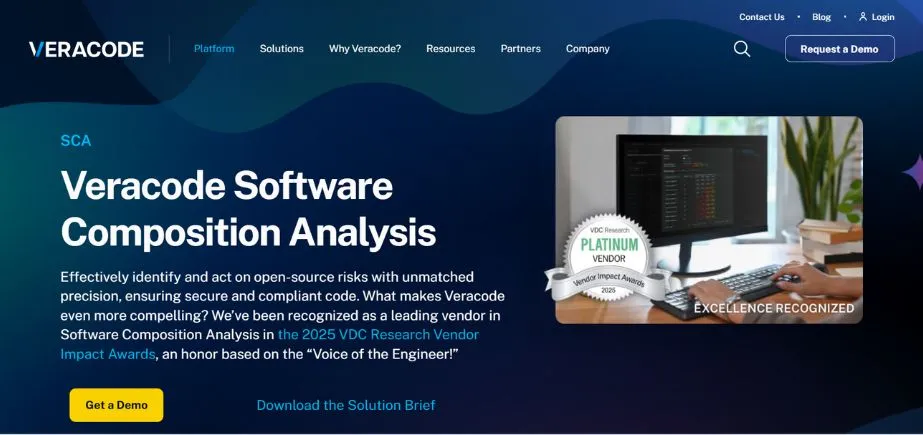
Veracode SCA is aimed at detecting vulnerabilities and license risk in the open source components. It seamlessly integrates with widely used IDEs, CI/CD, and repositories to provide real-time security information without hindering development. The platform provides policy, policy management, strong compliance reporting, and automated remediation instructions. The presence of a large database of vulnerabilities in Veracode will enable it to detect the known risks well. It is cloud-delivered, which makes it scalable to the needs of the enterprises, and its robust governance capabilities enable an organization to ensure continuous compliance with industry and regulations.
Website:
Key Features:
Comprehensive vulnerability database, license compliance, policy management, integration with Veracode platform, extensive reporting capabilities.
Ideal Use Cases:
Organizations already using Veracode for application security or those requiring comprehensive enterprise SCA capabilities.
Pricing:
Part of Veracode platform subscriptions; pricing based on applications and scanning frequency.
7. FOSSA
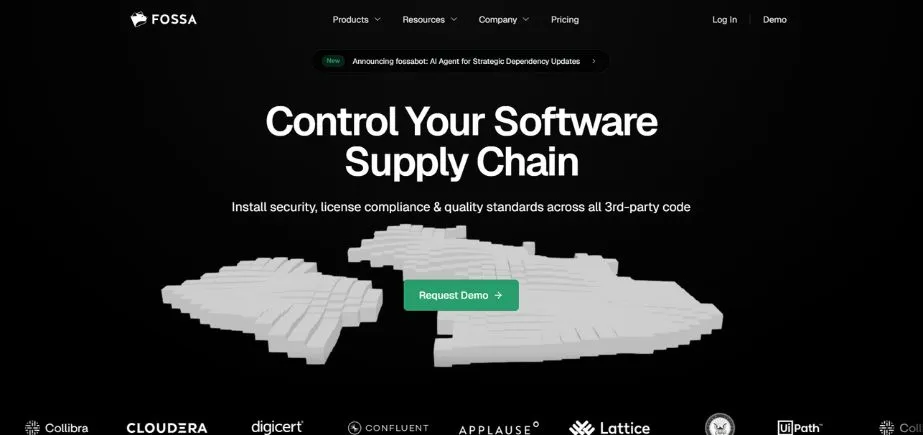
FOSSA automates software supply-chain open-source license compliance and vulnerability management. It scans codebases, dependencies, and containers and gives detailed reports on license obligations and risks of security. FOSSA can be integrated with GitHub, GitLab, Bitbucket, and your favorite CI/CD tools to provide continuous watch over this process, as your code travels from the development stage to the deployment stage. The policy enforcement in real time avoids the entry of unapproved or risky elements into production. FOSSA’s detailed SBOM generation supports transparency and compliance.
Website:
https://fossa.com
Key Features:
Comprehensive license database, automated compliance workflows, detailed dependency analysis, audit trail capabilities, policy customization.
Ideal Use Cases:
Organizations with complex license compliance requirements or those in highly regulated industries.
Pricing:
Starts around $150 per developer per month; enterprise pricing available.
8. Anchore Enterprise
The Anchore Enterprise product is a security and compliance system, container-based, that scans images by looking at vulnerabilities, misconfigurations, and policy violations. It can interface with Docker registries, Kubernetes, and CI/CD pipelines to automatically scan during the build process. Anchore offers in-depth compliance verifications of norms such as NIST and PCI DSS. It is based on its policy-as-code framework, which enables bespoke rules to be created that can be used to enforce security needs. Ideally suited to organizations that operate containerized workloads, Anchore assists organizations to ensure secure and compliant deployments on multi-cloud and on-premises.
Website:
Key Features:
Deep container image analysis, policy-based compliance, runtime monitoring, comprehensive vulnerability database, Kubernetes integration.
Ideal Use Cases:
Organizations with container-heavy architectures or those requiring comprehensive container security.
Pricing:
Enterprise-focused pricing; contact for custom quotes based on requirements.
9. Checkmarx SCA
Checkmarx SCA recommends security vulnerabilities, obsolete components, and license problems of open-source software. It can be part of the wider application security platform of Checkmarx that enables the combined management of SAST, SCA, and IaC scanning. The tool provides real-time notification, mitigation suggestions, and policy enforcement to have a secure codebase. It facilitates security checks by being included in the development routines done with IDEs and CI/CD integrations. Checkmarx SCA fits perfectly into those enterprises that want to consolidate a security policy throughout their entire application lifecycle.
Website:
https://fossa.com
Key Features:
Multi-language support, license compliance, policy management, integration with Checkmarx platform, comprehensive reporting.
Ideal Use Cases:
Organizations using Checkmarx for application security or those requiring integrated SAST/SCA solutions.
Pricing:
Part of the Checkmarx platform subscriptions; pricing based on lines of code and features.
10. Mend.io (formerly WhiteSource)
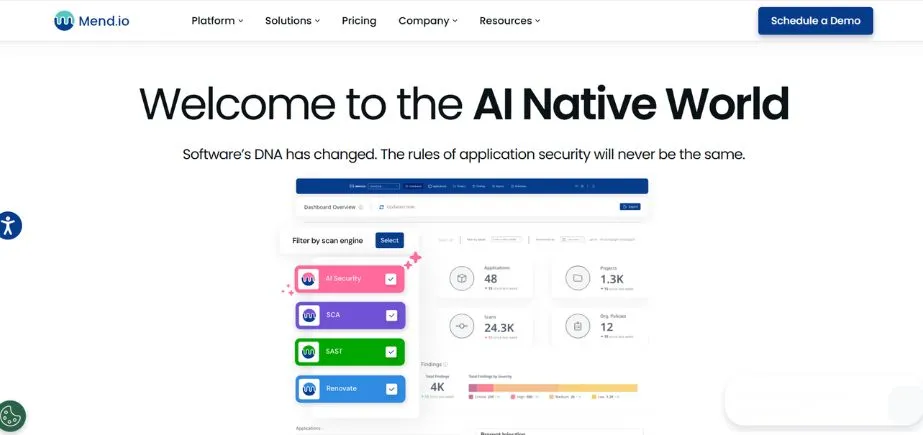
Mend.io is an automated open-source security and license compliance management tool. It scans codebases, dependency trees, and containers and provides prioritized remediation advice. Mend.io has joined more than 200 development tools, such as IDEs, repositories, and CI/CD, which guarantees their smooth adoption. It has powerful reporting tools in order to generate SBOMs and monitor their compliance. Mend.io supports real-time policy enforcement to ensure vulnerable or non-compliant components (according to the policy) cannot be put into production, aiding an organization to significantly de-risk the process of putting software into production without sacrificing the speed of development.
Website:
Key Features:
Real-time alerts, automated remediation, comprehensive license management, extensive integrations, developer-friendly interface.
Ideal Use Cases:
Organizations seeking highly automated SCA solutions with strong developer workflow integration.
Pricing:
Starts around $19 per developer per month; enterprise plans available with custom pricing.
Common Mistakes to Avoid
Relying solely on manual scans: Manual, periodical scans are too slow to keep up with the dynamics of such dependencies as well as the pace at which new vulnerabilities are being discovered. Use automated, continuous scanning integrated into development workflows.
Ignoring transitive dependencies: Overlooking dependencies-of-dependencies leaves major blind spots. Use dependency tree analysis software that will reveal and correct hidden vulnerabilities.
Lack of SBOM maintenance: Generating an SBOM once isn’t enough. Automate it so as to stay current as far as the present software composition is concerned and avoid using outdated and misinforming records.
Inadequate integration with workflows: Tools involved in security development ought to incorporate their development cycles and present timeline observations on the context, devoid of time wastage in the delivery.
Focusing only on high-severity issues: Medium- and low-severity vulnerabilities can still be risky. Address all severity levels for comprehensive security.
Conclusion
The issue of software supply chain security has shifted its focus from being niche to being vital to the business and may spell a make-or-break situation for an organization in the current threat environment. The tools and practices that have been discussed in this guide constitute, as of now, the state of the art in preventing supply chain attacks, yet the field keeps rapidly changing both in terms of the attack methods and the tools used to defend against them.
There are many dimensions to the benefits of deploying overall supply chain security tools beyond mere vulnerability management. Such tools grant organizations insight into their software composition like never before, allow organizations to be more proactive in managing risk, help them keep on top of the changing regulatory environment, and ultimately facilitate software development with speed and security.
Those organizations that are more concerned with security prevention as part of their development cycle will be much better situated to innovate with the assurance that they are equally handling the risks of contemporary software development. Of course, the investment made in proper tooling and processes not only returns in the form of a lowered security risk but also in development efficiency, a stronger compliance position, and trust with customers and other stakeholders.
The security of software supply chains can only grow in importance as we go deeper in 2026 and beyond. Companies that are organizing themselves to comprehensively provide supply chain security programs will realize a big advantage over those who delay. The technologies and processes are available today to give your security posture a major boost–the question is not can you afford to do it, but can you afford not to.
The days of perimeter security or response focused after the breach are over because tomorrow will be about making security go into the very core of the way we develop, distribute, and use software. This method rests on the security tools of the supply chain so organizations can have the velocity and advancement expected of modern business and the protection and stability users and regulators anticipate.
FAQs
1. What are the security tools of the software supply chain?
Solutions to prevent vulnerabilities, misconfigurations, and license risks of dependencies, containers, and CI/CD pipelines, protecting the software development life cycle.
2. Why are these tools used?
They mitigate the risk of supply chain attacks, decrease the security-related risks of third-party components, and meet the industrial and government regulations.
3. Is this just a scan of open-source dependencies?
No. Most of them also protect proprietary code, containers, infrastructure-as-code, and build pipelines in order to protect the whole software ecosystem.
4. What are the places where such tools fit in the development processes?
They communicate with IDEs, code repositories, CI/CD pipelines, and artifact registries, allowing them to scan automatically as well as provide legitimate feedback in the form of real-time security indicators.
5. Is software supply chain security software appropriate to be used on small teams?
Yes. Most of the tools are scalable in pricing, have open-source versions, or are cloud-based, which allows startups and enterprises to access them.
Continue Exploring: Best Software Companies in Vijayawada