In the modern digital environment, companies cannot afford to operate without the efficient functioning of their IT systems. Downtime of servers or slow networks costs companies money and leaves customers frustrated. This is where the superior infrastructure monitoring tools are involved. These tools assist IT teams in monitoring their whole technology infrastructure, discovering issues ahead of time before they develop into huge issues, and keeping all things operating well.
The following paper will discuss the 10 most popular infrastructure monitoring tools in the year 2026. We explain what they do, how they work, and which one can suit your business. At the end, you will know all you need to know about selecting the appropriate monitoring solution for your needs.
What to Look for in the Best Infrastructure Monitoring Tools
The key items to consider would include:
1. Simple Interface: The tool must be easy to use and navigate on a day-to-day basis
2. Live Tracking Features: It must display what is going on this very moment, not last night.
3. Quick alerts Alert and Notification: System alerts make you fix issues before they become bigger.
4. Scalability to Business Development: The tool must expand with your business and manage its expansion.
5. Good Customer Support Service: Assistance Service teams are very helpful in cases of problems.
Key Features to Look for in the Best Infrastructure Monitoring Tools
There are specific features that are required when considering the incorporation of the most effective tools of infrastructure monitoring. The following features will predetermine the success of the tool in your business:
1. Detailed Dashboard and Reporting: Detailed visuals view the health of your system at a glance.
2. Automated Problem Detection Systems: Time-saving alerts help you save time and identify problems that you could have overlooked.
3. Cloud and On-Premise Support: Current tools are required to observe cloud and physical infrastructure.
4. Integration with Other Tools: Workflows are made very smooth and efficient by being connected to existing software.
5. Historical Data and Analytics: Past data assists in projecting future issues and strategizing on how to do so better.
Read More: Best Software Companies in Vadodara
Top 10 Best Infrastructure Monitoring Tools in 2026
1. Datadog
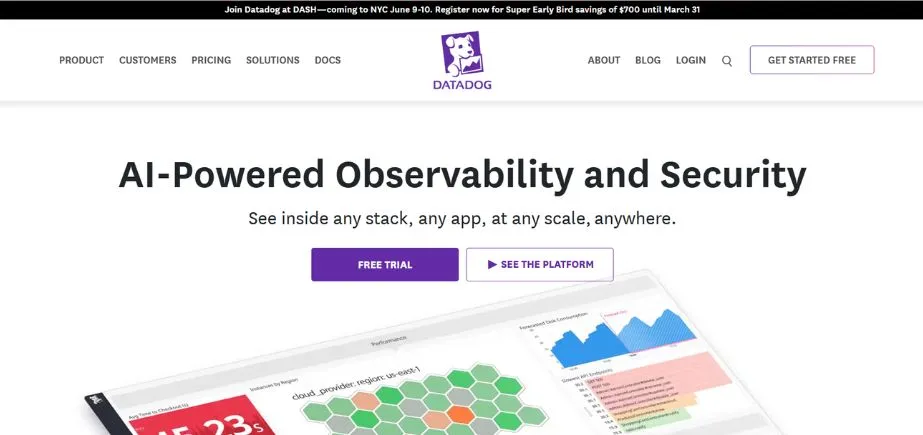
Among the most trendy infrastructure monitoring software tools today is Datadog. It offers a full view of your entire IT environment,, including servers and databases as well as applications and networks. Datadog can be used by businesses of all sizes and has a cloud platform, which is simple to install. The tool gathers information from hundreds of various sources, and it is all displayed in gorgeous and easy-to-digest dashboards.
Key Features
- Infrastructure real-time performance monitoring.
- More than 650 integrations-on-demand.
- Ridiculously modern analytics and visualization.
Pros
- Very easy to use
- Good customer service is in place.
- Effective reporting and dashboards.
Cons
- Can be expensive
- There is a complex pricing structure.
- Entry-level learning curve.
Best For: Enterprises
Pricing: Starts at $15/host/month
Website: https://www.datadoghq.com
2. Nagios
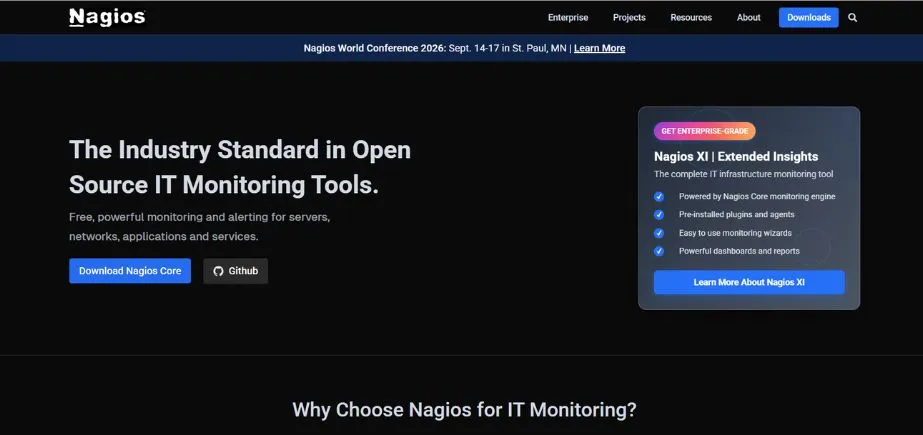
Among the most reputable IT infrastructure monitoring tools is Nagios, which is one of the oldest. It is more than 20 years old, and system administrators all over the world love it. Nagios is open-source, and this implies that it is free to use and it can be configured to suit your very specific requirements. It is very reliable in monitoring servers, networks, applications, and services. Nagios might seem outdated in comparison with newer products; nevertheless, it is powerful and efficient.
Key Features
- Free and very free and customizable.
- Supervises networks and servers.
- Community support is large in nature.
Pros
- Free to use
- Very powerful and flexible
- Good neighborhood and applications.
Cons
- Interface is old-fashioned now.
- Technical knowledge is required to be installed.
- Configuration may be complicated.
Best For: Developers
Pricing: Free (Enterprise version available)
Website: https://www.nagios.org
3. Zabbix
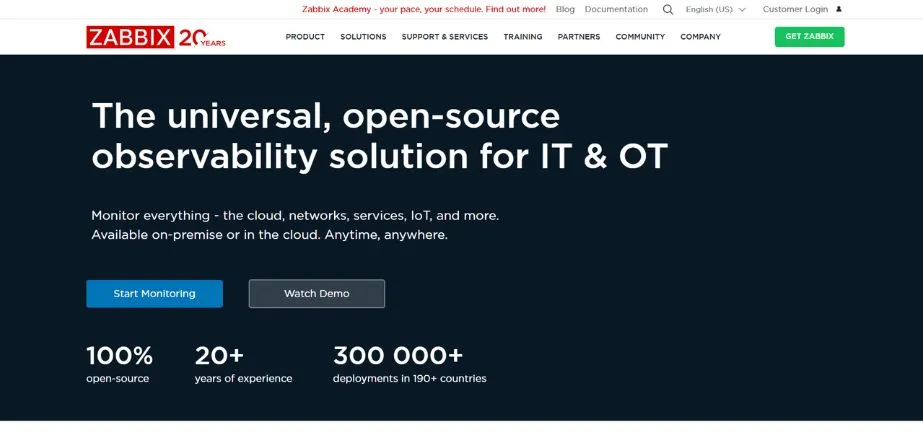
Other best tools of monitoring infrastructure are Zabbix, which is another and also excellent open-source tool. It provides monitoring capabilities at an enterprise level at a price of an enterprise price. Zabbix has the capacity to watch thousands of devices and gather data from servers, networks, virtual machines, and cloud services. The tool is also reputed to be highly adaptable and customizable. Zabbix can be configured to keep track of nearly anything in your IT infrastructure.
Key Features
- At the enterprise level, it had monitoring capabilities.
- Provides support to thousands of devices.
- Elaborated visualization and reporting.
Pros
- Free and open-source
- Solution provided that is highly scalable.
- There are excellent documents online.
Cons
- It needs technical skills to set up.
- The interface could be better.
- Lack of out-of-the-box integrations.
Best For: Enterprises
Pricing: Free (Commercial support available)
Website: https://www.zabbix.com
4. Prometheus
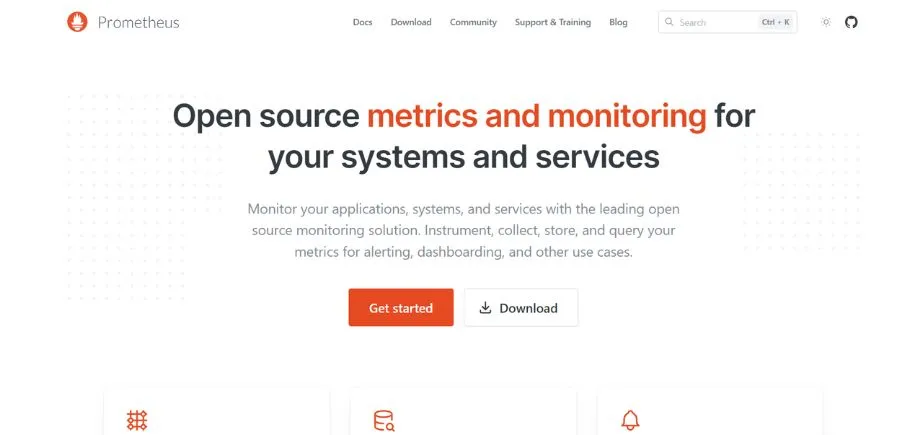
Prometheus is a current-day infrastructure monitoring tool that has gained immense popularity and in particular, cloud-native applications. SoundCloud initially constructed it, which has since been used by numerous technological firms across the globe. The Prometheus is good at keeping watch on volatile cloud environments that change server configurations every few seconds. It has a high-powered query language that allows you to pose specific queries about the performance of your system. Prometheus is particularly compatible with Kubernetes and applications on containers.
Key Features
- Metrics time-series database.
- Intense query language provided.
- The cloud environment is friendly.
Pros
- Open source Kubernetes monitoring.
- Free and open-source
- Community and active development.
Cons
- Needs technical skills for installation.
- None of the built-in dashboards.
- Storage can be challenging
Best For: Containers
Pricing: Free
Website: https://prometheus.io
5. SolarWinds Network Performance Monitor
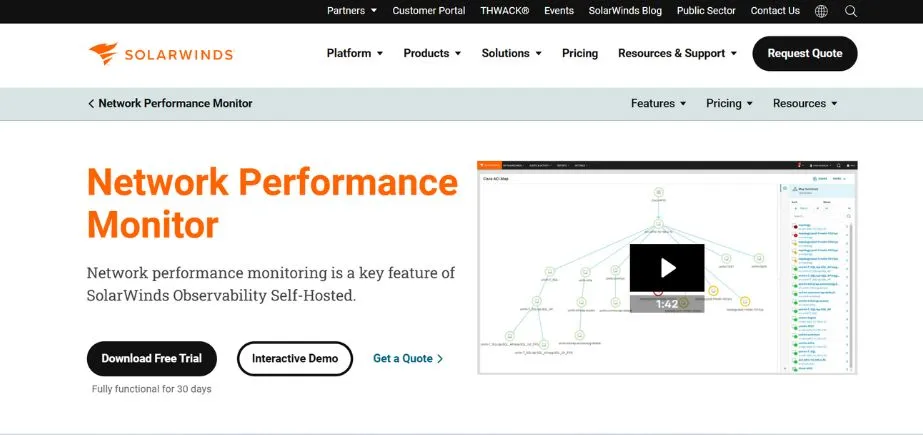
SolarWinds is a company that has been offering IT infrastructure monitoring tools for decades and is widely respected in the industry. Their Network Performance Monitor is explicitly made to provide you with full visibility of your network infrastructure. It will automatically find all the devices in your network, and then it begins to monitor those devices automatically. SolarWinds has been rated as easy to use and powerful, such that it allows you to troubleshoot issues in a quick manner. The tool gives network maps in detail, performance charts, and informs one on what goes wrong.
Key Features
- Automatic discovery of network works.
- Smart network mapping was provided.
- Available deep packet inspection.
Pros
- A highly user-friendly interface is offered.
- Superb network visualization applications.
- Powerful technical support department.
Cons
- Only works on Windows
- It can be quite expensive
- On systems Intensive in resources.
Best For: Networks
Pricing: Starts at $2,995
Website: https://www.solawinds.com
6. PRTG Network Monitor
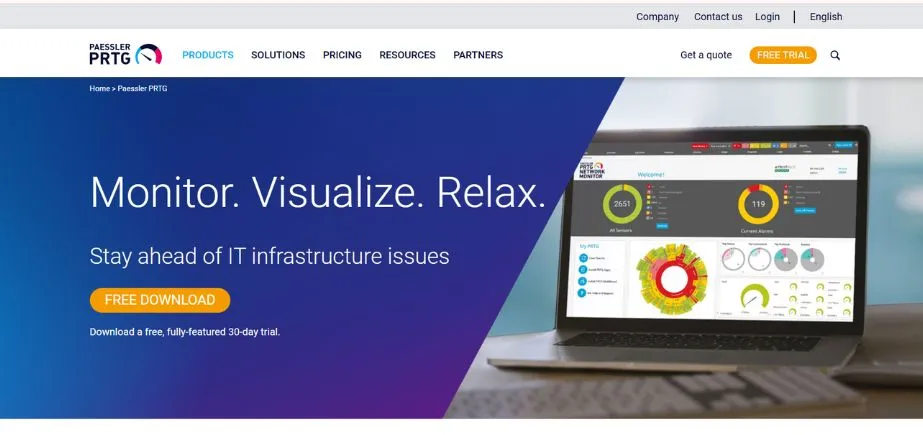
Paessler PRTG Network Monitor is one of the most universal software solutions for infrastructure monitoring. It has an exclusive sensor-based monitoring system in which each sensor will be tracking one of your infrastructures. PRTG has the capacity to track bandwidth and servers to applications and databases. Small to medium-sized businesses are the biggest users of the tool, especially due to its ease of installation and operation. PRTG has a free version that has 100 sensors, which is sufficient in the case of most small businesses.
Key Features
- The monitoring system is issensor-basedd.
- Over 250 sensor types
- Simple installation and configuration.
Pros
- Free for 100 sensors
- Very easy to use
- Intrusion prevention software.
Cons
- Only the window installation was necessary.
- It can get expensive quickly
- Limited mobile app features
Best For: SMBs
Pricing: Free for 100 sensors, paid from $1,750
Website: https://www.paessler.com
Know More: Best Software Companies in Vijayawada
7. New Relic
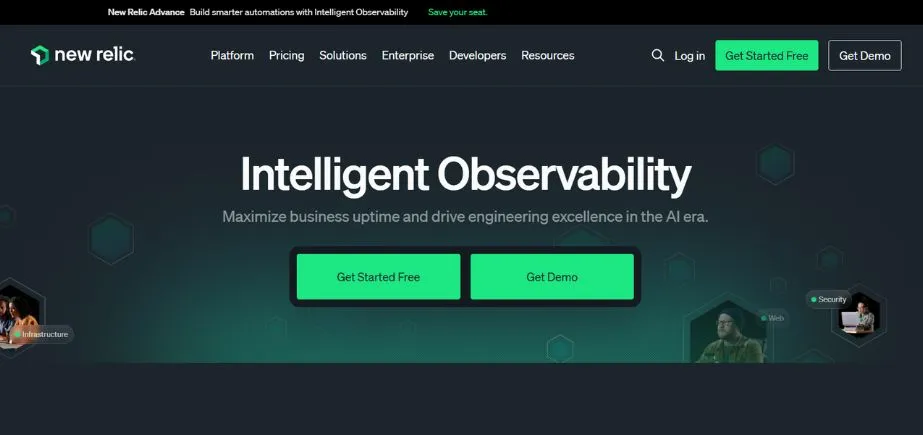
New Relic is a robust cloud-based solution, and it is one of the most superior infrastructure monitoring tools in application and infrastructure monitoring. It will offer profound details about your application’s performance and its support by your infrastructure. Application performance monitoring is another area in which New Relic does well, although it is also competent in infrastructure monitoring. The tool gathers huge volumes of data and enables you to identify issues and interpret trends with the assistance of artificial intelligence.
Key Features
- A full-stack observability platform was included.
- The daily insights provided by AI.
- Application and infrastructure monitoring.
Pros
- Very good user interface design.
- Competent analytics capabilities were featured.
- Great for DevOps teams
Cons
- Pricing can be confusing
- Can be expensive
- Crushing small businesses.
Best For: Applications
Pricing: Free tier available, paid from $99/month
Website: https://newrelic.com
8. Dynatrace
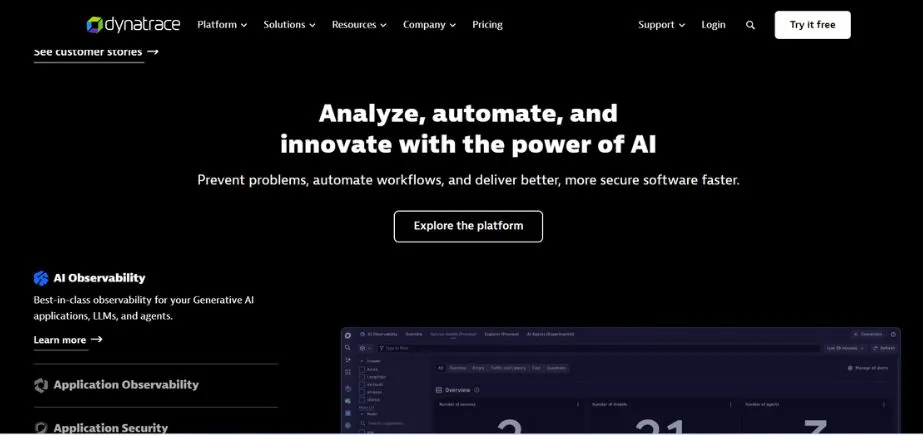
Dynatrace is a high-performance system infrastructure monitoring tool based on artificial intelligence to observe and streamline the entire technology stack. It is also the most advanced tool in the market and targets large organizations in complicated settings. Dynatrace automatically identifies every aspect of your infrastructure and the way it is connected. The tool has the capability of automatically identifying issues, establishing their cause, and, in some cases, repairing them automatically as well. Dynatrace is more costly than the alternatives, but it provides such functionality that is unavailable in many other products.
Key Features
- Automatic recognition of problems using AI.
- Full-stack monitoring capabilities were provided.
- Automatic root cause analysis.
Pros
- Very intelligent and automated.
- Very good in complicated environments.
- Exemplary training and service.
Cons
- The offered solution is very costly.
- Unnecessarily over-the-top on small businesses.
- Requires training to use
Best For: Enterprises
Pricing: Contact for pricing
Website: https://www.dynatrace.com
9. Checkmk
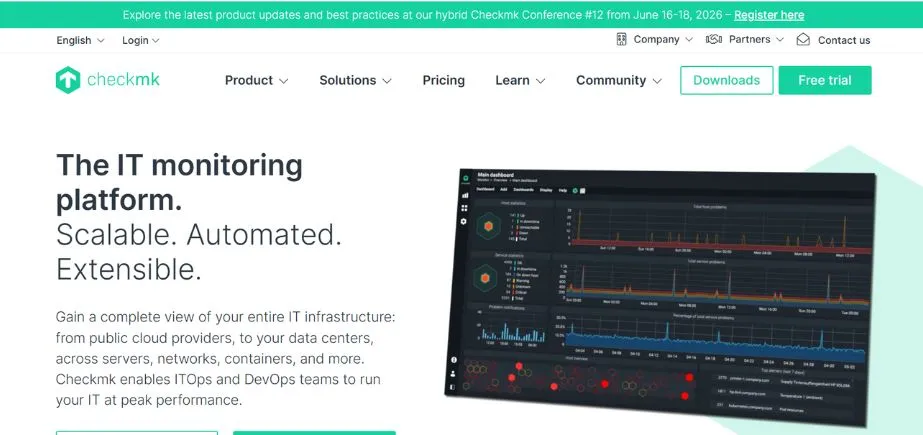
Checkmk is a complete monitoring tool that integrates Nagios into a better interface and modern features. It also comes in open source and also in commercial versions, therefore flexible to various budgets. CheckMK can monitor servers, networks, applications, cloud services, a nd containers on a single platform. The tool is also said to be very effective and capable of surveillance of large environments without the need to have powerful hardware. Checkmk possesses an advanced web interface that is significantly easier to operate compared to the conventional Nagios.
Key Features
- Based on Nagios core
- Hybrid cloud monitoring assisted.
- Service discovery works in a non-human manner.
Pros
- Free version available now
- Very efficient and fast
- Proper documentation on the internet.
Cons
- The interface could be better
- There is a learning curve in the first place.
- Some features need payment
Best For: Hybrid
Pricing: Free (Enterprise from $690/year)
Website: https://checkmk.com
10. ManageEngine OpManager
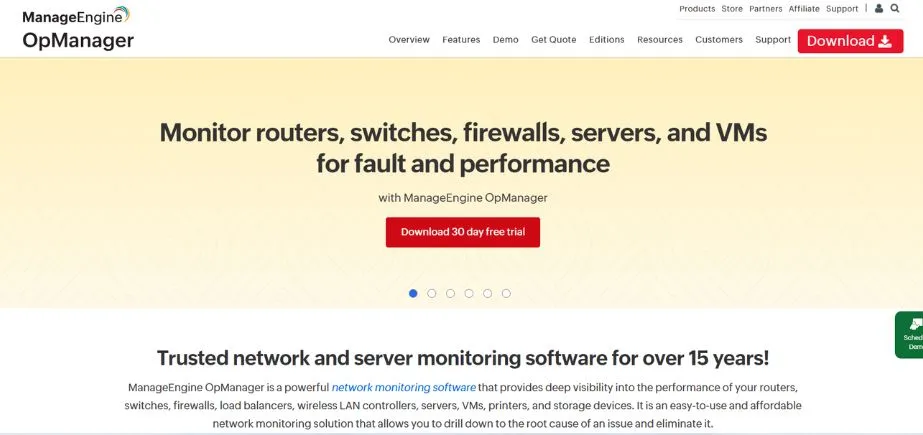
ManageEngine OpManager is an all-in-one infrastructure monitoring software that will give you full visibility of your IT infrastructure. It is a network and server monitoring tool that is specifically designed to fit IT teams of medium to large companies. OpManager is able to map and discover your entire network automatically, monitor performance, and alert you to problems. The tool has hundreds of built-in monitoring templates; thus, setup is fast and easy.
Key Features
- Monitoring of the network and servers.
- Auto network discovery was included.
- Over 2,000 device templates
Pros
- A low-cost pricing system is provided.
- Easy to set up
- Good support team available
Cons
- On some occasions, the interface becomes old.
- Poor cloud monitoring capabilities.
- It has additional features that need extensions.
Best For: Networks
Pricing: Starts at $245
Website: https://www.manageengine.com
Comparison Table: Best Infrastructure Monitoring Tools
| Tool | Best For | Starting Price | Deployment | Open Source |
| Datadog | Enterprises | $15/host/month | Cloud | No |
| Nagios | Developers | Free | On-Premise | Yes |
| Zabbix | Enterprises | Free | On-Premise | Yes |
| Prometheus | Containers | Free | On-Premise | Yes |
| SolarWinds | Networks | $2,995 | On-Premise | No |
| PRTG | SMBs | Free/100 sensors | On-Premise | No |
| New Relic | Applications | $99/month | Cloud | No |
| Dynatrace | Enterprises | Contact | Cloud | No |
| Checkmk | Hybrid | Free | Both | Partial |
| OpManager | Networks | $245 | On-Premise | No |
Common Use Cases of Best Infrastructure Monitoring Tools
The most significant uses of the high-quality infrastructure monitoring tools in the current IT activities are:
1. Monitor CPU, Memory, and Disk Monitoring: Server Performance to avoid impairments.
2. Network Traffic Analysis: Monitor bandwidth and determine problematic network bottlenecks.
3. Application Health Monitoring: Make sure that your applications perform well with all end users.
4. Cloud Resource: Optimization Cloud costs can be monitored, and resources can be optimized to save.
5. Security and Compliance Monitoring: Identify abnormal practices and ensure security levels within systems.
Conclusion
The appropriate selection of the best infrastructure monitoring tools out of a number of the best monitoring solutions is vital to the success of your business. All the tools that we have discussed have their own set of benefits based on your individual requirements, finances, and technical knowledge. Your choice of whether to install a free open-source tool such as Nagios or Zabbax or invest in a commercial infrastructure monitoring tool such as Datadog or Dynatrace is less important than the fact that you are now going to start monitoring your infrastructure appropriately.
Use the opportunity to use the free trials when most vendors provide them to test the monitoring tools of the IT infrastructure in your own systems. This practical experience will assist in making an informed choice. Properly installed infrastructure monitoring tools will make it possible to concentrate on expanding your business, as you have your own monitoring tools built to supervise your technological infrastructure.
Frequently Asked Questions
Q1: What are infrastructure monitoring tools?
Infrastructure monitoring software is are programthat take a watch around your IT systems, such as servers, networks, and even applications. They notify you when something goes wrong and assist as well as in ensuring the performance and reliability of your systems.
Q2: What is the purpose of the infrastructure monitoring tools?
These tools are necessary to avoid downtime, fast fix problems, maximize performance, and save money. They assist you in being aware of what goes on at any given time in your IT environment.
Q3: Can free infrastructure monitoring tools be sufficient?
Free software such as Nagios and Zabbix is robust and can fit most companies. They will, however, need technical knowledge to install and sustain. Paid tools are less challenging to set up and have superior support.
Q4: The cost of infrastructure monitoring tools?
Prices range from free open-source to thousands of dollars per month. Free tools are available to small businesses, and large ventures may spend up to $10,000 a month on full monitoring.
Q5: Is it possible to use infrastructure monitoring in the cloud?
Yes, a majority of the contemporary infrastructure monitoring tools are cloud-friendly. Somareeewas created specifically to monitor cloud and those that support both cloud and on-premise infrastructure.
Continue Exploring: Best Software Companies in Thane