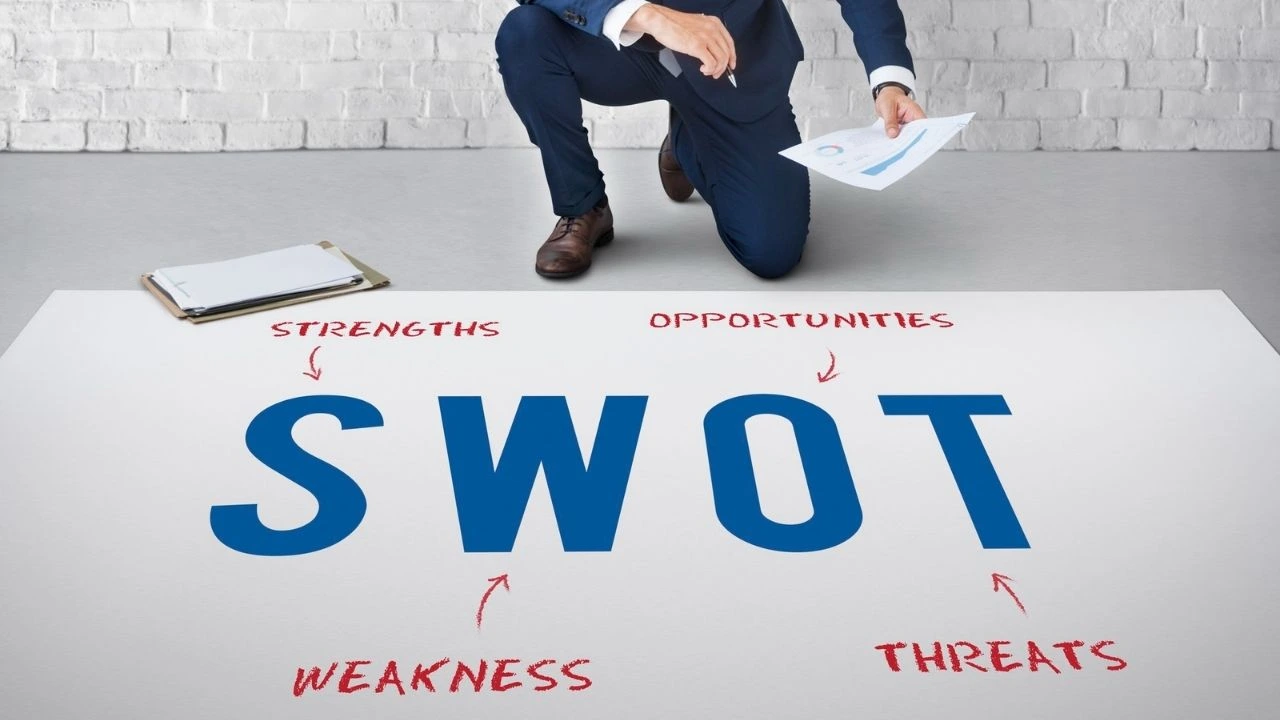
A SWOT analysis is a strategic planning tool developed to assess four functions of a business or a project, namely Strengths, Weaknesses, Opportunities, and Threats. This analytical tool assists organizations to know where they are and what to do in the future by studying the internal factors (strengths and weaknesses) and external factors (opportunities and threats) that may affect performance.
SWOT analysis is being used as a basis for making strategic decisions because it gives a clear picture of a company as regards its position in the marketplace. It assists a business in realizing areas where improvement is needed, taking advantage of competitive grounds, realizing growth potentials, and being ready to deal with the hurdles that lie ahead. It is an all-around perspective that helps organizations in coming up with sound decisions concerning the allocation of resources, position in the market, and long-term planning.
This article presents 10 examples of detailed SWOT analysis that are conducted in large companies of different industries. Both cases illustrate how various organizations utilize their strengths, overcome weaknesses, follow the opportunities, and contain the threats within their markets.
What Are the Components of a SWOT Analysis?
Strengths
Internal advantages that give a company a competitive edge. These are good features that can be located in the control of the organization, including an excellent brand name, a qualified workforce, excellent technology, or good customer service.
Weaknesses
Internal limitations that may hinder growth. These include opportunities in which the company is disadvantaged over its competitors, such as limited finances, becoming technologically obsolete, a bad location, or general inexperience in one or more fields.
Opportunities
External factors that the business can leverage for success. They include good conditions in the external environment that the company can utilize to its benefit, like the growth of markets, technological development, or the desire of consumers to change products.
Threats
External challenges that could negatively affect performance. These are the elements beyond the control of the company that may have a negative impact on its business, such as recession, competition, change in regulations, or change in trends in the market.
How to Conduct a SWOT Analysis Effectively
In order to have an efficient SWOT analysis, organizations need to distinguish between the internal and external factors clearly, making a difference between the controllable and uncontrollable factors on their part. The analysis will be based on facts since it will be carried out using information and knowledge gained through the financials, customer responses, and market trends. Including departments or leadership gives a well-rounded opinion using a variety of perspectives in the organization. Lastly, ranking results and relating them to business goals can mean that the SWOT analysis is actually converted into business strategies.
10 SWOT Analysis Examples Across Industries
1. General Motors (GM)
General Motors is a major automaker company in America that produces such legendary brands as Chevrolet, GMC, Cadillac, and Buick. As more companies focus on electric automobiles and environmental friendliness, GM is leading the way in mobility technology and autonomous driving. This firm is known to work on an international basis and to dominate the future of transportation and automotive technology. Below is the company’s SWOT Analysis:-
Strengths: General Motors has a robust portfolio of brands whose names are well known to consumers, such as Chevrolet, Cadillac, and Buick; it has an elaborate manufacturing base across the globe. The firm has put a lot of investment in electric drive technology to achieve self-driving status, coupled with financial stability and a sustainable income.
Weaknesses: GM has a poor history regarding product quality and reliability, and the market is highly dependent on the North American market. Outdated pension and healthcare liabilities are costly to maintain, and the company has been lagging behind competitors such as Tesla to enter into the electric vehicle market.
Opportunities: The rising electric vehicle market is a great opportunity to expand as governments enforce new regulations protecting the environment. GM will be able to explore further growth in the developing markets and in Asia, especially, and it can also work on autonomous car technology and encourage strategic partnerships with technological companies to become innovative.
Threats: GM has very stiff competition from conventional automakers and new ones such as Tesla. Changes in regulation and emissions standards dictate that large investments are expended in new technologies, and weaknesses to the economy result in lost consumer spending on vehicles and also the interruption of the chain in terms of profitability.
2. Zoom Video Communications
Zoom may be described as one of the most popular video conferencing services that was brought to popularity by the COVID-19 pandemic. It provides smooth virtual teleconferencing to talk in meetings, webinars, and work together as a team. Applicable to companies, educators, and people, Zoom prioritizes convenience, stability, and growth, which makes it a resourceful instrument in the time of distant work and online connection.
Strengths: Zoom is a video conferencing outfit with better technology, which ensures a high level of quality audio and video performance. Due to the pandemic, the company got brand recognition never seen before, to the extent that the term Zoom has come to mean video conferencing. Zoom has a scalable software-as-a-service, which enables it to have predictable recurring revenue, and it also has a user-friendly interface that can be used by both novice and skilled users.
Weakness: Zoom is an organization that is susceptible to the alteration of workplace trends because it has a high reliance on remote work patterns. It lacks reflection to diversify its platform and capabilities, overall, displaying low levels of diversification, which poses a concentration risk to the company. Zoom has had to face enormous security and privacy issues and is in a highly competitive market of communications-based technology.
Opportunities: Zoom has a chance to extend the use case to more collaboration and productivity tools and have all of them integrated as an alternative to Microsoft Teams. The flourishing of hybrid working models offers prospects to create special hybrid meeting capabilities. The firm has an opportunity to come up with custom solutions to the healthcare, government, and education sectors, and also expand its operations globally to such regions where the technology has gained traction.
Threats: The possibility of the transition towards face-to-face working conditions may greatly decrease the need for video conferencing services. Zoom will have to deal with very high competition from Microsoft Teams, Google Meet, and other mature tech firms that use their previous relationships with customers. Economic recessions have sharp impacts on the amount of money that will be spent on business technology, and new laws or regulations concerning information privacy and security might even result in higher costs of compliance and constrained market potential.
3. Netflix
Netflix is a streaming service that provides users with an endless selection of films, television series, documentaries, and exclusive material. It pioneered the way entertainment is consumed with such hits as Stranger Things and The Crown. Having millions of subscribers across the world, Netflix keeps investing in a wide selection of programming and technological advancements to remain the leader in the field of digital entertainment. Below is the company’s SWOT Analysis:-
Strengths: Netflix is a worldwide streaming provider that has more than 230 million paying customers all over the world, and this gives them an impressive amount of revenue and influence in the market. It has also created powerful original content creation tools through award-winning series and movies. Advanced recommendation algorithms, enabling the personalization of content discovery, are used by Netflix, and it has a first-mover advantage in the streaming business.
Weaknesses: Acquisition and production of content is extremely costly to the company, which is only increasing with the growing competition. In some ways, the Netflix market is growing stagnant, especially in the mature markets where competition is especially stiff. The site relies solely on quality internet infrastructure and over very few powers to license content agreements.
Opportunities: Since Netflix has a wide user base and technology base, it can enter into the area of gaming and interactive content. A lot of growth is possible in the international markets, especially the Asian countries and Latin America. The company will be able to create live content and sports streaming services and strategic partnerships with telecom companies in bundled services.
Threats: The major competition that Netflix is exposed to is the presence of fully funded platforms that include Disney+, HBO Max, Amazon Prime Video, and Apple TV+. Piracy of content and sharing of passwords remain threatening to revenue generation. The regulatory changes implemented by various nations may also affect the availability of content and operations, and the declining economic activities through discretionary allocations toward entertainment subscriptions.
4. McDonald’s
McDonald’s is the largest fast-food chain across the world, which is famous for its burgers, fries, and the golden arches. Established in 1940, it has operations in more than 100 countries. McDonald’s has been successful nature into the standardization of its operations, internationalization of its marketing, and a well-established brand name. It has been changing constantly to take the current needs of consumers, offering healthier options in its menu, digital orders, and sustainability. Below is the company’s SWOT Analysis:-
Strengths: McDonald’s is the fastest food restaurant chain in the world, with a global brand recognition that can never be matched. The company has very efficient processes and standardized operations that enable it to deliver the same quality in its thousands of sites across the world. Their franchising business concept results in a large interconnected network around the world without high costs, attracting low-income citizens.
Weaknesses: The brand also experiences consistent negative attitudes towards health and nutrition, as customers are keying more on healthier eating choices. McDonald’s has a large rate of employee turnover and an underdeveloped menu compared to its competitors. A franchise relationship is very crucial in driving their growth process, and this has the disadvantage of having them lose control of the brand standards.
Opportunities: Rising demand of consumers for healthier options in the menu offers the opportunity for McDonald’s to expand its menu with salads and grilled food, and other organic ingredients. The company has the opportunity to expand to new markets and emerging markets, to grow digital ordering, delivery, and to grow operating hours.
Threats: The threat to McDonald’s is that there is competition in the fast-food restaurant through fast-casual restaurants. The competition might be perceived because of the quality of food offered. The movement in consumer tastes toward healthier eating is challenging the old fast-food paradigm, as is the decrease in spending during economic recession, and increased labor costs pinching those profit margins.
5. Starbucks
Starbucks is the international coffeehouse chain widely known for its top-quality coffee, custom drinks, and comfortable store environment. Starbucks has over a thousand stores in different parts of the world, making it a commonplace destination for coffee consumers and solitary employees. It is very much focused on ethical sourcing, customer experience, and community involvement, mixing convenience with individuality in its brand experience. Below is the company’s SWOT Analysis:-
Strengths: Starbucks has gained great global recognition and patronage that goes beyond cultural borders. The company has a high positioning in the coffee market, which enables it to charge premium prices compared to the competitors, and still be in demand. The chain of stores created by Starbucks is highly developed and allows the company to use convenient locations, and it presents steady improvements in both the creation of the product and the introduction of the seasonal mix.
Weaknesses: Starbucks is threatened by the high prices relative to its competitors, which may close the door to customers when the economy is not doing well. The firm displays great exposure to Coffee commodity prices, and its activities are labor-intensive, having high employee staffing costs. The prevalence of markets in major areas such as North America cannot allow the expansion of new stores.
Opportunities: Starbucks has the chance to aggressively explore the emerging markets, mostly in Asia, where the culture of coffee consumption is expanding at a high rate. The company can substantially increase its range of cold beverages and food products and adopt digital ordering and delivery services, and lure environmentally aware citizens with sustainability-driven plans.
Threats: Starbucks is under strong competition from both the large ones, like Dunkin, and the local coffee shops that have more competitive products at a cheaper price. Financial crisis impacts reduce spending on relatively expensive coffee substantially, and the shift of consumer behavior toward healthier drinks, as well as distribution chain shocks, pose constant threats.
Also Read: Best Software Companies in Coimbatore
6. Subway
Subway is a fast-food chain that deals with sandwiches, salads, and wraps that can be customized. With its signature slogan of Eat Fresh, this gives customers a chance to customize the preparation of food through varied fresh ingredients. Having thousands of restaurants across the globe, Subway focuses on affordable cost and healthy options in the industry of quick-service restaurants, addressing both health-aware consumers and budget-sensitive customers. Below is the company’s SWOT Analysis:-
Strengths: The Subway also has a broad franchise network worldwide, operating more than 37,000 outlets located in different parts of the world, unsupported convenience, and accessibility. It has effective brand positioning as a healthier fast-food chain where customers can have their sandwiches customized, something very important to the health-conscious public. Their menu is very adaptable to different dietary requirements, yet global in its brand recognition.
Weaknesses: The company encounters serious quality control problems in different locations franchised because it is decentralized, and different locations have different standards. Subway has little development over its competitors and has also been facing diminishing sales in the major markets. Issues about relationships in the franchise have caused strains between headquarters and individual franchise owners.
Opportunities: The increased consumer interest toward healthy and fresh dining foods also recommends itself to Subway, whose positioning is associated with these trends and which can be capitalized on to expand the menu. The firm can grow tremendously into the field of delivery options and online ordering. The new menu items and formulation of restaurants can appeal to various customer groups, and overseas market expansion provides a huge potential for growth.
Threats: There is stiff competition among Subway and fast casual restaurants such as Chipotle and Panera providers which are seen as superior with regard to quality and more innovative products. The established strategy of offering value that has served Subway well is a threat to the new tide created by changing consumer tendencies toward high-quality dining experiences. The pressure on franchise owners economically, as well as the food safety issue, provides a continuous four-dimensional risk to operations and reputational risk.
7. Tesla
Tesla is one of the leading EV and clean energy businesses established by Elon Musk. The company Tesla is famous because it has created sleek-looking EVs such as Model 3 and Model S that have revolutionized autonomous driving capabilities and batteries. It also manufactures energy storage systems and solar panels that promote sustainable energy in the world. Below is the company’s SWOT Analysis:-
Strengths: Tesla is the innovation leader in electric vehicle technology that is constantly delivering in areas of innovation in terms of the performance of its batteries and the autonomous driving capabilities of the automobile. The company has a good brand image and customer loyalty, which is very high, and its owners tend to become brand builders as well. The vertically integrated manufacturing model employed at Tesla gives the company more quality and cost control, and the presence of charismatic leadership attracts a lot of media attention, which is achieved without any advertisement costs.
Weaknesses: Tesla has low production volumes compared to demand, and this gives them long queues, and they may miss out on their revenues. The pricing of the vehicles sold by the company does not favor the mass markets, with sales mostly being made to wealthy consumers. Tesla has a troubling history of reliance on governmental incentives and a history of quality control, as well as service network problems.
Opportunities: Increasing world demand for electric vehicles would offer immense growing potential as more governments adhere to stronger emissions restrictions. Tesla has the opportunity to develop the energy storage and solar markets, create an autonomous driving technology that will provide a new type of revenue, and seek international market entry in Europe and Asia.
Threats: The company is threatened by the growing competition from Tesla against other established automakers that are doing extensive research in the development of electric cars. The shift in regulations regarding the incentives of electric vehicles may have an effect on demand and profitability. Economic crises have a tremendous impact on sales of luxury vehicles, and glitches in supply chains and raw materials supply may affect the production schedules and prices.
8. Uber
Uber is a multinational ridesharing and transport company that uses a mobile application to match drivers with customers. The company has ventured into other services such as Uber Freight and Uber Eats. Thanks to providing flexible, on-demand mobility, Uber transformed urban transport and brought challenges to old-style taxi services, and contributed massively to the global economy. Below is Uber’s SWOT Analysis:-
Strengths: Uber was the first company to start the ride-sharing business and continues to be the leading company in the entire world, with presence in more than 70 countries. The firm has a good brand identity, and it is now associated with ride-sharing services. The technology platform at Uber is very innovative, as it offers seamless booking of services, and it has a diversified business model that offers ride-sharing, delivery of food, and freight.
Weaknesses: Uber still experiences a profitability issue despite a huge increase in revenue. The company has systemic regulatory and legal problems in different markets, such as the disagreement over the classification of drivers, licensing. Uber has relatively low control over the quality of its service because of the independent contractor structure and edge on the continuation of its driver network that has to be constantly maintained.
Opportunities: Uber can be aggressive in autonomous vehicle technology, which has the prospect of saving on the cost of drivers and increasing the profit margins. The firm has a strong growth opportunity in food delivery and logistics services, can create subscription-based services that generate predictable revenues, and can explore growth opportunities in international markets in developing countries where the number of urban citizens is increasing.
Threats: There is a lot of rivalry with other ride-sharing companies, such as Lyft, and other regional businesses. Legal shifts on the gig economy may compel regulatory regimes to reclassify drivers as employees, which means huge cost inflation. Economic recession decreases discretionary spending by consumers in the transportation services, and the pushback that the conventional taxi industries offer acts as a barrier to entry into certain markets.
9. Walmart
Walmart is the world’s largest retailer that deals in a variety of affordable products, such as groceries, electronic products, among others. It is well-known as the retail chain with Everyday Low Prices, and it runs thousands of stores around the world with a great presence online. Walmart has a highly efficient supply chain, a large size, and has ventured into e-commerce, making it a Middleweight globally in retail.
Strengths: Walmart is the largest retailer in the world and enjoys the huge scale benefits that give it unsurpassed buying power and cost economies. With its moderately priced products, the company has continued to enjoy the concept of low-cost leadership, which has continually appealed to the price-conscious consumer. Walmart has a wide supply chain and logistics operations, and it has established itself in both brick-and-mortar stores and online business.
Weaknesses: Walmart is characterized by constant perception issues of being a low-end quality or discount brand, thus restricting its customer base to the higher income bracket. The firm has severe staff changes and constant labor relations problems. Walmart has not fared very well in other foreign markets and relies on low-margin, high-volume business models that cannot offer much flexibility.
Opportunities: Walmart still has an opportunity to retain its e-commerce competencies and omnichannel retail services to compete with Amazon. There is a substantial opportunity in the area of grocery operations in terms of delivery and pick-up. It can also create its own label products to enhance its margin, and lastly, it can look into areas where organized retail is still in its infancy, which is in emerging economies.
Threats: Walmart is exposed to stiff competition from Amazon and other retailers that are fast gaining market share both online and in real-life retail shopping. Economic events can decrease the level of discretionary uses and cause customers to pursue even cheaper options. Modifications to regulation, such as the introduction of a higher minimum wage, can have large effects on operational costs, and shifting consumer preferences to high-quality and environmentally-friendly merchandise confronts the conventional value propositions.
10. LA Fitness
LA Fitness is a chain of American gyms that provides a wide range of exercise equipment, group classes, and personal trainer products and services. It has hundreds of locations in North America to serve a variety of demographics who are interested in subscription-based and convenient workout options. It is mostly equipped with pools, courts, and high-quality equipment to attract such customers, who are not only at the gym, but also frequent visitors and those who are passionate about fitness.
Strengths: LA Fitness runs a wide distribution of physical fitness facilities in the United States, which makes it highly convenient for its members. In its chain, it provides full-service fitness equipment and facilities such as cardiovascular equipment, free weights, group exercise classes, and amenities such as swimming pools. They offer lower-priced fitness than the boutique studios, and yet they have a high membership base and recurring revenue.
Weaknesses: The scale of operation does not allow a personal level of the business like the small fitness studios, and there have been some cases of machine malfunctions, especially in high-volume operations. The employee turnover rates at the company are high, and this may affect the quality of service, and it also struggles to distinguish itself among other big-box gym chains.
Opportunities: The increasing trend of health and wellness is still growing as an activity and triggering the need for fitness services. LA Fitness can diversify into corporate health plans, adopt technology in virtual training and applications, and create custom fitness programs that focus on a given demographic or fitness objectives.
Threats: Boutique fitness studios and specialized gyms are growing in the number of customers, as they are more individual. A decrease in disposable income has a direct effect on optional purchases of memberships, and home fitness and fitness equipment offer an easy substitute to gym memberships.
Conclusion
SWOT analysis is a complex tool that enables one to comprehend the positioning of a business and to set strategic direction. These 10 cases illustrate the way companies in different industries can apply the SWOT analysis in order to define their competitive advantages, deal with their weaknesses, and even explore possibilities to fulfill the market as well as face the potential threats.
The advantages of frequent SWOT analysis would go further than the original strategic planning to continuous business review and adjustment. Through efficient work on analyzing in-house resources and the outside market environment, organizations will receive better opportunities in terms of resource distribution, setting a position in the market, and long-term development strategy.
It can be helpful to carry out a SWOT analysis, whether you are in charge of a large company, a small business, or some other organization. One of the ways to improve your business or your role is to consider this framework and define the area to work on and find your opportunities. There are so many free templates and tools out there to guide you in your own SWOT analysis that even small organisations can afford the mighty strategic instrument.
Continue Exploring: Best Software Companies in Vizag