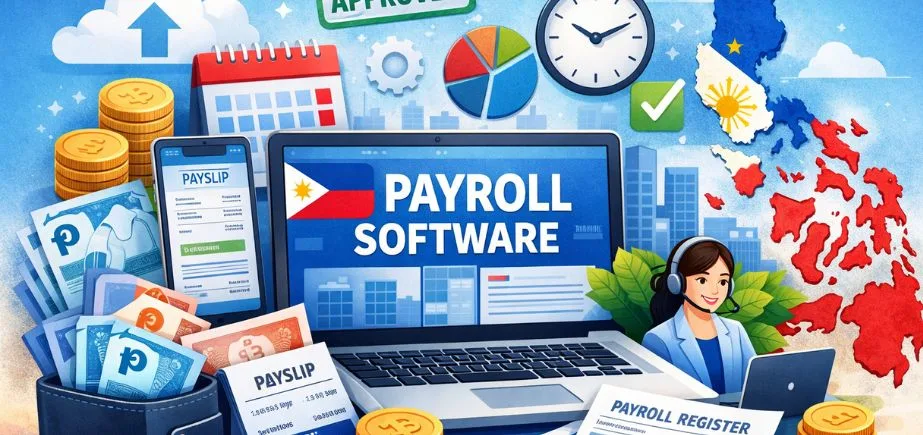
The payroll software in the Philippines cannot be managed using simple payroll calculators, but rather with software that is well aware of the local labor laws and statutory compliance. Employers need to precisely manage taxes stipulated by the Bureau of Internal Revenue (BIR), contributions made to the social security system (SSS), PhilHealth premium payments, and deductions to the Pag-IBIG fund, and maintain pace with the constant changes in regulations. Paper-based payroll processing is not only prone to more errors and penalties but also wastes time that the HR departments would use to develop strategic plans.
These challenges can be made easier with the help of the right payroll software, which can automate the computation of taxes, generate compliant payslips, and ensure that the statutory payment is made on time. Contemporary solutions are also unified in terms of attendance tracking, leaves, and employee self-service portals, which result in a smooth HR and payroll process.
Being an up-and-coming startup that needs to save money and wants to decide and act quickly, or a larger company that needs to scale, keep its data secure, and provide detailed reporting, it is essential to select the most appropriate tool. This is a detailed guide to the most popular 12 payroll software in the Philippines market, their functionality, advantages, and appropriateness in businesses of various sizes.
Principal Payroll Software in the Philippines Compliance Requirements
The regulations of payroll software in the Philippines are controlled by various governmental bodies, and that is why precision and timeliness are crucial to employers. The business has to comply with tax laws prescribed by the Bureau of Internal Revenue (BIR), such as the right calculation of withholding tax, filing of monthly and annual taxes, issuing of payslips, and other BIR forms like Form 2316. Any error of calculation or a failure to file on time may lead to sanctions, interest, or audits.
Besides the income tax, employers have to deal with the compulsory contributions of the employees. These are Social Security System (SSS) retirement, disability, sickness benefits, disability and sickness benefits; PhilHealth premiums to cover the national health insurance, and Pag-IBIG fund premiums to cover housing and savings schemes. All such agencies have certain rates of contributions, salaries, and reporting timetables to be correctly implemented on a payroll run.
Philippine labor laws also provide that the minimum wages, payment of overtime, payment of holiday, payment of night shift differentials, and entitlement to leave in the form of service incentive leave must be complied with. Employers are required to make sure that there is an appropriate calculation of 13th-month pay, final pay, and separation benefits as required.
Frequent changes in regulations and high standards of their enforcement make it easier to stay operational, minimise risk, and not lose the trust of employees through using payroll software in the Philippines that automatically incorporates the newest regulations.
Read More: Top OTT Software Solutions
12 Payroll Software in the Philippines – List (2026)
1. Sprout Solutions
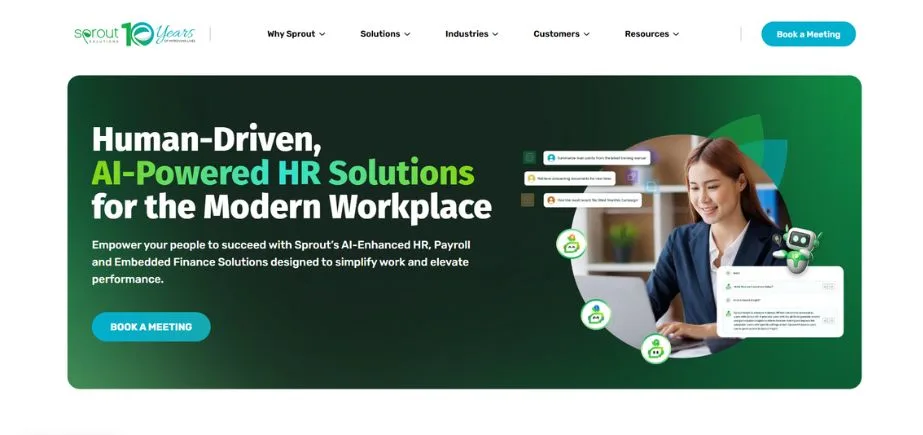
The homegrown payroll and HR management system, which is specifically aimed at the local business requirements, is called Sprout Solutions, which is the homegrown one within the Philippines. The solution, being a cloud-based one, has gained immense popularity among the Filipino firms owing to its strong knowledge of the labor laws and compliance provisions in the Philippines.
Sprout provides complete HR management, including recruitment and onboarding processes, as well as payroll processing and employee interaction. The employee self-service portal of the platform also enables employees to view their payslips, submit leaves, and make changes to personal details on their own, and relieves the HR of general administrative tasks.
Key Features:
- Pag-IBIG compliance and reporting, SSS, and Automated BIR.
- Leave management and payslip portal (self-service) for employees.
- Full-time and attendance system, and biometric-enabled.
- Editable pay policies and pay schedules.
- On-the-go HR mobile application.
Pros:
- Philippine-compliant and labor laws built.
- Great domestic customer service during Filipino time.
Cons:
- It is possible that pricing is higher than international.
- Lack of global payroll facilities in the case of multinational operations.
Website:
People-First AI Platform for Payroll, Compliance and Work
2. Automatic Data Processing (ADP)
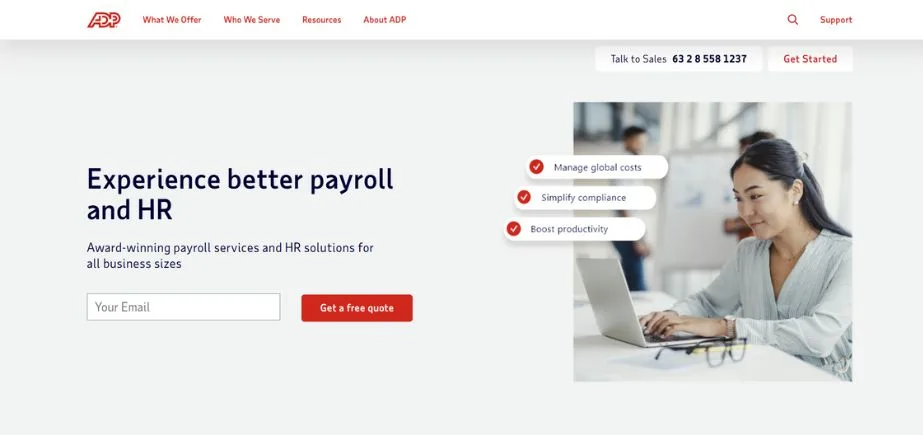
ADP is a multinational payroll company that is highly experienced in delivering its services to multinational companies that are based in the Philippines. Having many years of experience in payroll processing, ADP provides powerful solutions capable of dealing with the complicated organizational structure, multiple sites, and different types of employees.
Their operation in the Philippines offers localized services and uses best practices across the world. The platform offered by ADP combines payroll with talent management, benefits management, and workforce analytics, which is why it can be regarded as the perfect solution among companies that want to have an all-in-one solution. The system is scalable and suitable for expandable business organizations that look forward to the growth of their business.
Key Features:
- Regional operations, including multi-country processing of payrolls.
- highly developed analytics and reporting dashboards.
- Major accounting and ERP system integration.
- Broad tax planning and compliance, and regulatory changes.
- Special account management and support teams.
Pros:
- Successful experience with giant organizations across the globe.
- Well secured and data protection measures.
Cons:
- It may be costly for small to medium-sized businesses.
- The implementation process can be time-consuming and complicated.
Website:
https://www.adp.com
3. Paychex Flex
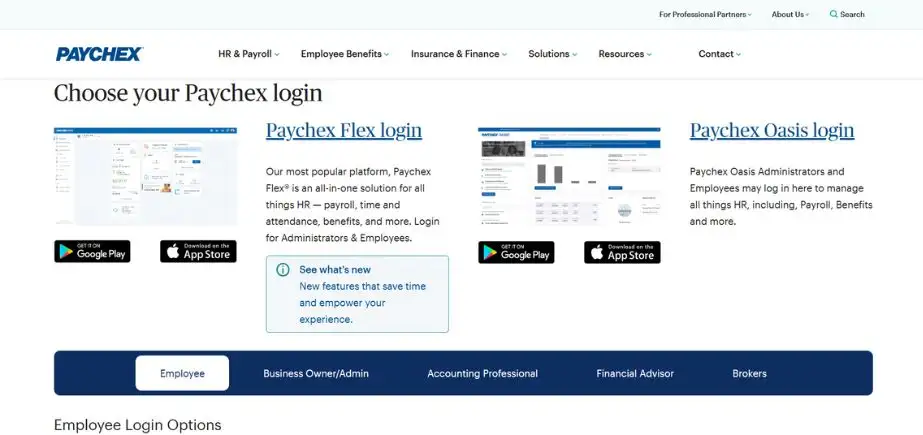
Paychex Flex is one of the payroll software in the Philippines market with flexible payroll solutions that can be redesigned to fit businesses of any size. The platform is a single one-stop workforce management ecosystem that includes payroll processing, benefits administration, and HR services. The user-friendly interface of Paychex Flex makes it easy to use even when one does not have a lot of experience in the area of payroll.
The system offers real-time reporting and analytics to assist business owners in making decisions regarding the cost of labor and staffing plans. Their customer care service staff in the Philippines are aware of the local business culture and regulatory provisions.
Key Features:
- Processing of flexible payrolls, including a variety of payment options.
- Benefits management, such as insurance and pension schemes.
- Onboarding and offboarding processes of employees.
- GPS-based time and attendance monitoring.
- Employee and administrator mobile application.
Pros:
- Growing solution as your business grows.
- Friendly user interface, not very much training is needed.
Cons:
- There are more advanced features that are only available with superior subscriptions.
- Small customization opportunities for unique payroll cases.
Website:
https://www.paychex.com
4. Rippling
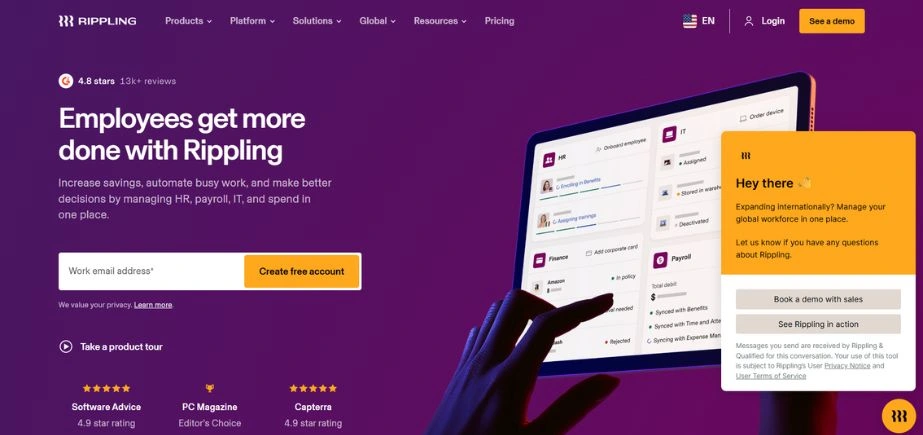
Rippling makes workforce management a revolution through integrating payroll, HR, and IT services under one platform. The integration is of great importance to technology-oriented firms that desire to program employee provisioning of all systems. In Rippling, the system will automatically take care of their payroll, email address, hardware placement, and access to software when you hire somebody.
With Rippling, payroll software in the Philippines can access local payroll compliance without losing the popularity of automation. The workflow automation of the platform can help HR teams save a lot of time on repetitive work.
Key Features:
- Integrated payroll, human resources, benefits, and IT system.
- Automated employee offboarding and onboarding.
- Custom authorization procedures and enforcement of policies.
- Interaction with 500+ business applications.
- Distributed team global payroll services.
Pros:
- Outstanding automation minimizes the human administrative input.
- smooth HR and IT operations.
Cons:
- Pricing method can be a complicated multi-add-on.
- May provide features that are not required by small businesses.
Website:
https://www.rippling.com
5. Deel
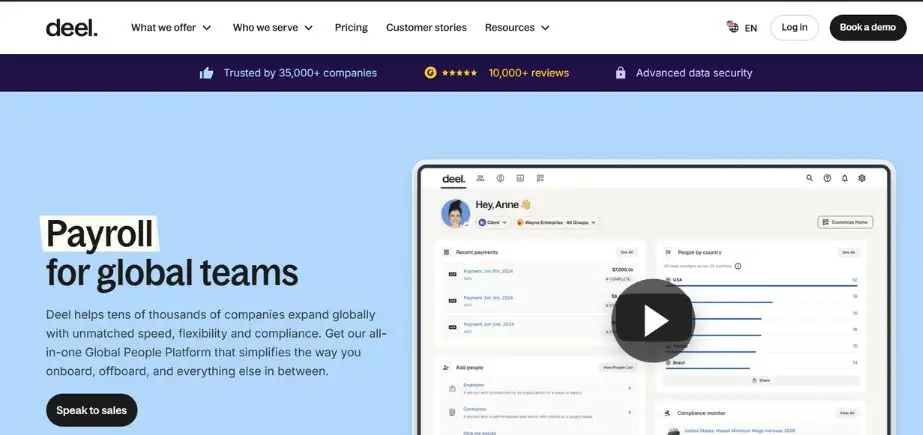
Deel has become one of the biggest payroll software in the Philippines that recruit remote employees and contractors in the Philippines and other countries. The platform focuses on global compliance, and it is easy to recruit, compensate, and manage international employees. Deel also deals with employment agreements, is compliant with local taxes, and offers payment options in various currencies.
For Philippine-based businesses going global or foreign firms recruiting Filipino talent, Deel makes global employment less complicated. Contractor management functions are also quite powerful in the platform and provide well-documented features with automated invoice processing.
Key Features:
- Employee and contractor compliance contracts in 150 countries.
- Automated payment and invoicing in various currencies.
- Incorporated in accordance with the local labor laws and tax regulations.
- International team benefits management.
- Visa and immigration assistance services.
Pros:
- Makes it easy to hire worldwide and payroll internationally.
- Rapid contractor and employee boarding.
Cons:
- Firstly, international operations are based as opposed to domestic operations.
- More expensive contractor payment fees than a solution based locally.
Website:
https://www.deel.com
Don’t miss:
6. QuickBooks Payroll
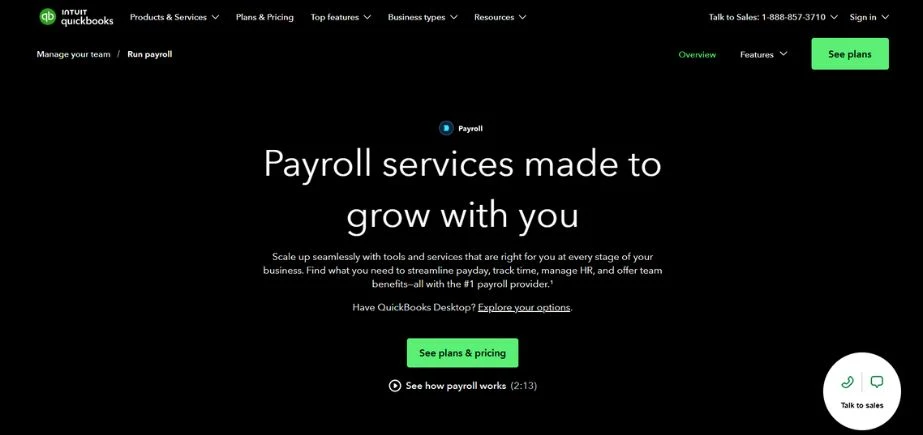
QuickBooks Payroll is an easy payroll system available to those companies that are already on the QuickBooks accounting system. This integration not only removes the need to key in data twice but also to go ahead and have payroll expenses automatically update with your financial records. QuickBooks Payroll is a perfect payroll service with the basic payroll functions needed without being too complex for small and medium businesses in the Philippines.
This payroll software in the Philippines computes tax, produces payrolls, and processes government remittances. The successful penetration of the Philippine SME market by QuickBooks implies that most accountants and bookkeepers already know the system, so they can easily implement it.
Key Features:
- Direct communication with QuickBooks accounting software.
- Government remittances and automated computation of tax.
- Pay slip portal using the employee self-service portal.
- Check printing and Direct deposit functions.
- Payroll reports and financial analytics are customizable.
Pros:
- Automated accounting will remove manual reconciliation.
- Flexible interface with a new, QuickBooks user-friendly interface.
Cons:
- Subscription to QuickBooks is required to be fully functional.
- Philippine-specifics might be of less rank than local solutions.
Website:
https://quickbooks.intuit.com/payroll
Explore More: Best Software Companies in Pondicherry
7. Papaya Global
Papaya Global is a workforce and payroll management company that offers all-inclusive solutions to companies that have employees working in more than one country. The platform is also very effective in handling the intricacies of international compliance, such as local taxation, employment standards, and reporting provisions.
In the case of Philippine operations, Papaya Global can fully comply with the laws of BIR and social security, and can provide insight into the costs of the global workforce. The analytics of the platform assist the companies to get to know the total labor costs in the various regions and make strategic choices concerning the workforce distribution.
Key Features:
- International payroll services in 160 countries.
- Live monitoring of compliance and regulation.
- Workforce intelligence and the overall cost of visibility.
- Multicurrency and currency management.
- Major HRIS and ERP integration.
Pros:
- Ideal in firms that have complicated foreign business practices.
- Well-established compliance skills in a variety of jurisdictions.
Cons:
- It could be excessively developed in companies that are only in the Philippines.
- Premium rates represent business-level competency.
Website:
https://www.papayaglobal.com
8. Patriot Payroll
Patriot Payroll is a simple and affordable service, which is why it can be attractive to small Philippine enterprises and startups. The site is dedicated to the essence of payroll without any redundant complexity, which enables the business owner to make payroll fast and effectively. The simple pricing structure used by Patriot attracts cost-effective business people who desire certainty in their spending.
Although it does not offer some of the more advanced capabilities of an enterprise-level solution, Patriot Payroll provides a stable, basic payroll processing, calculation of taxes, and reporting. The customer support on the site is also reputed to be responsive and helpful, especially to the small business owners who do their own payroll by themselves.
Key Features:
- Strauss forward, easy-to-use payroll interface.
- Computer-aided tax computations and filing.
- Primitive time and attendance monitoring.
- Printed check and direct deposit.
- Pay slips and tax forms portal available to employees.
Pros:
- Highly competitive prices for small businesses.
- Simple to use, i.e., one does not need much training.
Cons:
- Few sophisticated features and personalization.
- Not readily scalable to large and fast-growing companies.
Website:
https://www.patriotsoftware.com
9. FreshBooks
FreshBooks is mainly referred to as an accounting software, but has extended to provide integrated payroll services. This is why it is a great alternative to service-based businesses, freelancers, and small companies in the Philippines who require invoicing and payroll within the same platform. The strength of FreshBooks is that it has a project tracking and time billing service, which is integrated into payroll processing.
It is a software that automatically calculates the number of billable hours and has the capability of processing the payroll based on the time tracked. In the case of creative agencies, consulting firms, and professional services companies, this integration simplifies the process of client billing as well as employee compensation.
Key Features:
- Built-in invoicing, accounting, and payroll.
- Auto payroll calculation and time tracking.
- Tracking and reception of expenses.
- Billing client and project management tools.
- On-the-go business management mobile application.
Pros:
- Ideal when working with service businesses that require time tracking and billing.
- Refined and contemporary user interface.
Cons:
- Payroll services can be simple in a dedicated solution.
- More adapted to small teams and not large organizations.
Website:
https://www.freshbooks.com
10. BambooHR
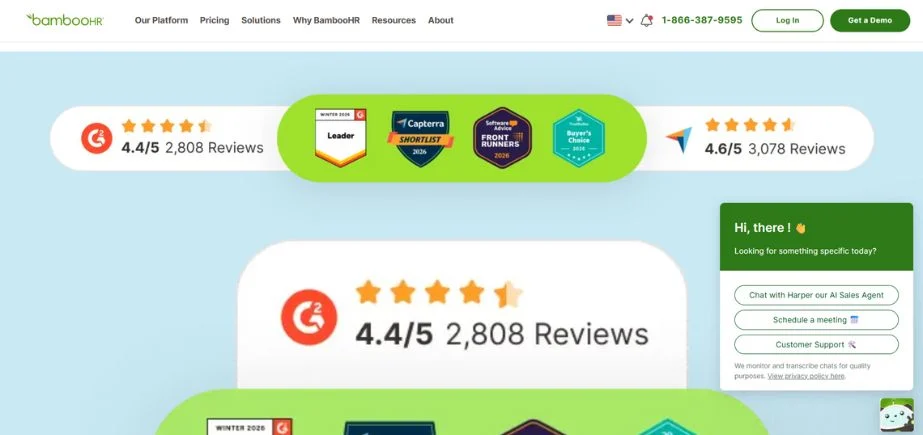
BambooHR has established a reputation as an HR information system that is easy to use and has well-established payroll functionality embedded in the system. The software focuses on the experience of employees due to its simplicity and self-service characteristics. The applicant tracking system, onboarding processes, and performance management tools of Bamboo HR form a complete HR ecosystem.
BambooHR provides an affordable point of entry to Philippine SMBs that want to professionalize their HR. Reporting and analytics of the platform allow firms to monitor the major HR indicators and make informed decisions related to human resource management.
Key Features:
- Complete HRIS/built-in payroll processing.
- Recruitment management and applicant tracking.
- Mobile employee self-service portal.
- Management and tracking of goals and performance.
- Approval processes and workflows can be customized.
Pros:
- Outstandingly easy-to-use interface and staff experience.
- Good customer service and a massive knowledge base.
Cons:
- Pricing will rise considerably with each addition of a module.
- Payroll functions can use third-party integration.
Website:
https://www.bamboohr.com
11. Gusto
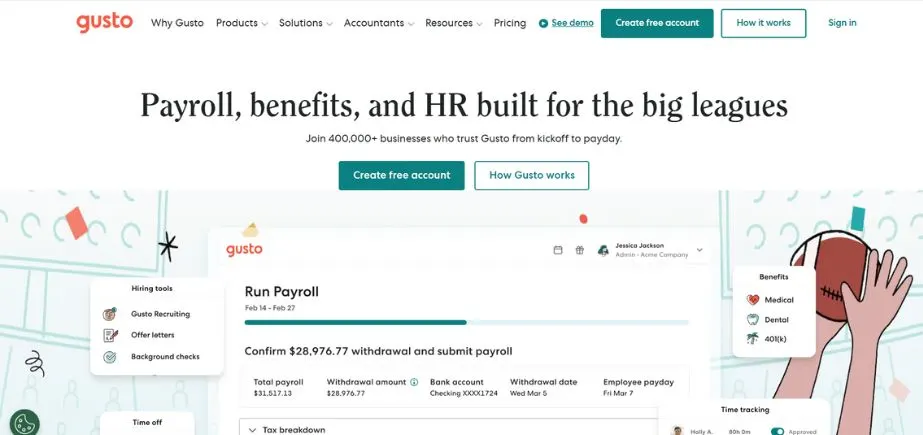
Gusto has grown to be adopted by startups and small businesses as a result of its contemporary payroll, benefits, and HR management services. Its platform is a combination of great functionality and easy user experience, so the process of payroll becomes less of a burden. Gusto deals with tax computations, reports, and transfers to the government, and sends employees attractive-looking digital payslips and benefits data.
The benefits administration in the platform consists of health insurance and a retirement plan. Payroll software in the Philippines that have remote employees or a distributed workforce can access Gusto cloud services to access what they need wherever they are.
Key Features:
- Full service and automated tax filing and payroll.
- Benefit management, such as health insurance and retirement.
- PTO tracking and time tracking.
- Reporting and onboarding process of new hires.
- Team management applications and organizational charts.
Pros:
- Intuitive and modern interface and great user experience.
- Open prices and no side charges.
Cons:
- Can lack compliance peculiar to the Philippines.
- Originally targeted at the US market but internationalized.
Website:
https://gusto.com
12. HReasily
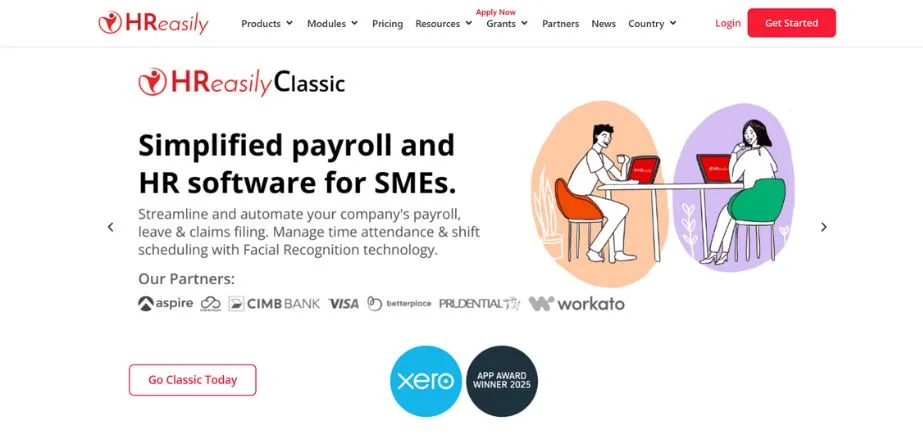
HReasily offers payroll software in the Philippines based on the cloud platform, with a specifically developed Southeast Asian market. The platform is aware of local labor regulations and standards of compliance and is a good option for companies working in the ASEAN countries. HReasily simplifies key HR functions such as attendance management, leave management, claims management, and payroll management.
The mobile app allows employees to check in/out, request leave, and file claims using their smartphones. HReasily provides a unified platform in several countries to growing Philippine companies planning to expand regionally.
Key Features:
- Southeast Asia Cloud-based HR and payroll.
- Employee self-service and time tracking mobile application.
- Policies in leave management that are customizable.
- Processing of claims and reimbursement.
- Multi-country payroll- ASEAN.
Pros:
- Southeast Asian market/ regulatory-specifically designed.
- Low cost to small and medium companies.
Cons:
- May not have all the sophisticated features of a world enterprise solution.
- The international platforms have a higher user base.
Website:
https://www.hreasily.com
Frequently Asked Questions
Q1: What are some of the things I should consider in the selection of payroll software in the Philippines business?
The main criterion to be used when choosing your payroll software in the Philippines is that it must be able to be fully compliant with or in accordance with the local legislation, such as tax calculation to the BIR, as well as SSS, PhilHealth, and Pag-IBIG payments. Find the automated government reporting capabilities to create the necessary forms, such as BIR Form 1604C and alphalists.
Think through the need to incorporate extra HR functionality, such as leave management and attendance tracking, or is standalone payroll functionality adequate? Test the interface of both administrators and employees, since it is easy to use, and it is adopted. Lastly, evaluate the quality of customer service and the local presence of the vendor because you will require the help of the vendor with the questions and other things about the Philippines and its regulations.
Q2: What is the approximate price of payroll software in the Philippines?
The pricing of the payroll software in the Philippines is highly dependent on the size of the company, the features needed, and the model of deployment. Some simple plans of small businesses begin at ₱500- 1,500 per month with 10-20 employees. Full-fleet HR solutions are normally priced between 2,000 and 8,000 every month, covering up to 50-100 employees.
Large organization enterprise solutions can cost 15,000-50,000 and above every month, or provide negotiable costs depending on the number of employees and needs. Most of the providers apply the per-employee pricing model, which is 50-200 pesos every month. Certain platforms provide basic, professional, and enterprise packages. Always seek specific quotes that contain costs of implementation, training, and support maintenance costs to know the cost of ownership.
Q3: Does payroll software in the Philippines have the ability to interface with our current accounting system?
Payroll software used today is most likely to be integrated with accounting systems that are popular in the Philippines. Quiet solutions such as QuickBooks Payroll have automatic integration with QuickBooks accounting, and this integrates automatically with payroll expenses, liabilities, and journal entries. Given that many platforms are connected to Xero, SAP, Oracle, and other enterprise accounting systems, they use APIs or pre-established connectors to connect them.
The integration gets rid of manual data entry, errors, and the financial records are accurate in showing payroll expenses. When assessing software, a particular inquiry to make is whether it can integrate with your current systems and whether it can be custom-developed to do so. Other vendors will also require extra charges in integration, installation, and maintenance, thus make this clear early.
Q4: Can payroll software (in the cloud) securely and safely accept sensitive data on employees?
The credible cloud payroll services will come with strong security measures to secure the information of employees. Seek out the platforms with encryption of data both in transit and storage, multi-factor authentication, role-based access control, and frequent security audits. Data security is shown by such compliance certifications as ISO 27001, SOC 2, and GDPR.
Cloud-based solutions can also offer more security than on-premise systems when they are controlled by small businesses that do not have a particular IT security skill set. Make sure that your selected provider has redundant data centers, including disaster recovery options, and define the data ownership and backup. Read the privacy policy and data processing agreements of the provider, and then know how the information about the employees is handled and whether the data is stored in the Philippines or abroad.
Q5: What is the time for implementing new payroll software?
Payroll software implementation schedules are different depending on the size of a company, the complexity of data, and the solution of choice. Building simple systems that support the payroll of small businesses may sometimes take 1-2 weeks, and they may also include the movement of the data and some initial training.
The medium companies take a range of 4-8 weeks to implement, which allows customizing the workflows, setting up the integration, and performing the overall user training. The vast companies with complicated payroll regulations, numerous places, and many areas of integration might require 3-6 months to implement fully. This is generally the data collection and cleanup, setup of the system, migrating the employee data, and parallel payroll to confirm the validity, training, and go-live assistance.
Continue Exploring: Best Software Companies in Indore