
Data Loss Prevention (DLP) software is a vital security product that is used to ensure sensitive business information is not accessed by unauthorized users, accidentally leaked, or maliciously breached. These advanced technologies detect, track, and prevent the flow of classified information within the networks, endpoints, and even in cloud applications. The DLP software operates by detecting sensitive information like customer records, financial data, intellectual property, and personally identifiable information (PII) and implementing policies to ensure that it is not shared and exposed without authorization.
The modern DLP systems employ highly developed technologies such as machine learning, content scanning, and context analysis to draw the line between the lawful business operations and possible criminal threats. With cyber threats increasingly developing and new data privacy laws such as GDPR and CCPA being more stringent, DLP software has become significantly important in ensuring that organizations have compliance agreements, safeguard their reputation, and prevent the loss of important digital assets to both internal and external attacks.
Also Explore: Top OTT Software Solutions
Best 12 Data Loss Prevention Software
1. Code42 Incydr
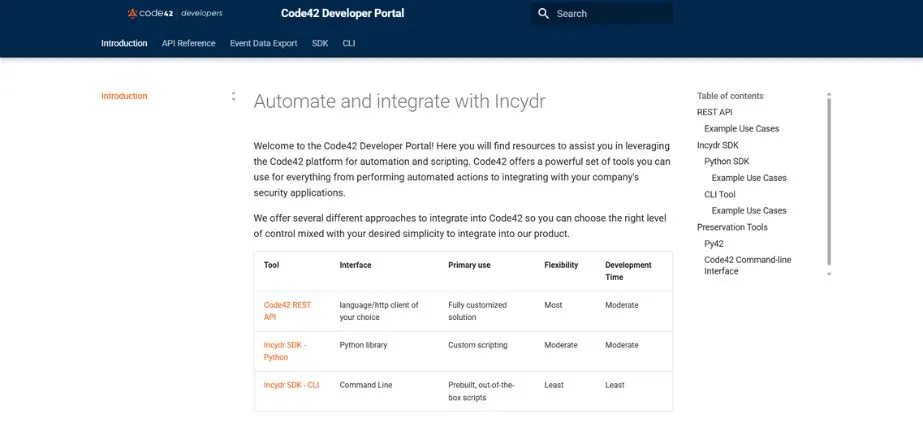
Code42 Incydr is designed to be a product that detects insider risks, as opposed to conventional enforcement of policies. The platform tracks file activity on the endpoints, cloud syncs, email, and web browsers to detect risky activities indicating data theft or IP leakage. Through machine learning, Incydr determines the behavior standards of each user and alerts to suspicious activity.
Its low-weight model focuses on the productivity of the security team since it shows only high-risk events. The solution is especially able to identify outgoing employees who are seeking to steal proprietary information, offering in-depth forensic evidence, such as full file histories and activity logs, all of which can be used in investigations.
Key Features:
- Prioritization and detection of insider risks.
- User baseline behavioral analytics.
- Light monitoring with little endpoint effects.
- Monitoring file activity on a multi-channel basis.
- Complete the activity history tools of the forensic investigation.
Pros:
- It majorly cuts the alert fatigue as the high-risk events are emphasized.
- Contemporary strategy pays attention to insider threats and IP protection.
Cons:
- Less thorough enforcement of policy in comparison with traditional DLP.
- Poor coverage of regulatory compliance use cases.
Best uses:
Companies with insider threat concerns, like organizations, companies with intellectual property, and companies that want modern alternatives to the traditional DLP.
Website:
code42.com
2. Digital Guardian
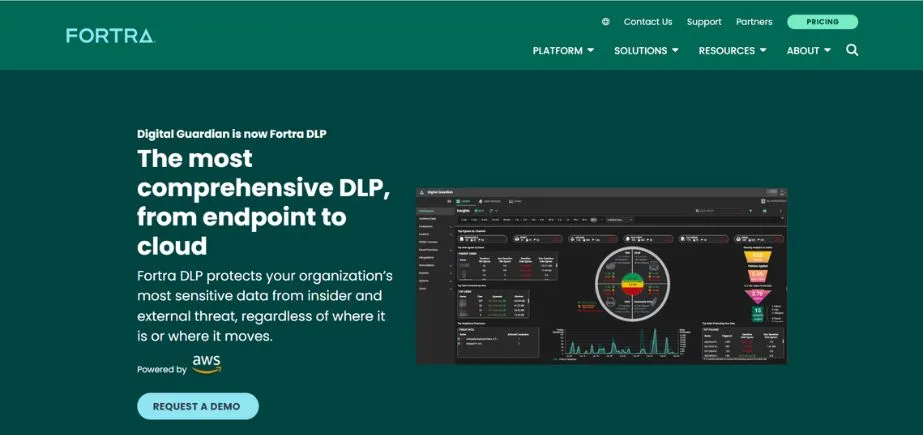
Digital Guardian provides endpoint-based Data Loss Prevention software that provides kernel-level visibility of any data events taking place on the guarded devices. The agent-based architecture tracks all data flows, user activities, and system activities to generate detailed audit trails of compliance and forensic investigations. Its detection and response service, which is managed, integrates a high level of technology with a 24/7 security analyst monitoring service that investigates suspicious activity.
The solution is very efficient in safeguarding against ransomware, internal attacks, and advanced persistent threats to intellectual property. Cloud application protection is also applicable to SaaS programs, offering a variety of deployment opportunities to different enterprise platforms.
Key Features:
- Monitoring of the endpoint with full visibility of data at the kernel level.
- managed detection and response service using expert analysts.
- APTs and ransomware: Advanced threat protection.
- Options of flexible deployment (agentless and agent-based).
- SaaS application security.
Pros:
- Premier endpoint visibility and forensics.
- Managed service option eases the internal security personnel.
Cons:
- Mainly endpoint-based and not network-based DLP.
- Increased price through managed service.
Best uses:
Organizations with intellectual property to defend, firms that need security services to be managed, and businesses that are worried about insiders.
Website:
digitalguardian.com
3. CoSoSys Endpoint Protector
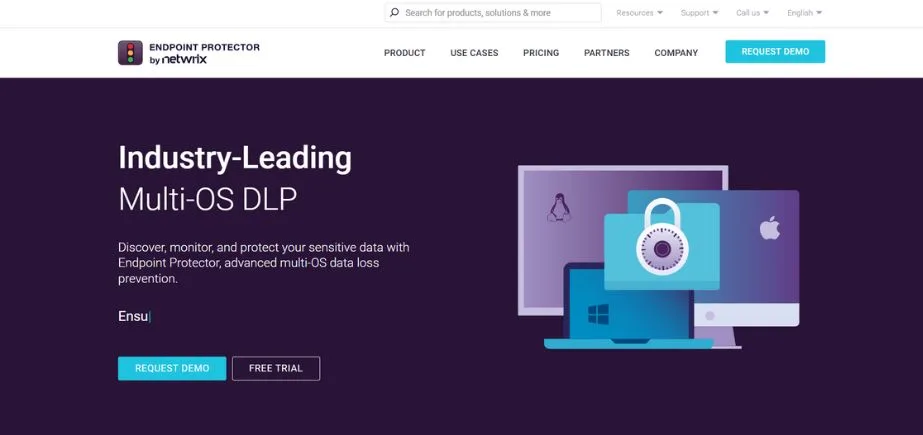
Endpoint Protector is a company that specializes in the control of devices and endpoint Data Loss Prevention, which offers fine-tuned control of data transfers to external services and devices. The solution provides detailed policies for controlling the devices used in USB drives, external hard drives, smartphones, printers, and peripherals. Its content-sensitive DLP engine will scan files that are transferred to identify sensitive information and block policy violations.
Cross-platform support includes Windows, macOS, and Linux using a single console. The eDiscovery module assists in the search for sensitive data stored on endpoints according to legal hold and compliance requirements, and enforced encryption of removable media.
Key Features:
- Full control of all types of peripherals.
- Data transfers, Scanning with content awareness.
- Cross-platform (Windows, macOS, Linux).
- eDiscovery to search sensitive endpoint data.
- Compulsory encryption of removable media.
Pros:
- Superior gadget management features with finer policies.
- Cascading user-friendly deployment and management interface.
Cons:
- Weak network and cloud DLP.
- Lack of a large range of features in comparison with full-fledged DLP features.
Best uses:
Organizations that value endpoint protection, businesses that worry about USB data theft, and businesses that need to control their devices.
Website:
endpointprotector.com
4. Forcepoint Data Loss Prevention
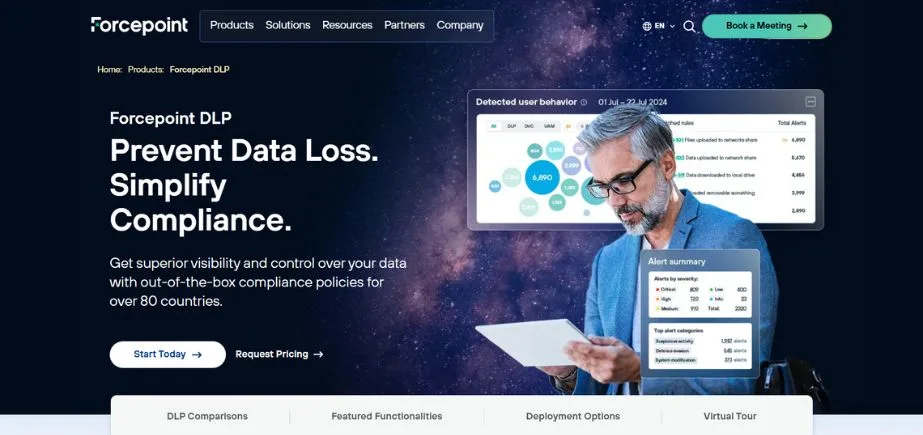
The Forcepoint DLP is human-centric and puts emphasis on the behavior and intent of people instead of strict policies. The platform integrates old-fashioned DLP with sophisticated behavioural analysis that determines patterns of the baseline, then alerts to abnormal behaviour of insider threats or account compromises. Risk-adaptive protection is an automatic adjustment of security protection controls and is determined by the computed user risk scores.
The coverage comprises network, endpoint, cloud applications, and email. The Evolved OCR technology identifies sensitive data in images and scanned documents. Developed forensic investigation tools to help thoroughly analyze the incident and implement flexible policy engines with an appropriate balance between security requirements and business productivity.
Key Features:
- User risk scoring behavioral analytics.
- Risk-adaptive policies that adapt to the way users behave.
- Image and OCR to identify the information on the visual representation.
- Protection of all vectors of data movement.
- Advanced forensic examination instruments for incident analysis.
Pros:
- Minimizes untrue positives with the help of context analysis.
- Balancing user productivity with security is in the flexible policies.
Cons:
- Behavioral baselining takes time to develop proper profiles.
- Small organizations may be overwhelmed with the advanced features.
Best Uses:
Best suited to organizations that put more emphasis on insider threat detection, businesses with diverse employees, and businesses with an emphasis on security.
Website:
forcepoint.com/product/dlp-data-loss-prevention
Know More: Best Software Companies in Indore
5. GTB Technologies
GTB Technologies provides full DLP with the specific power of securing unstructured data in complex enterprise settings. The invented Unified Content Engine processes all types of data, such as documents, images, audio, and video files, to find sensitive data of any type. Protection is provided across network borders, endpoints, cloud applications, and storage systems on a single management platform.
The high-performance architecture is able to process large data volumes without much influence on the system. With sophisticated features ensuring the protection of intellectual property, source code, and proprietary information that may otherwise be overlooked by the traditional DLP, and the ability to modify protection controls in a flexible policy engine, protection can be limited to specific protection rules.
Key Features:
- Unified Content Engine processes any kind of data.
- Security of structured and unstructured data.
- Minimal system impact, High-performance architecture.
- Protection of intellectual property and source codes.
- Granular controls in the flexible policy engine.
Pros:
- Good performance even in high data volumes.
- Powerful security features on a variety of data, such as multimedia.
Cons:
- The low level of brand recognition as opposed to large security vendors.
- Less extensive partner ecosystem for integrations.
Best uses:
Organizations keeping intellectual property safe, high-throughput, data with varied types.
Website:
gtbtechnologies.com
6. McAfee Total Protection Data Loss Prevention

McAfee Total Protection Endpoint, Network, Cloud, and Storage repository offers complete protection of endpoints, networks, cloud applications, and storage repositories with a single management platform. The solution will mix conventional DLP with superior encryption, access controls, and data discovery tools. The ePO management console by McAfee is used to centralise the policy creation, deployment, and enforcement of all modules.
The classification engine is content-aware, and it has more than 1,500 pre-defined templates of all major regulatory requirements, such as GDPR, HIPAA, and PCI DSS. Connection to the rest of the security systems in McAfee allows linkage to threat intelligence, endpoint protection, and SIEM systems to provide end-to-end functionality.
Key Features:
- Single management using the ePolicy Orchestrator platform.
- 1,500+ pre-made compliance templates for big regulations.
- Identification and categorization of repositories and databases.
- Policies that control the devices to avoid illegal data transfer.
- Correlated intelligence integration with McAfee security ecosystem.
Pros:
- Extensive coverage on all channels and locations of data.
- High compliance with comprehensive regulatory templates.
Cons:
- Elaborate implementation involving proper planning and configuration.
- Performance is impaired for some users on the endpoints.
Best uses:
Organizations that are already using McAfee security systems, those that have very regulated businesses, and those with complicated compliance standards.
Website:
mcafee.com/enterprise/en-us/products/total-protection-for-data-loss-prevention.html
Don’t miss:
7. Microsoft Purview Data Loss Prevention
Microsoft Purview DLP is a solution that is compatible with the Microsoft 365 ecosystem, including native security over Teams, SharePoint, OneDrive, Exchange, and Windows endpoints. The solution is based on a large repository of types of sensitive information and trainable classifiers based on Microsoft’s machine learning to identify content automatically. Contextual awareness takes into account the location of the user, the compliance of the device, and sensitivity labels in the implementation of policies.
The centralized policy platform enables enterprise-level security for organizations that do not have full security teams. Close coordination with other security services in Microsoft establishes a unified security posture that aligns DLP events with a vast threat intelligence.
Key Features:
- Naturally built in with Microsoft 365 services and applications.
- Ready-made and trainable classifiers of sensitive information.
- Conditional protection is provided when the device complies with the user’s requirements.
- Cohesive endpoint and cloud policy management.
- Persistent data classification Sensitivity labels.
Pros:
- Hustle-free implementation of Microsoft 365 for users with low configuration.
- Economical to organizations that already license Microsoft security weapons.
Cons:
- Poor security on non-Microsoft applications and platforms.
- Limited higher functionality than specialized DLP sellers.
Best uses:
Microsoft-based companies, SMBs that utilize Microsoft 365, and organizations that require built-in security tools.
Website:
microsoft.com/en-us/security/business/information-protection/microsoft-purview-data-loss-prevention
8. Netwrix Data Loss Prevention
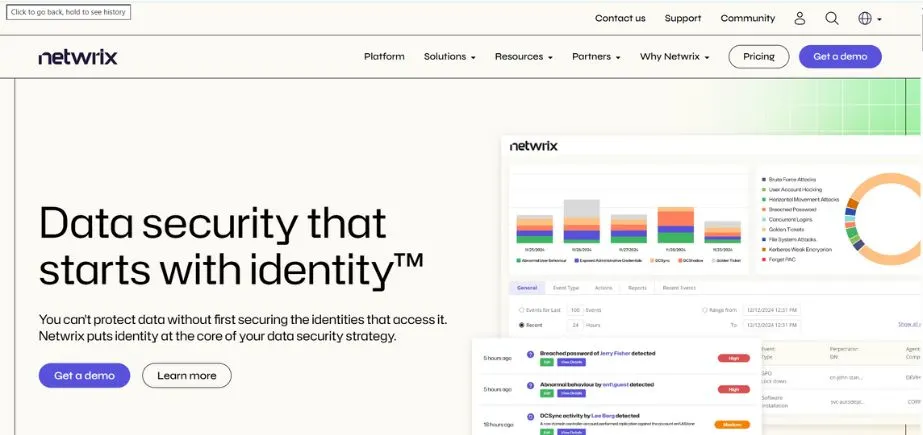
Netwrix DLP is aimed at securing valuable data stored on file servers, SharePoint, OneDrive, and cloud storage systems, and prioritizes visibility and access control. The solution is very strong in the discovery and classification of data, which assists organizations in knowing the location of sensitive information and the people who are gaining access to it. Risk assessment capabilities can expose and detect sensitive data that is overexposed, expired permissions, and security vulnerabilities that might result in breaches.
Real-time monitoring is used to monitor user activities and file operations, which warns security teams about suspicious activities. Incorporation into Netwrix’s broader IT auditing and change management applications offers the ability to have complete visibility of configuration modifications and data security incidents.
Key Features:
- Data classification and discovery between file repositories.
- Risk evaluation of excessive exposure to delicate information.
- Monitoring and detection of anomalies in user behavior.
- Permission analysis-based access governance.
- Connection with Netwrix auditing software.
Pros:
- Good data finding and visibility.
- Great support for file storage services.
Cons:
- No endpoint DLP capability.
- Not as thorough as all-purpose DLP platforms.
Best uses:
Best to use by organizations that control file servers and cloud storage, businesses that care about data visibility, and businesses that have existing Netwrix tools.
Website:
netwrix.com/data_loss_prevention.html
9. Nightfall AI
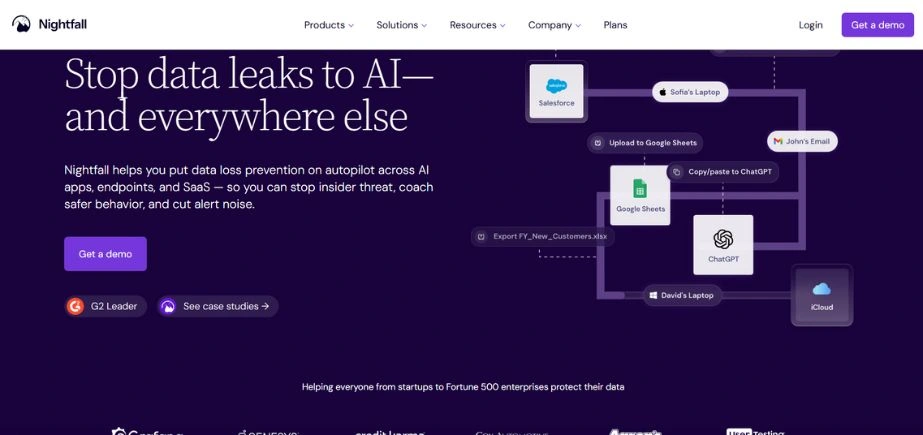
Nightfall AI introduces cloud-native and modern DLP, based on the protection of sensitive data in SaaS applications and cloud collaboration tools. The solution is based on high-quality machine learning and natural language processing that allow it to find sensitive information with a high rate of accuracy and thus minimize false positives. The heavy integrations with Slack, GitHub, Google Workspace, Microsoft 365, and Atlassian products can facilitate real-time tracking of data as it is created and shared.
The API is developer-friendly and can be embedded and integrated into the workflows and applications of developers. Automated remediation consists of putting messages under quarantine, sending message notifications about violations, and offering on-the-job security training to cloud-first organizations.
Key Features:
- High-accuracy detection with machine learning.
- Integrations with major collaboration and SaaS platforms.
- Custom application integration developer API.
- Automatic remediation and notification of the user.
- Instant scanning as information is developed and disseminated.
Pros:
- SaaS is designed with a cloud-native architecture.
- Very few false positives compared to conventional DLP.
Cons:
- Lack of endpoint and on-premises protection of networks.
- A recent vendor whose track record is not that strong compared to established competitors.
Best Uses:
Organizations that are cloud-first, those that heavily rely on collaboration solutions, and businesses that are interested in finding modern DLP solutions.
Website:
nightfall.ai
10. Proofpoint Enterprise DLP
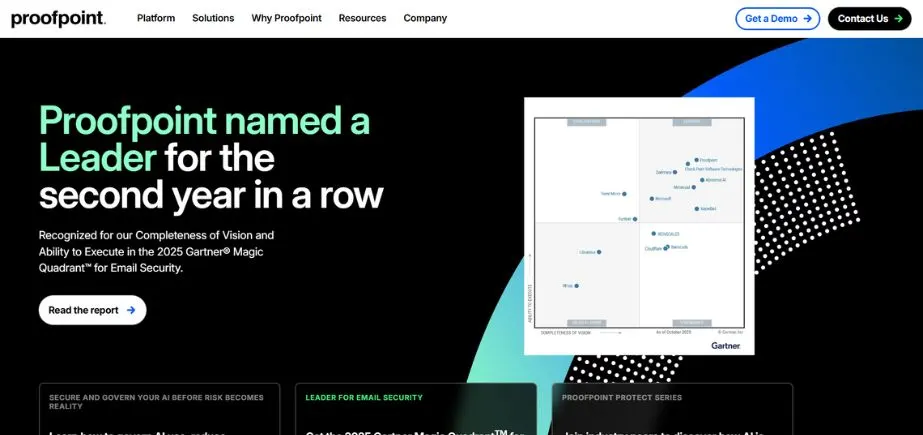
Proofpoint Enterprise DLP pays much attention to the protection of the data in movement, in the form of email and web, where the information often loses its control over the organization. The cloud-based infrastructure does not require any hardware situated on premises, so it can be quickly deployed and automatically scaled. The advanced classification engine employs a variety of detection methods, such as regular expressions, fingerprinting, machine learning, and the incorporation of other classification systems.
Specifically, email protection software functions by pre-scanning and encrypting messages and attachments, and/or quarantining or banning them prior to delivery. The correlation with the larger email security suite of Proofpoint will establish tiered protection over phishing and business email compromise, as well as over data exfiltration efforts.
Key Features:
- Quick deployment cloud architecture.
- Fine-tuning of email DLP, including encryption and policy protection.
- Monitoring and control of Web traffic.
- Combination with third-party classifications.
- Remediation options that are flexible, such as user education.
Pros:
- Swift implementation without an on-premise infrastructure.
- Good email security integration and features.
Cons:
- Weak endpoint protection when compared to their competitors.
- Minimal network DLP capabilities are used in internal data movement.
Best Uses:
Organizations that value the importance of email security, cloud-first organizations, and companies that need to deploy DLP quickly.
Website:
proofpoint.com/us/products/information-protection/enterprise-dlp
11. Symantec Data Loss Prevention
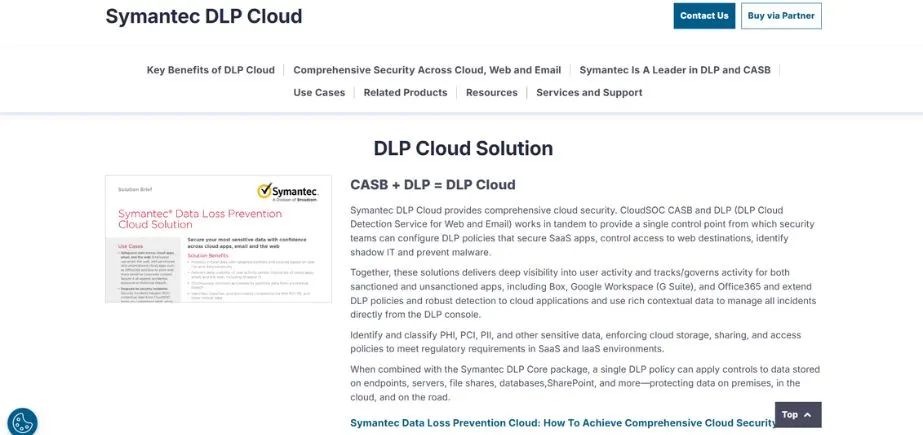
Symantec Data Loss Prevention provides extensive enterprise protection at the network, endpoint, cloud, and email systems. It has a sophisticated content recognition scanning machine that relies on fingerprinting, pattern matching, and machine learning in order to detect and identify sensitive data across organizations. The platform offers the granular visibility of data flow by detecting threatening behaviors before they develop into incidents. Such a level of deep integration of the key cloud services and collaboration tools will facilitate the adaptation to the hybrid work environment.
This is a reliable option as automated policy enforcement and comprehensive reporting services enable the enforcement of complex compliance needs and are popular among large businesses that require and handle large volumes of data on intricate infrastructures with complex security concerns.
Key Features:
- Improved content search and organization of all data repositories.
- Protecting endpoint, network, and cloud data and email data.
- Incident response and policy-based automated enforcement.
- Behavior analysis and anomaly detector using machine learning.
- Extended reporting and compliance dashboards.
Pros:
- Mature platform, large feature base, and track record.
- Superb sensitivity in sensing and categorizing delicate information.
Cons:
- Multifaceted implementation and settings that need expertise.
- Expensive in comparison with the developing DLP vendors.
Best Use::
Large-sized businesses, highly-regulated businesses, or organizations with complicated data protection needs.
Website:
broadcom.com/products/cybersecurity/information-protection/data-loss-prevention
12. Trellix DLP
Trellix DLP is a merger between McAfee Enterprise and FireEye, which provides basic enterprise-level protection of data and gives an added value of highly advanced threat intelligence. Endpoints, networks, cloud applications, and storage repositories are completely covered with a single management interface. The power of the platform will be in correlating DLP events to larger threat intelligence, detecting data exfiltration efforts as part of an organized attack wave.
The machine learning features constantly evolve the success of detection based on the analyst feedback and the patterns of organizational data. Deployment options are flexible and can be implemented on premises, in the clouds, or in a hybrid environment. The discovery and classification tools can be used to determine the landscape of sensitive data in an organization, and then protection policies should be enacted.
Key Features:
- Protective measures of data that are unified in all channels and platforms.
- Advanced attack detection by threat intelligence.
- Machine learning to provide better accuracy and reduce false positives.
- On-premises, cloud, and hybrid models of deployment.
- Complete data discovery and classification.
Pros:
- Good threat intelligence correlation and a high level of attack detection.
- Dynamic architecture to support a wide range of enterprise environments.
Cons:
- The change of brand can cause certain confusion about the product.
- Overlapping features between product lines are undergoing retirement.
Best Use:
In large firms, companies in need of threat intelligence integration, and complex security needs of the business.
Website:
trellix.com/en-us/products/dlp.html
How to select the Appropriate Data Loss Prevention Software
The best DLP solution depends on a thorough analysis of your security needs, infrastructure, and risk profile in your organization.
The Deployment Model also has a big influence on implementation complexities and continued management. Cloud-based systems such as Nightfall AI and Proofpoint can be deployed within a few hours without any hardware expenditures, whereas on-premise systems such as Symantec offer more control over sensitive data processing. Hybrid solutions can be used in a wide variety of infrastructures.
Data Protection Requirements define the protection features required. Full-fledged platforms such as McAfee and Forcepoint are endpoints, networks, cloud, and email, whereas targeted solutions are specific vectors. Determine the flow of your sensitive data, and focus on solutions that would cover those pathways.
Needs that dictate the requirements of templates and reporting features include Industry and Compliance Needs. Healthcare organizations have to have HIPAA-oriented DLP, financial institutions need to support PCI DSS, and European companies have to deal with GDPR. Assess the ready-built compliance templates and reporting capabilities.
The size and complexity of the Organization impact the feature requirements and budget limitations. Companies receive advanced platforms with behavioral analytics and sophisticated classification, whereas SMBs would find it easier using options like Microsoft Purview that can be integrated with the current tools.
User Experience and Productivity Impact should be balanced in terms of security and business operations. Behavioral analytics and contextual policy solutions reduce interruptions of valid work processes with a high level of protection.
Integration Ecosystem makes sure that DLP liaises with the currently implemented security environments, such as SIEM platforms, identity management systems, and endpoint protection systems. Good integration opportunities enhance the overall security effectiveness.
Data Loss Prevention Software Advantages
Through broad-based Data Loss Prevention solutions, significant business value is achieved as opposed to bare data security.
Improved Data Protection operates against external attacks and insider threats by tracking all the data transfers and preventing illegal data transfers. Organizations get access to data flows that they could not view or manage.
Further policy enforcement, audit trails, and extensive reporting make Regulatory Compliance easier to achieve and prove compliance with GDPR, HIPAA, PCI DSS, and industry-specific regulations. DLP has evidence to back compliance audits and investigations.
Intellectual Property Protection protects against theft of trade secrets, proprietary algorithms, strategic plans, and competitive advantages by both leaving employees and contractors, or hacked accounts. The advanced DLP solutions identify suspicious patterns that present IP exfiltration.
Minimizing data breach risk avoids the expensive incidents that ruin reputation, initiate regulatory penalties, and create customer distrust. Preventive data security is much cheaper than inactive recovery and intervention.
Operational Efficiency is further enhanced where security teams examine authentic threats as opposed to searching for endless false positives. The latest DLP solutions are powered by machine learning and behavioral analytics and are prone to alert fatigue reduction by a factor of four, yet comprehensive.
Conclusion
The Data Loss Prevention software has been transformed into a compliance checkbox to a vital security control against various threats to the most valuable asset of the organizations, their information. The 12 solutions discussed in this guide are the most effective solutions that can be deployed in the year 2026, and each solution is effective in certain deployment cases and organizational environments.
DLP cannot be successful just by the choice of technology. Organizations have to invest in the process of data classification, come up with realistic policies that have to balance both security and productivity, train the users on the proper handling of data, and constantly improve their practice based on the experience with operations. The best DLP initiatives have a balanced mix of powerful technical controls, organizational education, and dedication to data protection.
It does not matter whether you are selecting a full-fledged platform such as Symantec or Forcepoint, or a cloud-native solution such as Nightfall AI, or a dedicated tool like Endpoint Protector; the point is that you must align your choice with particular business needs and risk profile, as well as operational environment. The best way to implement this is by having clear objectives, starting the monitoring before imposing, and gradually increasing the coverage as your program grows.
The organizations most likely to safeguard their data effectively would not be the ones with the most advanced DLP programs, but those that consider applying the right controls, instill security understanding, and remain vigilant with the changing threats and business requirements.
FAQs
What is Data Loss Prevention software?
Data Loss Prevention (DLP) software is used to trace, identify, and block unauthorized relay or introduction of sensitive data on networks, contacts, and cloud applications and storage systems. DLP solutions determine confidential information by content checking, categorize it as limitations, and implement safety measures to avoid data loss, insider attacks, and unintentional data spills.
How does Data Loss Prevention software work?
The functionality of DLP software involves three primary operations, namely: data discovery determines the location of sensitive data, classification assigns labels to data, and policy enforcement tracks data flows and prevents unauthorized data transfers. Advanced DLP refers to machine learning, behavior analytics, and content-aware inspection in order to differentiate between legitimate activities and possible security threats.
What data is the Data Loss Prevention capable of protecting?
DLP software secures multiple forms of data, such as personally identifiable information (PII), protected health information (PHI), payment card data, intellectual property, trade secrets, source code, financial records, and any other custom-defined sensitive data. The contemporary solutions address structured information in databases, unstructured information in documents, and information in pictures and multimedia files.
Is Data Loss Prevention software necessary for small businesses?
True, small companies are progressively requiring DLP security due to the increasing amounts of customer data, intellectual property, and information that are susceptible to privacy laws. SaaS DLP systems and functions in programs such as Microsoft 365 are relatively cheap and offer an opportunity to protect data in an SMB budget without providing a set of necessary functionalities.
Continue Exploring: Best Custom AI Software Development Companies in India